
A shock or strut controls movement when a car is driven into a corner or over bumps. These units are comprised of shock oil, dampening valves, a piston, main seal, main body with mounting bushing and an activation shaft with mounting bushing. When shocks or struts fail it is typical in one of two ways, either the internal dampening valve fails or the main shaft seal fails allowing the shock oil to leak out. A shock absorber is mounted to a suspension component at one end and the frame of the car on the other. Many suspension components are in action while the car is driving included the shocks and struts such as the ball joints, lower control arm, bushings, sway bar links and more. If a rattling or bumping sounds is present while driving isolate the noise from front to rear, this will help in the diagnoses. If the location of the noise is difficult to detect have a helper ride along in the rear seat of the car and compare opinions.
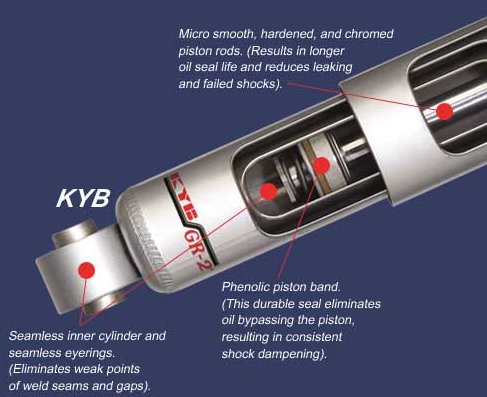
Car Shock Cutaway
Troubleshooting Procedure
Checking Front or Rear Strut Failure - Struts are created with hydraulic dampening valves that can fail causing a clicking or popping noise. If strut oil is leaking the shaft seal has failed and will cause a rattle or clicking noise. To test for this condition disassemble strut assembly and check for excessive strut movement, if strut is easily moved (low resistance) replacement is needed. A spring compressor is required for disassembly.
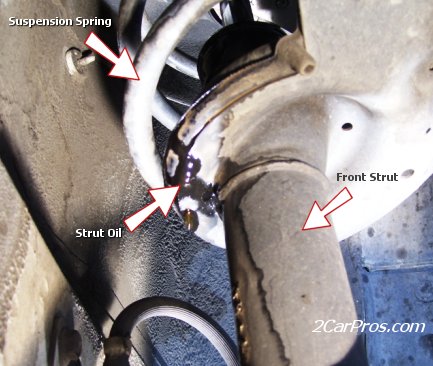
Front Strut Leakage
Checking Front or Rear Shock Failure - Shocks are created with hydraulic dampening valves much like struts. To test for this condition inspect shock assembly and check for leakage, if shock is easily moved (low resistance) replacement is needed.
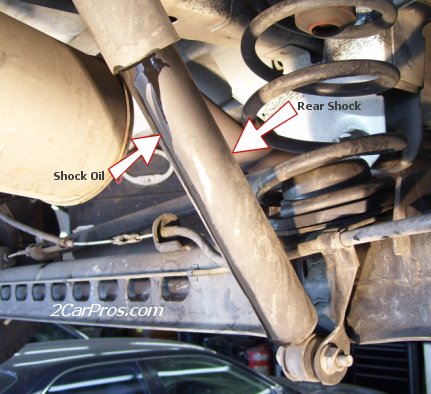
Rear Shock Leaking
If further assistance is needed, our certified car repair technicians are ready to answer your car questions.
Related Car Repair Information
- Questions About Struts
- Questions About Shocks
- How to Replace Shocks
- How to Fix Clicking Noise
- Clucking Noise Repair
- Rattling Noise Fix
Credits
This guide knowledge base was created by the 2CarPros Team. If you have a car repair question, you can ask the 2CarPros community for help. Please visit our 2CarPros YouTube Channel for more helpful repair videos.