Excess heating

1990 PONTIAC SUNBIRD
68,000 MILES • 2.0L • 4 CYL • 2WD • AUTOMATIC
Avatar
ARNOLDLAUSEVICH
  • MEMBER
  • 33 POSTS
New value assembly, lifters, water pump. New thermostat. Still indicates 220 F gradual rise.

Heat reading laser indicates ranges from 160 to 180. Back of value assembly 220 but where therm is located around 160-180.

Does smell oil as running hot and fan never turned on unless I turn on A/C switch.

Replaced thermostat and now running without the therm in place.

Do not know what to do. Remove air in system as I do have a vacuum pump?? But it's full of new 50% mix. At wits end.....
Jul 14, 2020 at 9:20 AM
Advertisement
Avatar
STEVE W.
  • CERTIFIED EXPERT
  • 15,116 POSTS
First you never want to run any engine without the thermostat as that can cause them to run hotter. This is because the thermostat creates a restriction to hold the coolant in the engine a little longer and transfer the heat.
Then I would probably start looking at the radiator for cold areas, run it and as it warms up check the entire radiator to see if you have any blockages. They will show up as colder spots. I would also test the new thermostat, it wouldn't be the first time a new part was bad. Next would be to verify the temperature, where are you reading the 220 at? Dash gauge? If so the sending unit could be bad and the engine really isn't that hot. Has it actually overheated before or since?
Jul 14, 2020 at 9:54 AM
Avatar
ARNOLDLAUSEVICH
  • MEMBER
  • 33 POSTS
Thanks Steve for reply. I have a new thermostat to put in. While the radiator was replaced a few years ago and looks great with no leaks. I will try to check for cold spots. Also would the radiator hoses reflect any difference in heat? They both run hot in and out of radiator.

The high read is from the dash, the readings I took were from my hand laser therm.

Jul 14, 2020 at 10:01 AM
Advertisement
Avatar
ARNOLDLAUSEVICH
  • MEMBER
  • 33 POSTS
Replaced new thermostat. Heat from radiator ranges 230 to 260+. I do not find any cold spots but one strange thing. As I turned off the car "Red Engine Light" on dash. checking the radiator the temperature went down to 90 to 120 degree range almost instantly. Does this indicate a blockage?? By the way, the last time the radiator was changed was in 2006.
Jul 14, 2020 at 10:19 AM
Avatar
ARNOLDLAUSEVICH
  • MEMBER
  • 33 POSTS
heater core was also replaced a few months ago. sprang a leak. forgot to mention.
Jul 14, 2020 at 10:25 AM
Avatar
STEVE W.
  • CERTIFIED EXPERT
  • 15,116 POSTS
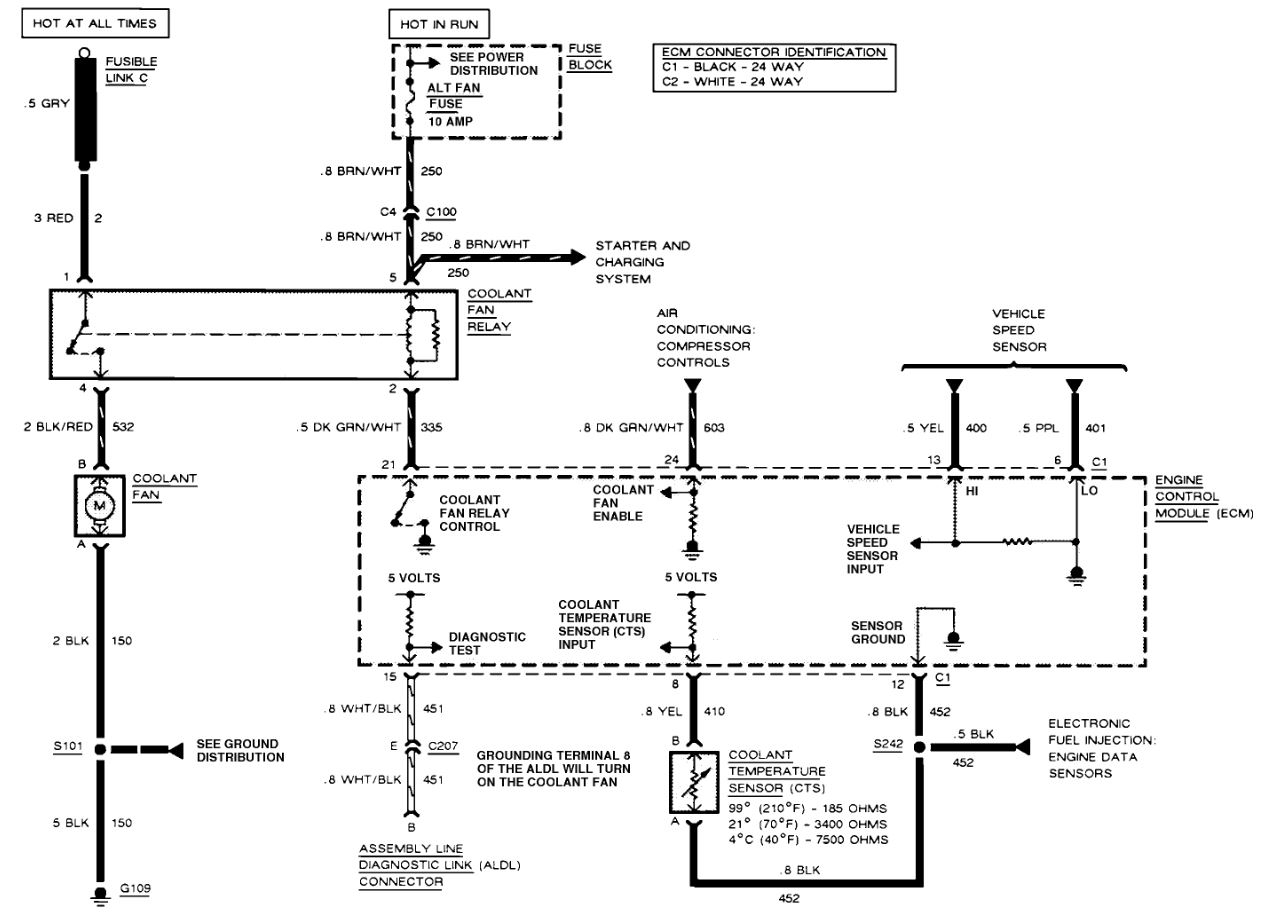
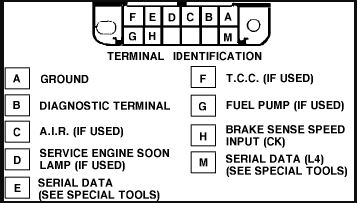
Normally the radiator hoses will be close enough to the same temperature you wouldn't feel much difference at running temperature. You said the fan doesn't come on? That could be the cause of it running hot if it doesn't work. For that I would look at the temperature sensor as you said it does turn on with the A/C, That means the power, relay and the rest works. It just may be that the coolant temperature sender is faulty, the resistance numbers for testing are in the diagram. You could test that by grounding pin B in the test connector under the dash. If you ground that and the temperature comes back down to normal then the fan isn't doing it's job.
Jul 14, 2020 at 11:37 AM
Avatar
ARNOLDLAUSEVICH
  • MEMBER
  • 33 POSTS
Thanks Steve for update.
Sender was replaced so I do not think that's the issue. I will check your recommended diagnostics. Maybe I should just replace that radiator? Would that seem to be the weak link in the lack of cooling? This inspite of not finding a "cool spot"??
Jul 14, 2020 at 4:06 PM
Avatar
ARNOLDLAUSEVICH
  • MEMBER
  • 33 POSTS
Going back to define cool spot on radiator. A good portion of the right side stays about 260F while a bottom portion indicates 390 to 400 F . Is this a normal heat distribution?
Thanks so much for your continued help. My sensor harness by the way indicates 12V to the connector. Looking at the diagram you attached it indicates 5V ??
Jul 14, 2020 at 4:24 PM
Avatar
STEVE W.
  • CERTIFIED EXPERT
  • 15,116 POSTS
There should be two sensors if I recall. One is for the fan control and one for the gauge.
Heat wise it sounds like that radiator has an issue. However there shouldn't be any coolant that hot either. You may want to do a head gasket test just to be sure you don't have an issue there.
Jul 14, 2020 at 4:29 PM
Avatar
ARNOLDLAUSEVICH
  • MEMBER
  • 33 POSTS
head gasket replaced. Was blown when I did. I think I will replace that rad. That based on what temp distribution I indicated to you. Some where I read that the top temperature should be hotter than the bottom. Well that's the reverse here. what ya think??
Jul 14, 2020 at 5:20 PM
Avatar
STEVE W.
  • CERTIFIED EXPERT
  • 15,116 POSTS
Your call on that. I would get the fan working as well. Then go from there.
Jul 14, 2020 at 5:57 PM
Avatar
ARNOLDLAUSEVICH
  • MEMBER
  • 33 POSTS
thanks Steve.
Jul 14, 2020 at 6:26 PM
Avatar
ARNOLDLAUSEVICH
  • MEMBER
  • 33 POSTS
Sensor for the fan control don't know where this is located. I only know the one on the valve cylinder location. Also I ordered another fan relay, but guess according to the schematic you sent its located near the ECM?
Jul 15, 2020 at 7:24 AM
Avatar
STEVE W.
  • CERTIFIED EXPERT
  • 15,116 POSTS
The relay is in the power center under the hood.
Jul 15, 2020 at 8:27 AM
Avatar
ARNOLDLAUSEVICH
  • MEMBER
  • 33 POSTS
Steve, I had a brain fart.. .experimented with turning the A/C on, this activated the fan. I would expect the temperature not to climb with the fan on but it still did. Again, I think it's pointing to the radiator. I did find the power center so I will replace that relay also.

Thanks so much for your advice and help.
Jul 15, 2020 at 9:37 AM
Avatar
STEVE W.
  • CERTIFIED EXPERT
  • 15,116 POSTS
With the fan on and temperature still going up I would say you have an issue. I would still do a combustion gas test though, just to rule out something like a cracked block or a defective gasket. If you start with a cold engine and then watch the temperature at idle, how long does it take to get hot? Another test would be to get a cooling system pressure tester and just put the pressure gauge on when you start the engine cold. The gauge shouldn't move at all until the engine has run a few minutes and even then it shouldn't get over 15 psi. Any higher and you have a problem, especially if the pressure starts rising as soon as you start the engine.
This says for head gaskets but it is the same testing for any combustion leak, be it a gasket, cracked block or head or some other odd item.
https://www.2carpros.com/articles/head-gasket-blown-test
Jul 15, 2020 at 10:16 AM
Avatar
ARNOLDLAUSEVICH
  • MEMBER
  • 33 POSTS
I had the same temperature issue before I replaced the upper half of the engine. This is the valves rebuilt and a new cam with lifters. All gaskets are new. Nothing was done below this point so if I have an issue it would be piston block related and I doubt this is happening. (?)

I do have a pressure tester and will try that also.
Jul 15, 2020 at 10:48 AM
Avatar
STEVE W.
  • CERTIFIED EXPERT
  • 15,116 POSTS
Okay, in that case I would still do the pressure test just as a precaution. If it tests good then great. As you said that turning the fan on didn't lower the temperature there is a problem. Either coolant flow or that the heat isn't transferring. Partially blocked radiator or a bad radiator hose could cause that.
Jul 15, 2020 at 1:12 PM
Avatar
ARNOLDLAUSEVICH
  • MEMBER
  • 33 POSTS
I found my block-check kit and will try it tomorrow. The relay will come soon and there are 3 in a row. I need to know which one is for the fan. The schematic you sent me should indicate the position? Cannot find solution on internet. The closest one is for a Fiero where 3 relays are in a row. I cannot find markings on the panel itself, but will investigate further as it maybe covered in dirt and grease?
Thanks again Steve.
Jul 15, 2020 at 5:28 PM
Avatar
STEVE W.
  • CERTIFIED EXPERT
  • 15,116 POSTS
The cooling fan relay is mounted above the brake master cylinder on the firewall.
Jul 15, 2020 at 9:06 PM
Avatar
ARNOLDLAUSEVICH
  • MEMBER
  • 33 POSTS
got it, thanks.
Jul 15, 2020 at 9:27 PM
Avatar
ARNOLDLAUSEVICH
  • MEMBER
  • 33 POSTS
Difficult to do the block check as coolant kept coming out of the radiator even when first starting. It ran green from what I could tell. Also this may indicate a blockage in the radiator if my theory is correct. I think I maybe on the right track??
Jul 16, 2020 at 8:26 AM
Avatar
ARNOLDLAUSEVICH
  • MEMBER
  • 33 POSTS
The other 1994 Sunbird as comparison does also push some coolant when uncapped but not half as much as this one which flowed out like a river.......
Jul 16, 2020 at 8:53 AM
Avatar
STEVE W.
  • CERTIFIED EXPERT
  • 15,116 POSTS
If you mean the coolant was being pumped out of a cold engine just from starting, that is not a good sign. It shouldn't do that until the coolant gets hot and starts to expand. If your kit is a pressure test kit, install it on the radiator on a cold engine, then start it and see what the pressure does. If it starts to rise instantly you have either a defective gasket or a crack somewhere, either block or head.
Jul 16, 2020 at 8:57 AM
Avatar
ARNOLDLAUSEVICH
  • MEMBER
  • 33 POSTS
The pressure starts almost immediately. Since I rebuilt everything except the bottom piston black assembly, I have little confidence that the blockage is from that but the radiator is not flowing through, so that must be the culprit. Anyway the radiator has been in there for over 14 years and I will change it out next week.
Wish me luck....
Jul 16, 2020 at 9:07 AM
Avatar
STEVE W.
  • CERTIFIED EXPERT
  • 15,116 POSTS
Pressure starting immediately isn't from a blockage. It is from combustion gasses in the system. Before you swap the radiator there is a simple test that can be done to see if you have an internal problem. It is sort of a reversed compression test. You remove the spark plugs and apply air pressure into each cylinder with the piston in a spot where both valves are closed. Usually this is done at Top Dead Center. It is like a leak down test but doesn't require a tester, although using one wouldn't hurt. You lock the engine from turning and apply 100-120 psi air into the cylinder. Then look into the radiator for any bubbles. If any show you have an internal engine problem. I like to also check with the piston lower in the cylinder but that can be difficult without taking the camshaft out to be sure the valves stay closed. What this does is put the same pressures that compression has inside the cylinder and you can find out if there is a crack anywhere. even in the block itself.
Jul 16, 2020 at 3:04 PM
Avatar
ARNOLDLAUSEVICH
  • MEMBER
  • 33 POSTS
I would still like to replace the radiator and worst case to perform the test you recommend.

Let me ask: if the coolant system is not purged of gasses during the initial refill process, would it also possibly react the same way with initial pressure upon startup?
Jul 16, 2020 at 3:17 PM
Avatar
STEVE W.
  • CERTIFIED EXPERT
  • 15,116 POSTS
Nope, if it still had air in it it would actually react the opposite way as the air takes longer to expand from the heat. That is why an air pocket in the system causes problems, it doesn't allow the coolant to get to the parts and can cause steam pockets if the engine does get hot and the coolant suddenly hits the hot surfaces. However that takes a while to happen. From a cold start it should take 2-3 minutes for the coolant to even start to get real warm. The only pressure in the cooling system should be caused by the expanding coolant. Nothing else causes pressure, the pump just circulates the water. From a cold engine start the coolant starts to expand as it gets hot, in a modern system the pressure increases until it either overcomes the pressure cap on the radiator and gets pushed into the reservoir or it expands in the coolant bottle. If you take the cap off and start the engine the coolant should set there until the engine warms up. Any pressure in the first minute is not a good thing. I just don't want you to replace the radiator and then discover it still has a problem.
You mentioned it had this issue before you replaced the other parts. If it got very hot there is a possibility of a crack in the block or the head. You say you rebuilt the head, did that include checking it for warpage or cracks?
Jul 16, 2020 at 4:48 PM
Avatar
ARNOLDLAUSEVICH
  • MEMBER
  • 33 POSTS
Thanks Steve. I found an adapter to fit a pressure fitting into each spark plug hole.

To find the top dead without removing the side cover/cam drive gear will be a challenge but I believe I do have an additional paint mark I made at the piston end pulley.

I will try this during the next week.
Jul 16, 2020 at 5:42 PM
Avatar
ARNOLDLAUSEVICH
  • MEMBER
  • 33 POSTS
Yes, I checked for warpage/flatness but only a visual on all the piston cylinder services.
Jul 16, 2020 at 5:44 PM
Avatar
ARNOLDLAUSEVICH
  • MEMBER
  • 33 POSTS
Another stupid mistake upon review of doing the block check. I had to pull the thermostat as the block check plug will not fit into the radiator because of clearance. This would contribute to the instantaneous coolant flow i think (?) If that's the case it would explain this issue..
Jul 16, 2020 at 6:21 PM
Avatar
STEVE W.
  • CERTIFIED EXPERT
  • 15,116 POSTS
It would allow flow but shouldn't cause it to overflow. But put the thermostat back in and see what it does.
Jul 16, 2020 at 6:32 PM
Avatar
ARNOLDLAUSEVICH
  • MEMBER
  • 33 POSTS
Unfortunately, I dumped the radiator coolant already. One thing I can tell you is when I compared the performance of the other Sunbird I have, in removing the cap to check if it would overflow....it did but not in a great amount.this was in approximately one minute operating.
Jul 16, 2020 at 7:03 PM
Avatar
STEVE W.
  • CERTIFIED EXPERT
  • 15,116 POSTS
That would be about the time it would take for the coolant to start to get warm, in a full system that is working okay it sounds about right for it to fill the neck and start to leak as it expands. But it shouldn't come pouring out.
Jul 16, 2020 at 7:51 PM
Avatar
ARNOLDLAUSEVICH
  • MEMBER
  • 33 POSTS
I will refill the radiator and put in the therm. See if we get slight flow verses streaming river.

Thanks Steve!
Jul 16, 2020 at 8:05 PM
Avatar
STEVE W.
  • CERTIFIED EXPERT
  • 15,116 POSTS
Let us know what it does.
Jul 19, 2020 at 12:58 PM
Avatar
ARNOLDLAUSEVICH
  • MEMBER
  • 33 POSTS
Will do.. thanks for your continued support.
Jul 19, 2020 at 5:09 PM
Avatar
ARNOLDLAUSEVICH
  • MEMBER
  • 33 POSTS
Good Day Steve.

Replaced the therm and refilled coolant to level. Good news even after 5 minutes no overflow. The heat did rise but I did not let it approach the 220F. Taking readings of the rad surface did not yield any cold spots so I do not know what to do.
The radiator is easy to replace and have it here so I may just go ahead and for piece of mind just replace it. (Was not expensive under $100.00.)
I would not do the procedure on back pressure/cylinders at this time.
Jul 20, 2020 at 8:19 AM
Avatar
STEVE W.
  • CERTIFIED EXPERT
  • 15,116 POSTS
Modern engine run about 210 degrees or even a bit hotter. I wouldn't worry unless it truly overheats. Then I would check the cap as well because they hold pressure that raises the boiling point of the coolant.
Jul 20, 2020 at 1:59 PM
Avatar
ARNOLDLAUSEVICH
  • MEMBER
  • 33 POSTS
It maybe that the gauge reading is in error? I do know that previously heat was a factor as it caused smoke and almost a state of lock-up (not good) I will monitor the block closely with my therm. I have not yet changed out the rad so hopefully that will be the solution.
If not, I may need to drive it to a mechanic- the last and expensive resort.
I will back flush the system before I do a fill as I have a special fitting already installed on the top rad hose. I need to make sure I minimize any air pockets.
Jul 20, 2020 at 3:04 PM
Avatar
STEVE W.
  • CERTIFIED EXPERT
  • 15,116 POSTS
It could be the gauge, the only way to know that would be to measure the temperature with a mechanical gauge in the same spot and see what it shows. However if it got hot enough to lock up you may have other damage internally. While it was that hot was any water or coolant added to it?
Jul 22, 2020 at 7:09 AM