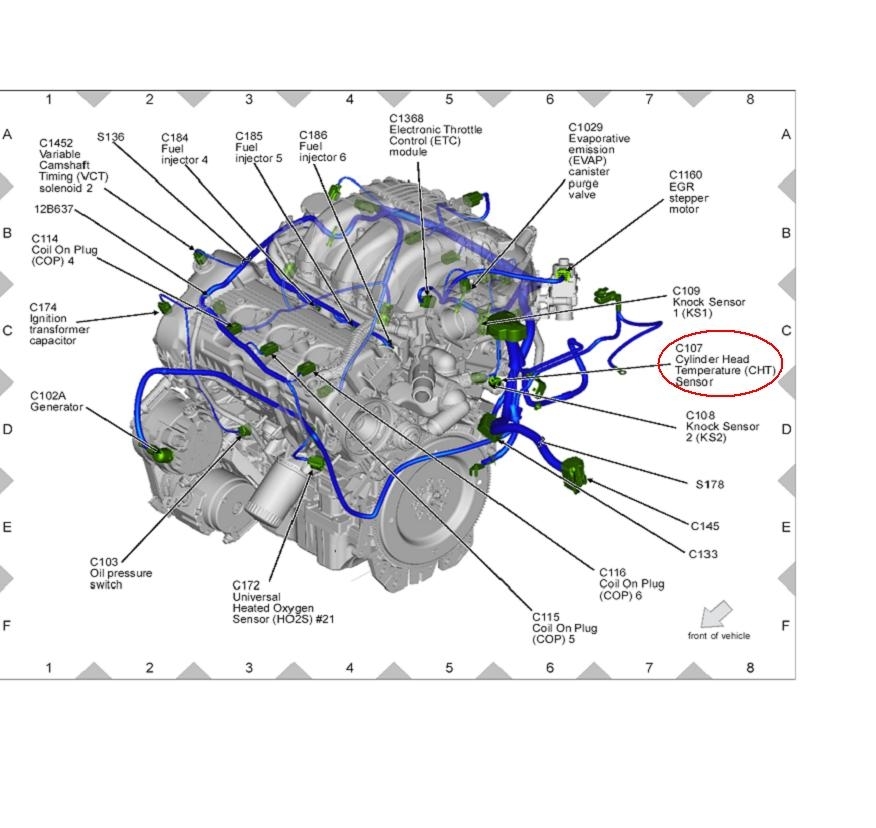
2015 Ford Fusion Overheating Sensor Location
Your car is too new for this, but if running the heater on "hot" and the fan on a higher speed brings the engine temperature down, corroded cooling fins on the radiator are a good suspect. A large butterfly collection in the radiator will do that too.
Another real good suspect is a leaking cylinder head gasket. The gases that get into the cooling system can pool under the thermostat and cause it to not open. Thermostats have to be hit with hot liquid. Hot air will not do it. A leaking head gasket is usually accompanied by the loss of coolant from the reservoir. There is a chemical test to check for this.
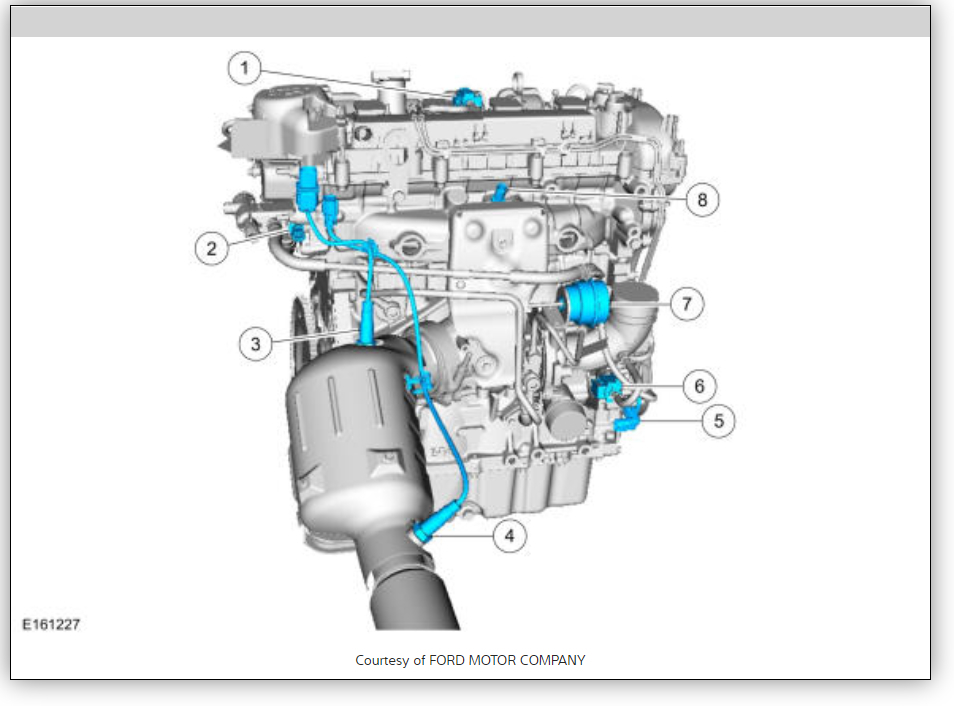
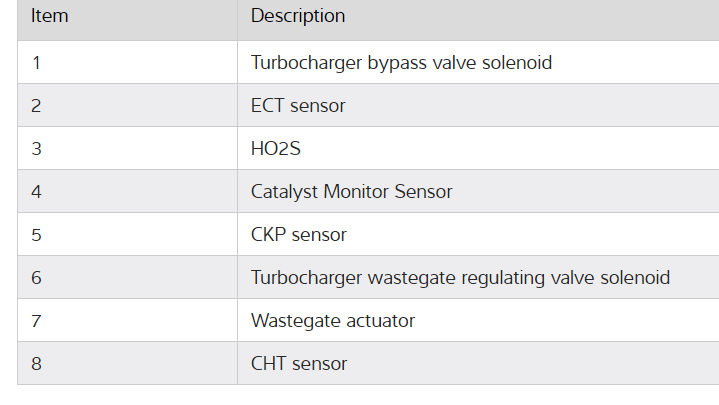
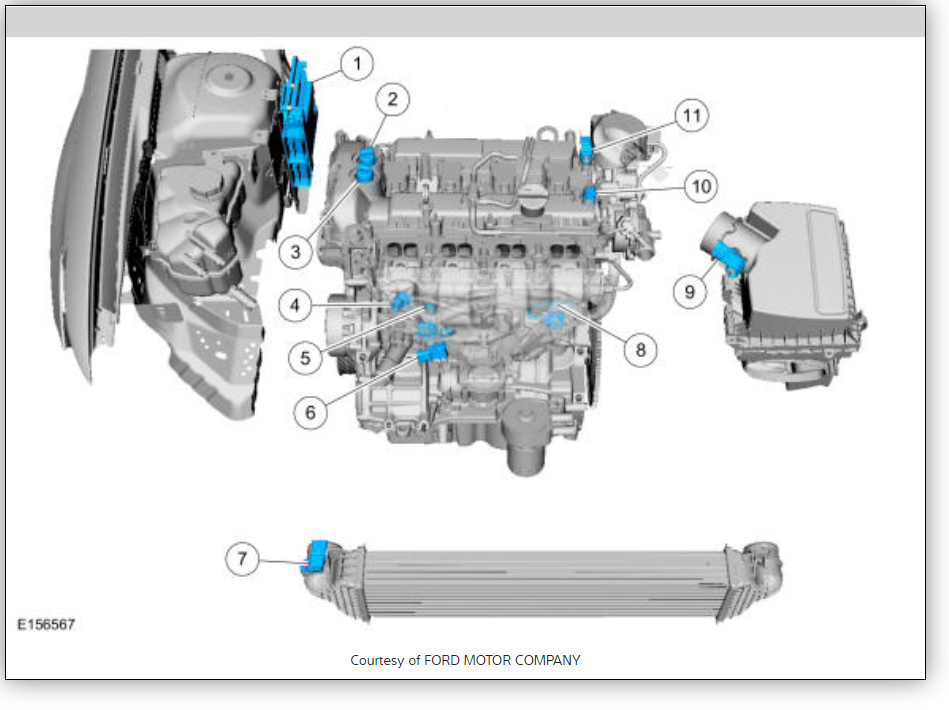
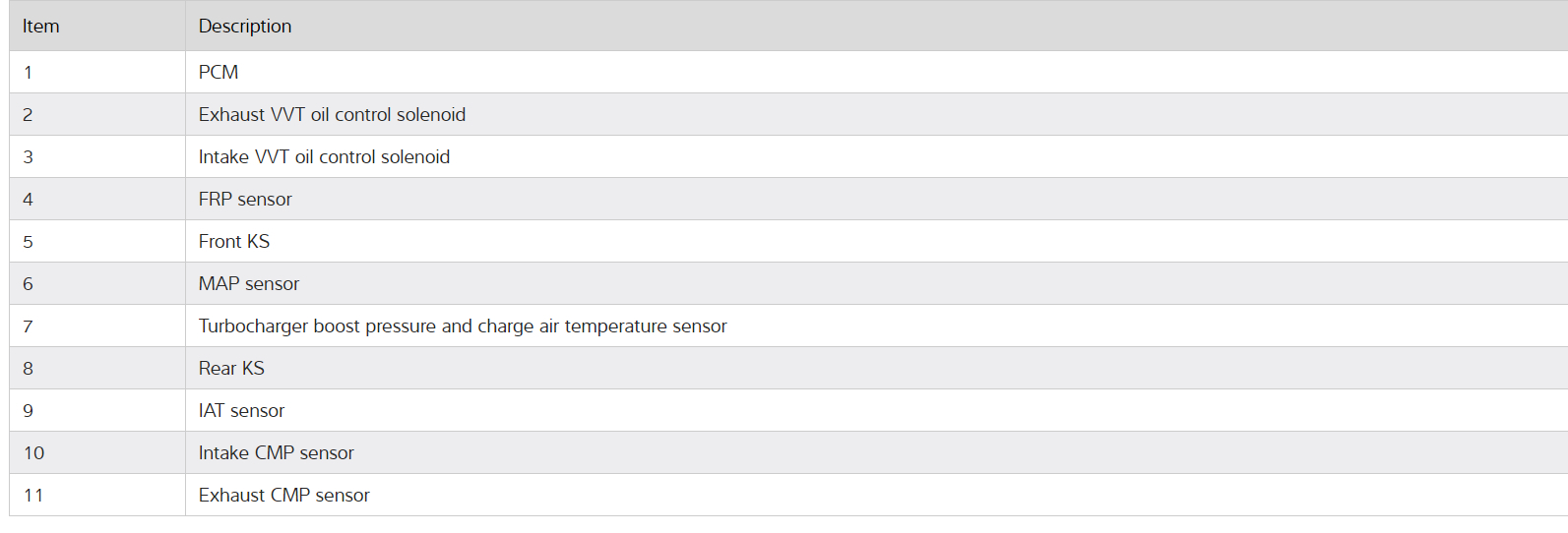
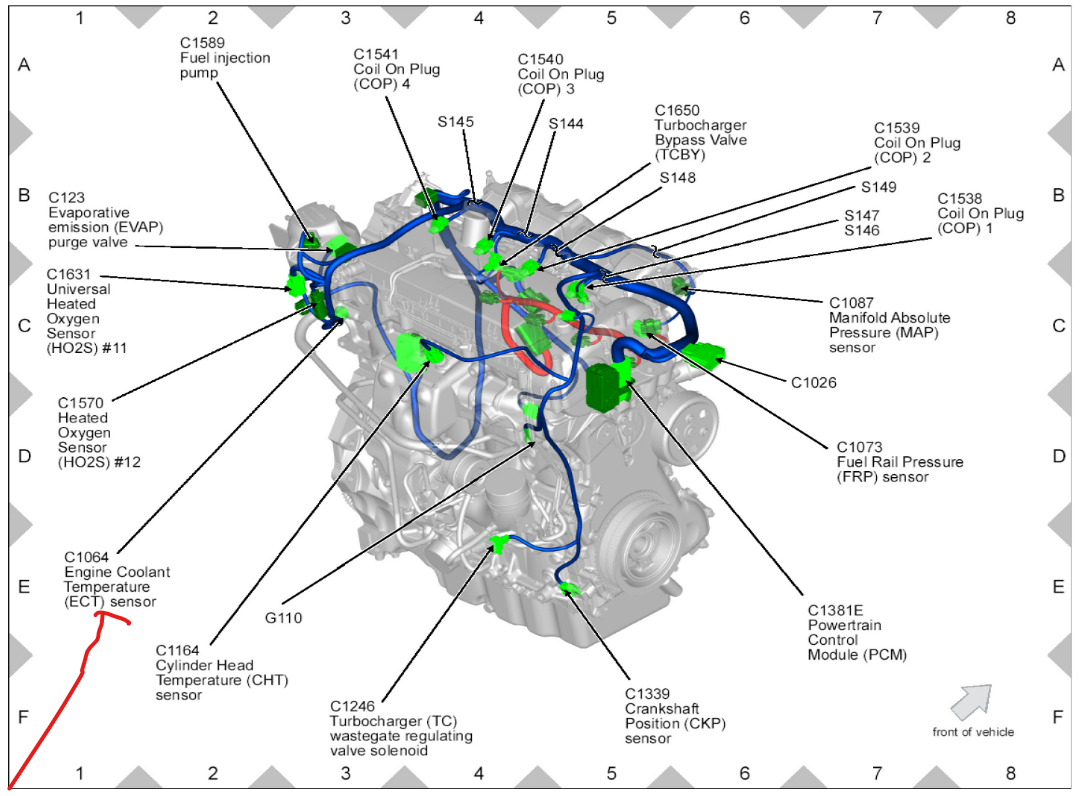
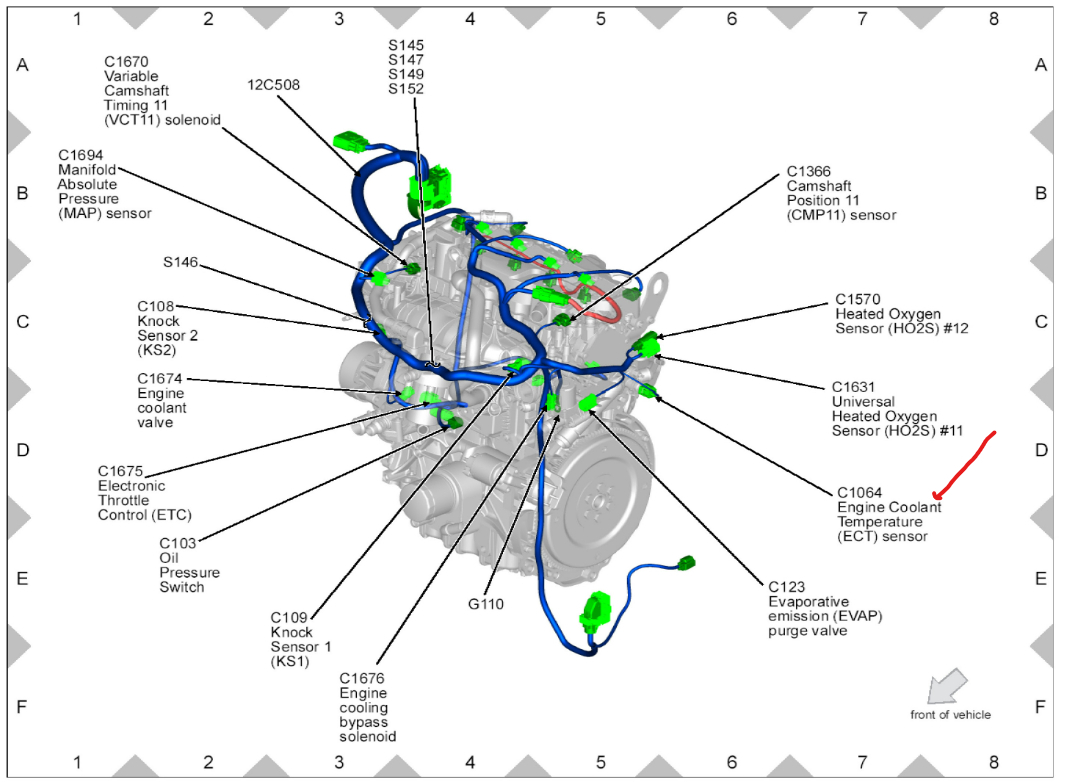
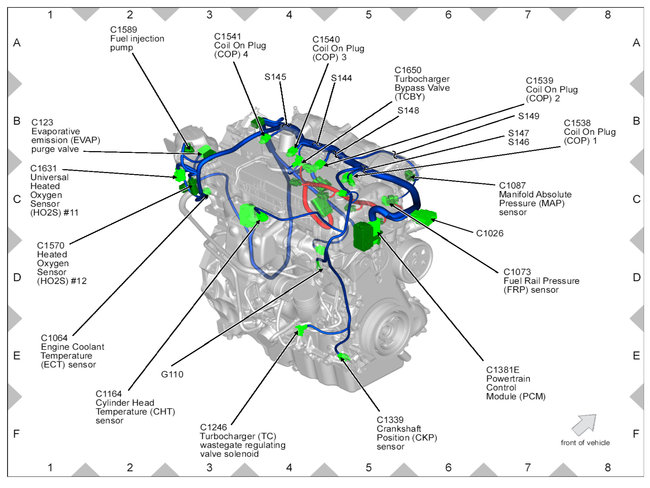
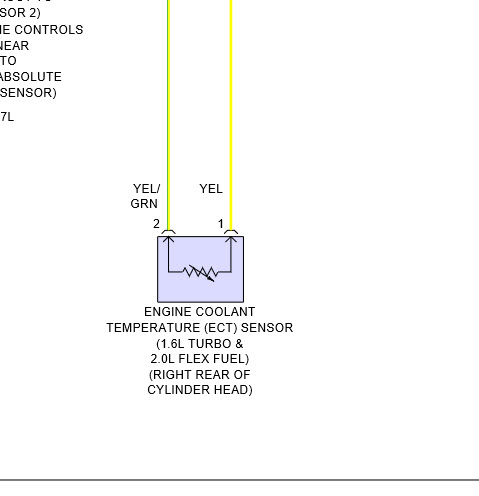
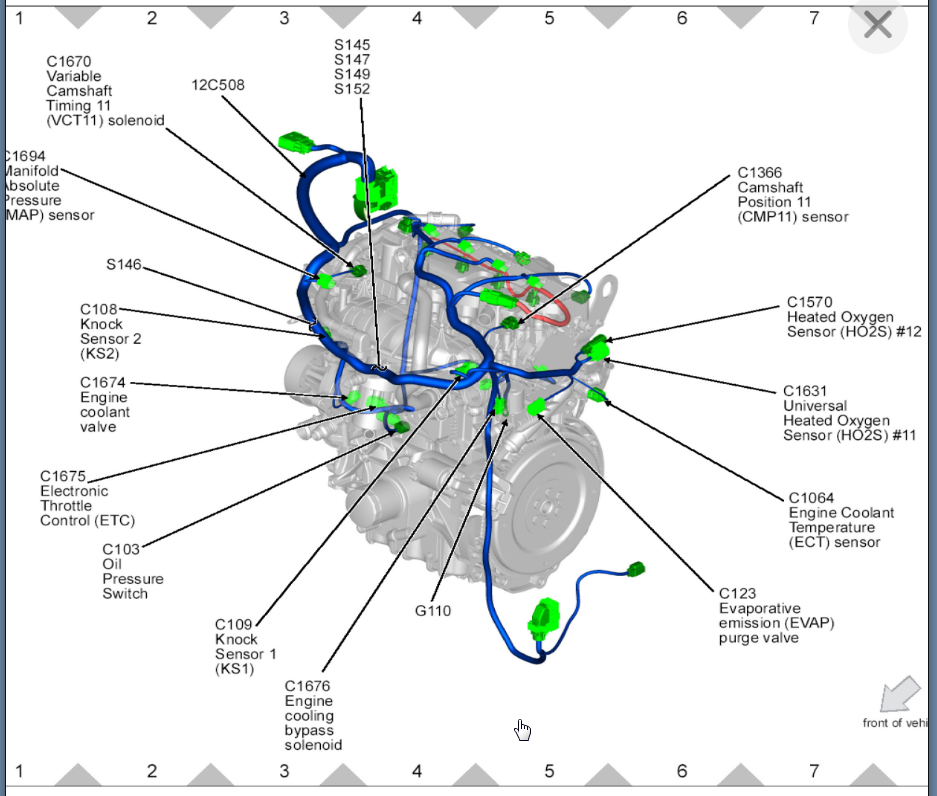
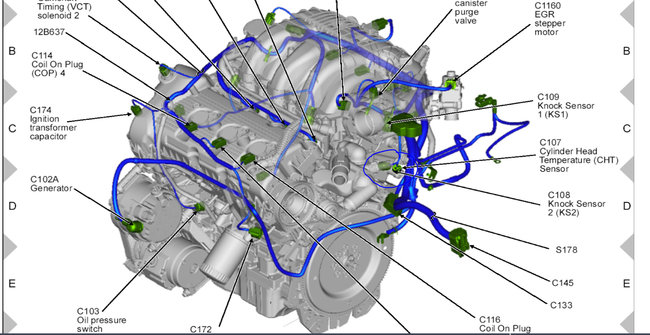
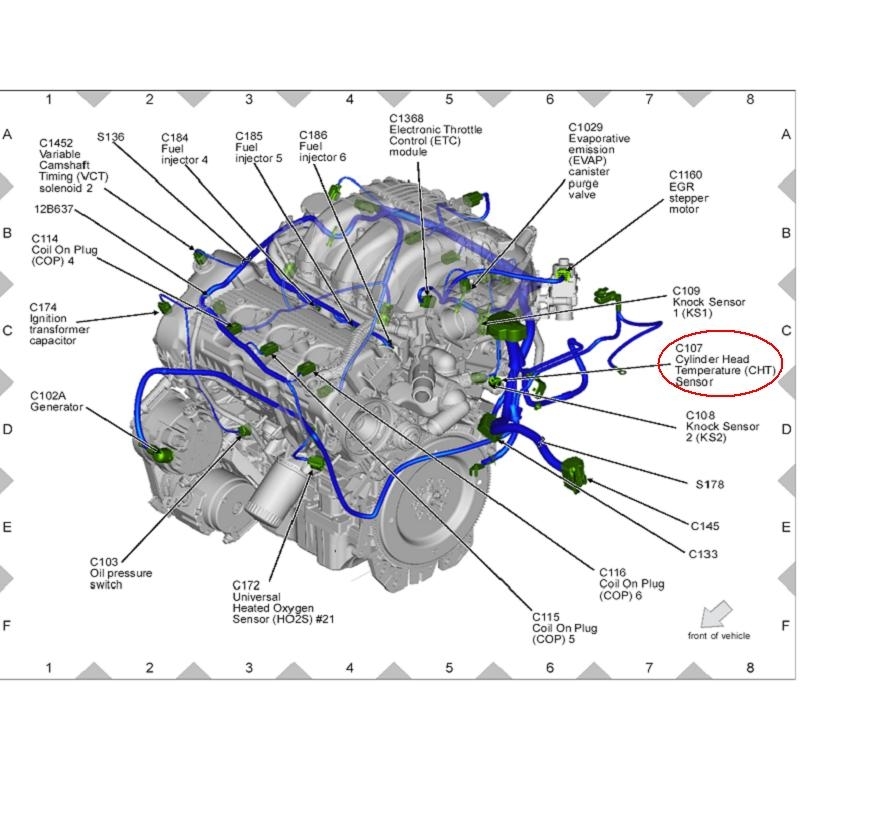
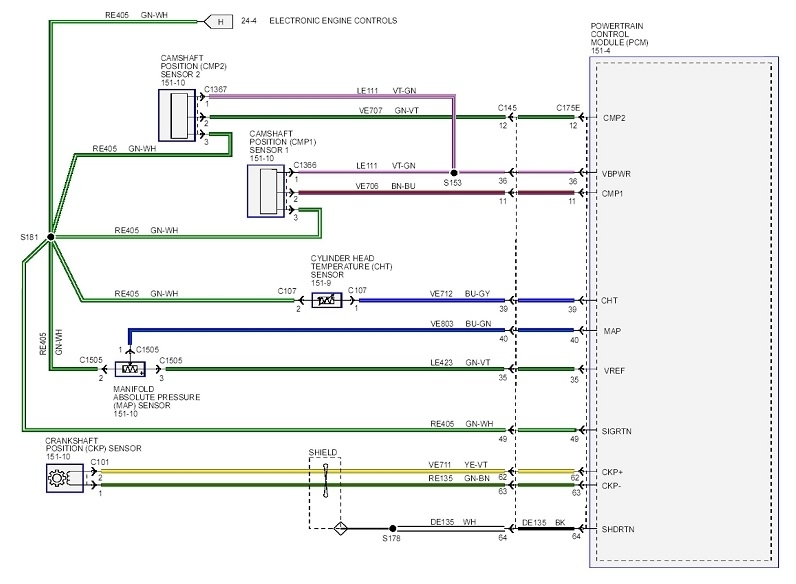
Here is the location of the engine temperature sensor and all the other sensors with a guide to help see whats going on if the sensor does not fix it.
https://www.2carpros.com/articles/engine-overheating-or-running-hot
Check out the diagrams (Below). Please let us know what happens. (ECT is the sensor you are looking for.)
Is coolant leaking past the threads? If so, there is no seal. Try using Teflon tape on the threads and then properly tighten.
Let me know if that helps.
Joe
Make sure the sensor is fully pushed in and that the clip is properly seated.
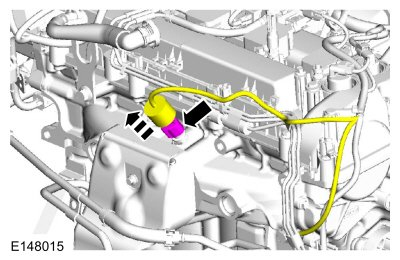
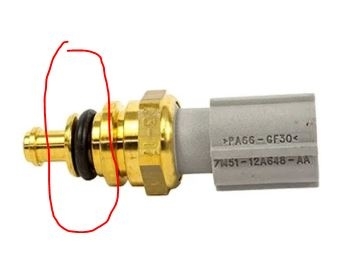
I attached a pic of the sensor and circled the o-ring that I mentioned. However, remember that the o-ring may not be the problem but instead, it is leaking through the sensor, into the electrical connector, and then out.
Let me know if this helps.
Joe
Let me know.
Joe
Take care and have a good weekend.
Joe
https://www.2carpros.com/articles/symptoms-of-an-overheating-engine
https://www.2carpros.com/articles/engine-overheating-or-running-hot
When does this overheat? Only when it idles or do you have to be driving?
Let me know this info and we can go from there. Thanks
Let me know and we can go from there. Thanks
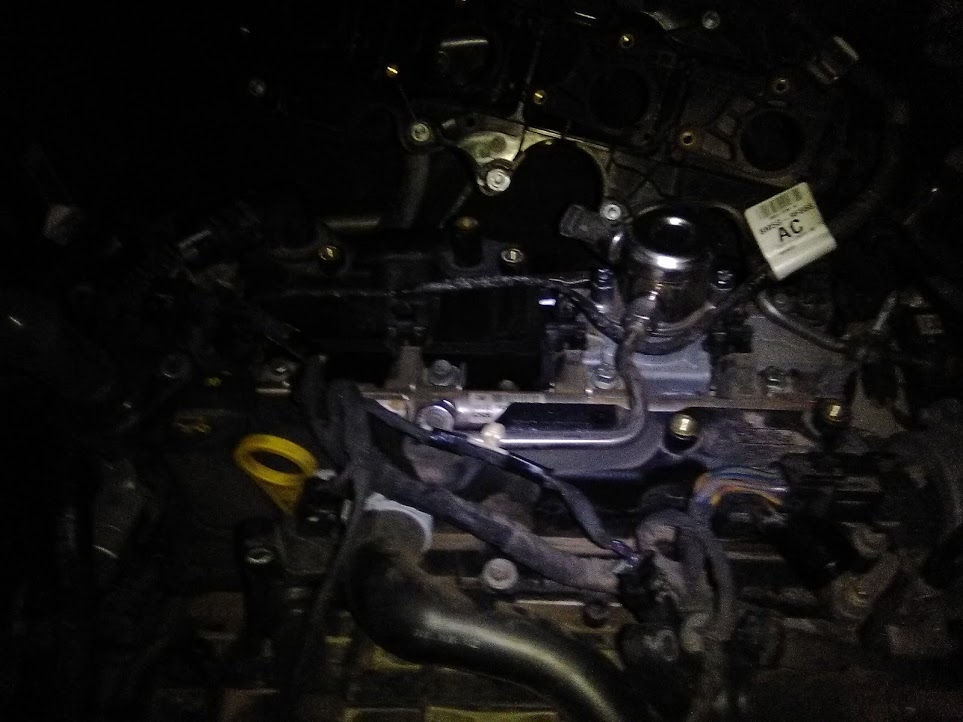
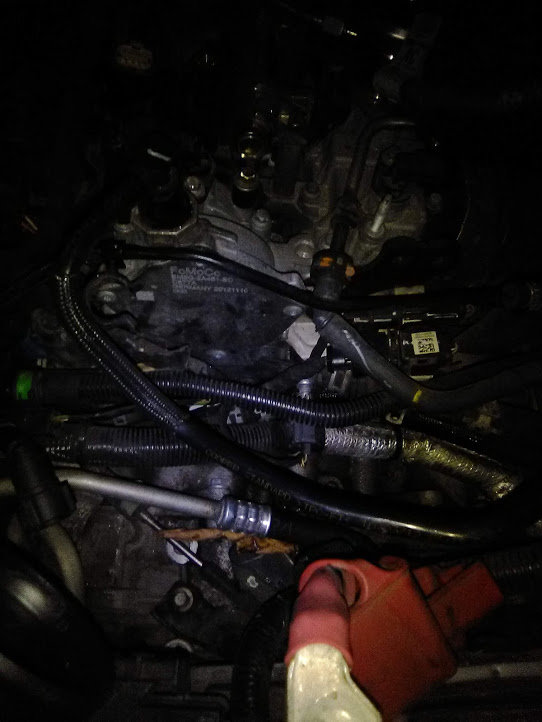
This vehicle has a cylinder head temperature sensor (CHT). The CHT is on the rear of the cylinder head. See the attached pic.
If there is a coolant temperature sensor that is different, it will be located near the thermostat housing.
Let me know if this helps.
Joe
I attached the location for you. It is by where the upper hose attaches to the thermostat housing.
https://www.2carpros.com/articles/symptoms-of-a-bad-coolant-temperature-sensor
https://www.2carpros.com/articles/coolant-temperature-sensor-cts-replacement
Why are you replacing it? Is there an issue?
Roy
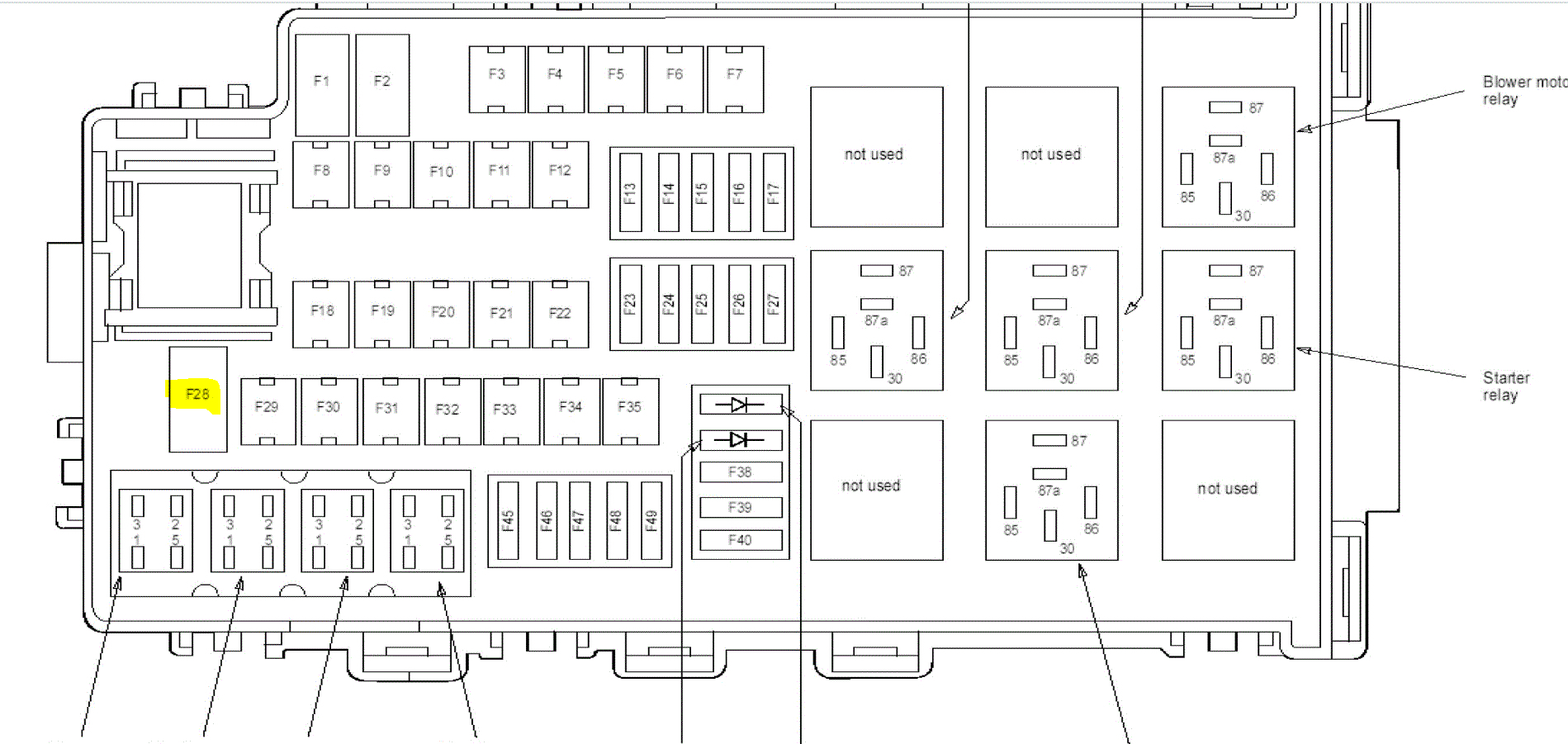
https://www.2carpros.com/articles/how-to-check-a-car-fuse
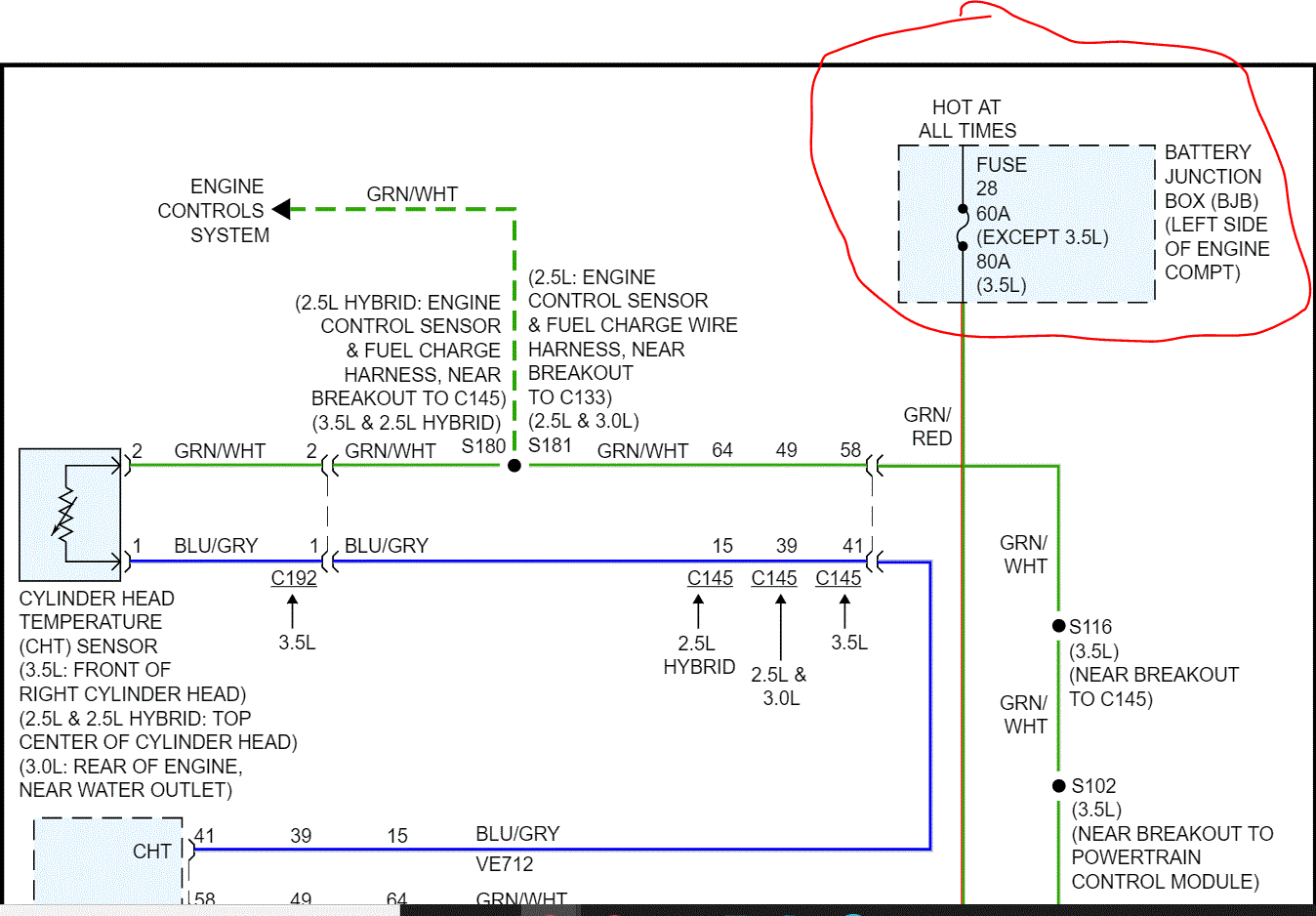
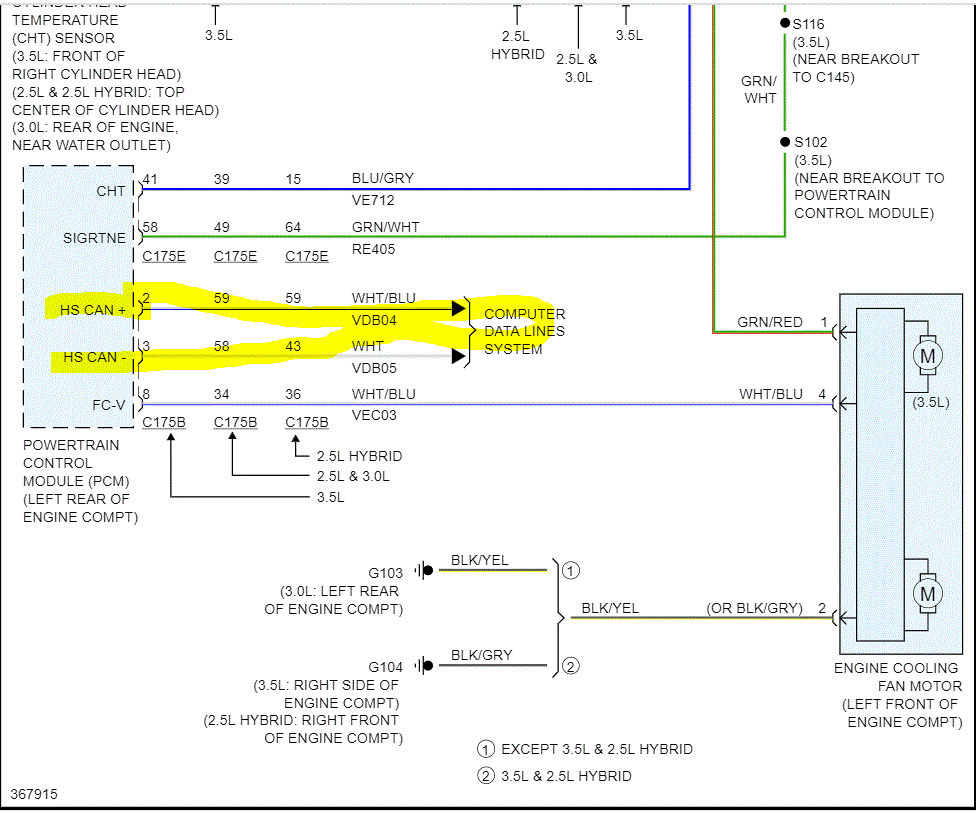
If the fuse checks good, I recommend having the CAN bus system scanned on the vehicle. CAN stands for computer area network. This network is how all the different modules and computer speak together. If you look at pic 3 below, you will see that I highlighted specific CAN wiring that is for the cooling system. Pic 3 shows the fuse and portion of the wiring diagram.
Here is a video of how to scan the CAN bus system and why it is becoming more necessary to do that a traditional OBD2 scan:
https://youtu.be/InIlnsjOVFA
Now, if the CHT sensor is bad, it can be the cause of the fan not to run. Also, the fan motors could be bad. It should turn on when you turn the A/C on, so check that as well. Or, it could be a break down in communication in the CAN bus network.
Lets start with the fuse first. Check that and see if it turns on with the /AC running. Also, remove the fan fuse and see if you can turn the cooling fan by hand and if it turns smoothly or seems to drag or feel rough. Here is a link explaining what to check on the fan. The link describes two different types of fans. The second type (electric) is what you have.
The bottom line is if the fuse is good and the fan turns freely, you really need to have the CAN bus system scanned for codes and error notices. That is going to get to the bottom of the problem.
Let me know what you find or if you have other questions.
Take care,
Joe
No problem. It was just a different way to test the fan motor. Let me know what you find with the fan and temperature sensor.
Take care,
Joe
Just a quick test for the circuit.
https://www.2carpros.com/articles/how-to-check-wiring
Roy
Before you get all wrapped around the axle looking for other causes, have your mechanic perform a chemical test at the radiator for a leaking cylinder head gasket. If combustion gases sneak into the cooling system, they can pool under the thermostat causing it to not open. Thermostats have to be hit with hot liquid to open. Hot air will not do it. Very often when a cylinder head gasket just starts leaking, it only does so under higher engine speeds and/or higher load. That agrees with your observation of only overheating at certain times.
You can do this test yourself if you borrow the tester from an auto parts store that rents or borrows tools, but they will make you buy your own bottle of special fluid. That is because it is rendered ineffective if it freezes or if it becomes contaminated with antifreeze. They do not want to risk borrowing it to you with contaminated fluid. That is why they made the last person buy their own fluid. It usually costs less to just let your mechanic do the test. It only takes a few minutes. Also sensor may be faulty
Suggested Repair
Identify the engine first, then locate the cylinder head temperature sensor at the rear of the head or the coolant temperature sensor near the thermostat housing. If overheating continues, verify that the radiator fans and fuse work, and have a chemical test performed for a leaking head gasket.
Conversation Summary
The owner of a 2015 Ford Fusion reported the temperature gauge climbing after a thermostat replacement and asked where to find the coolant temperature sensor. Experts explained that the sensor location depends on the engine and that some engines use a cylinder head temperature sensor instead. They advised checking cooling-fan operation and testing for combustion gases from a leaking head gasket before assuming the sensor is the cause. Later replies also covered a clip-retained sensor with an O-ring and intermittent fan operation.