Cranking but not starting

2003 FORD RANGER
171,000 MILES • 3.0L • V6 • 2WD • AUTOMATIC
Avatar
KC1284
  • MEMBER
  • 1 POST
I recently bought this truck. The previous owner said it hasn't run in months and needs to be looked at. I tried starting it and it's a dry crank with no pops even attempting to start. The exhaust smells like nothing. I replaced the ignition coil pack and now it pops and the exhaust smells heavily of gas. The truck has no codes or check engine light. What should I look at next? Is there a reason why the air fuel mixture is so off? Could it be the crank or cam sensor?
Jan 9, 2022 at 1:55 AM

Advertisement
Avatar
JACOBANDNICKOLAS
  • Experienced Mechanic
  • 110,240 POSTS
Hi,

There are a few reasons that can cause a rich fuel mixture. First, high fuel pressure can be the cause. Also, a faulty engine coolant temperature sensor can also cause it.

Since you are hearing a pop (backfire), it sounds like you are getting spark. However, the plugs could be fouled if they are wet with gas.

Here is what I suggest: Remove a couple of the spark plugs and see if they are wet with fuel. If they are, then I want you to check for ignition spark to the plugs. Here is a link that explains how that is done:

https://www.2carpros.com/articles/how-to-test-an-ignition-system

If there is spark, I would next check the fuel pressure to confirm it isn't too high due to a faulty pressure regulator. Here is a link that shows in general how it's done:

https://www.2carpros.com/articles/how-to-check-fuel-system-pressure-and-regulator

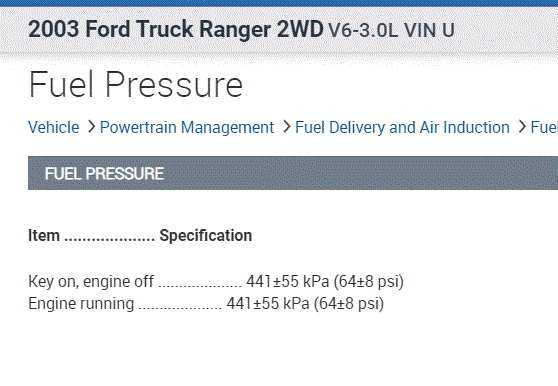
Let me know what you find. Also, I attached the fuel pressure specifications below. Let me know what they are.

Take care,

Joe

See pic below.
Jan 9, 2022 at 12:40 PM
Join 2CarPros for free, one of the most advanced car repair communities on the internet. From first-time drivers to seasoned mechanics, everyone is welcome to reply, share details, and get better answers. You can add a temporary image or video first; uploads are limited to 20 MB.
Ask a Free Question
Repair Safety Notice: This information is for general instructional purposes only. Vehicle repair can be dangerous. Verify all information, follow manufacturer service procedures, use proper tools and safety equipment, and consult a qualified repair shop when needed.