2018 Ram 1500 P062A Fuel Pressure Drop
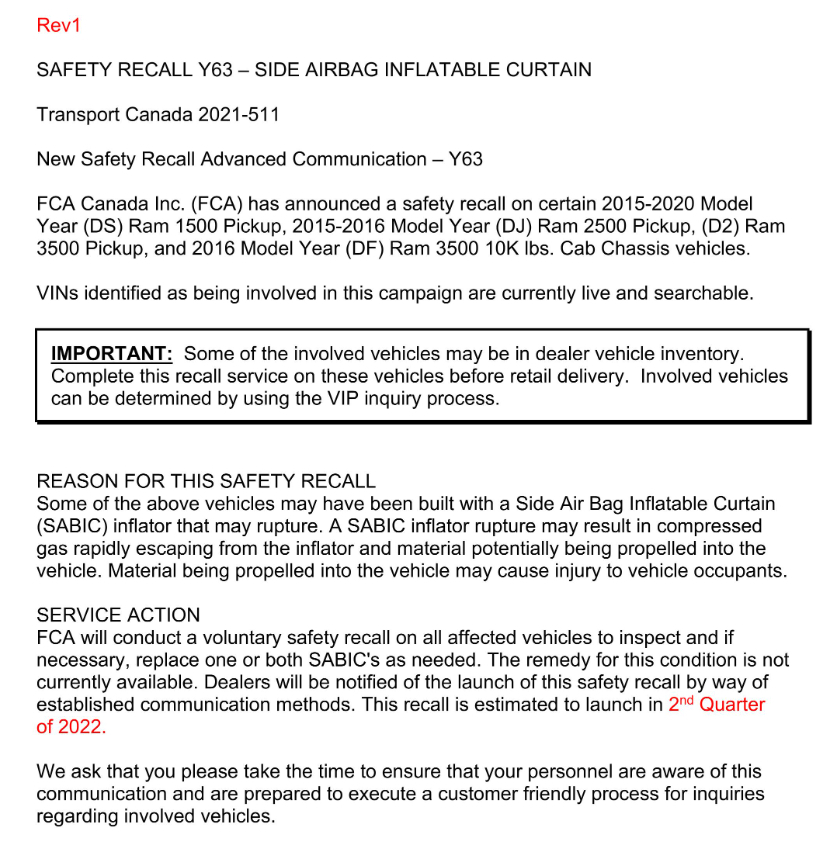
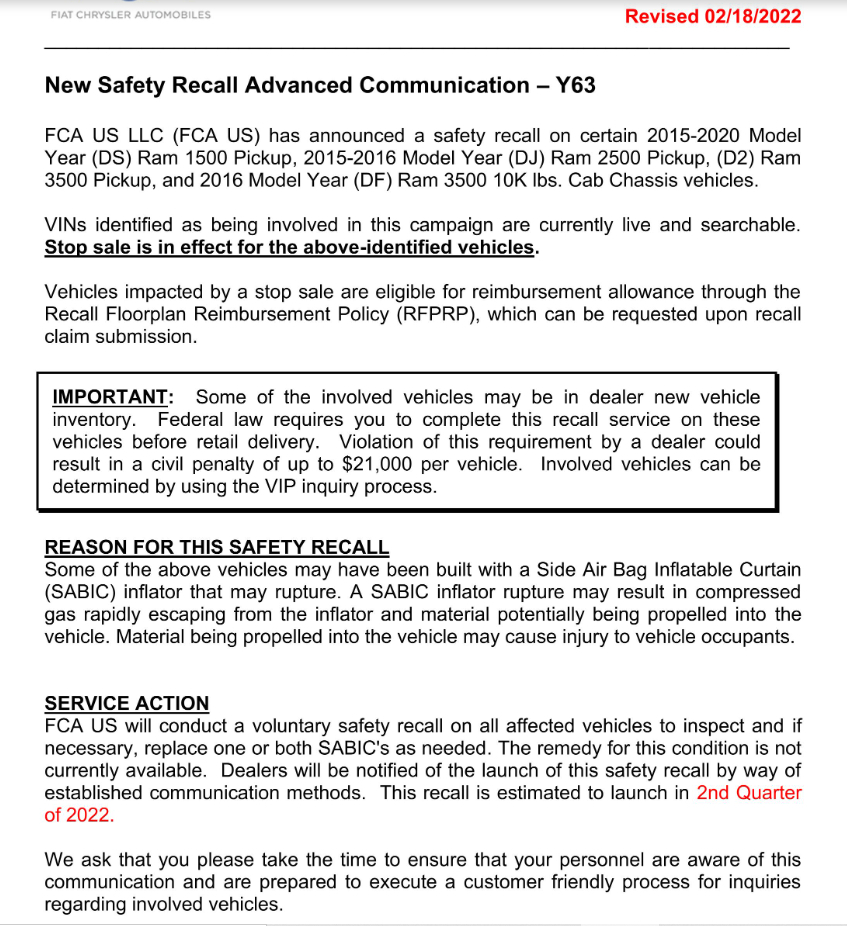
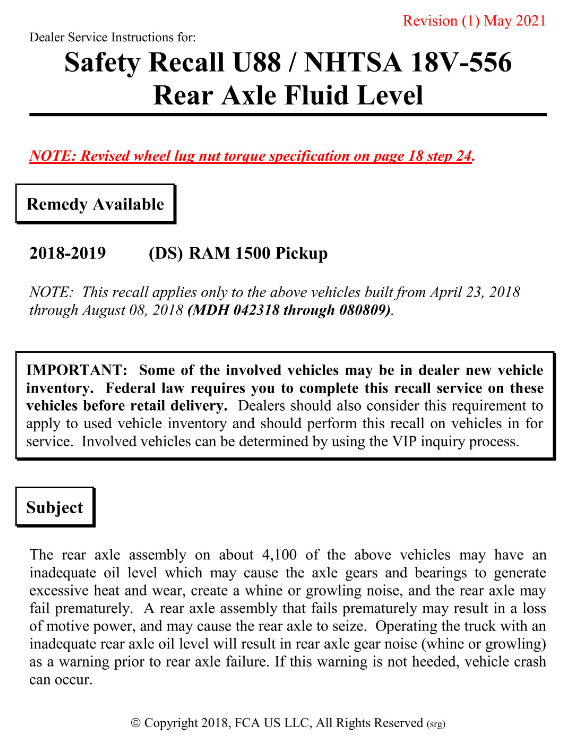
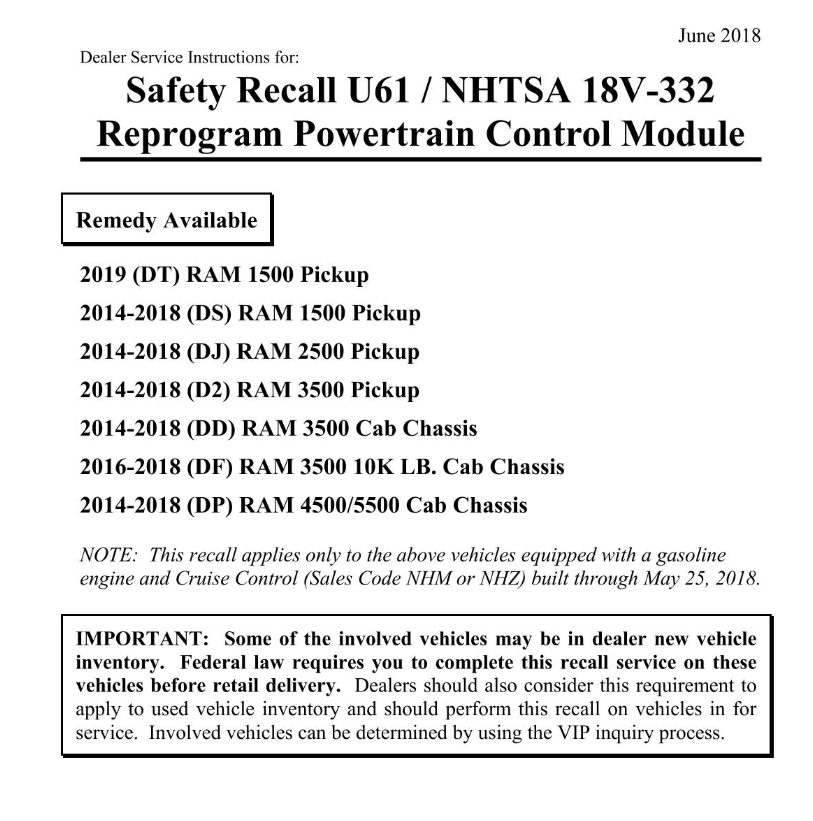
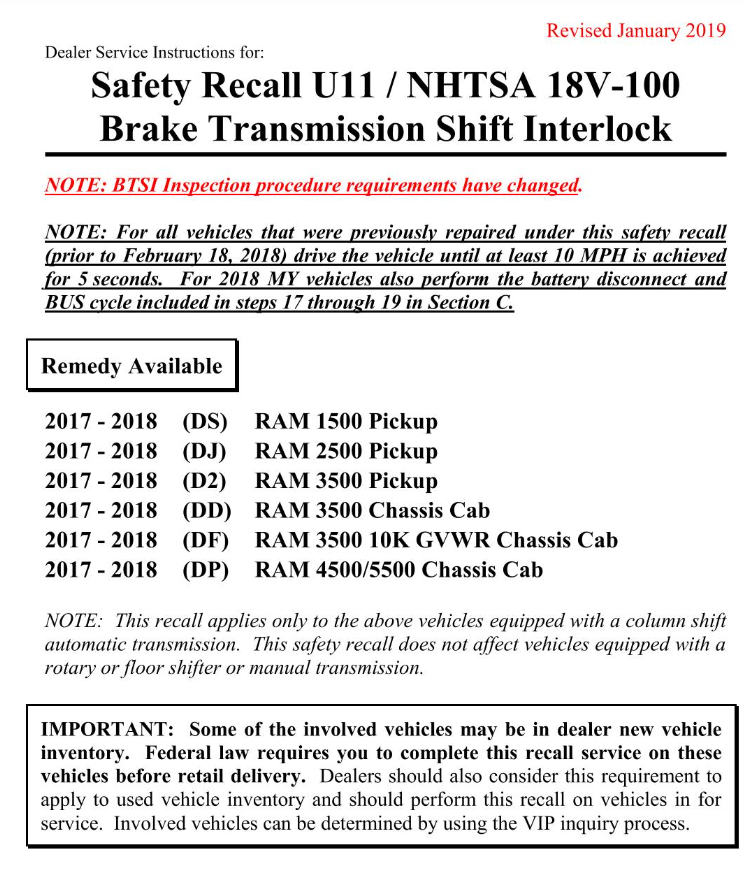
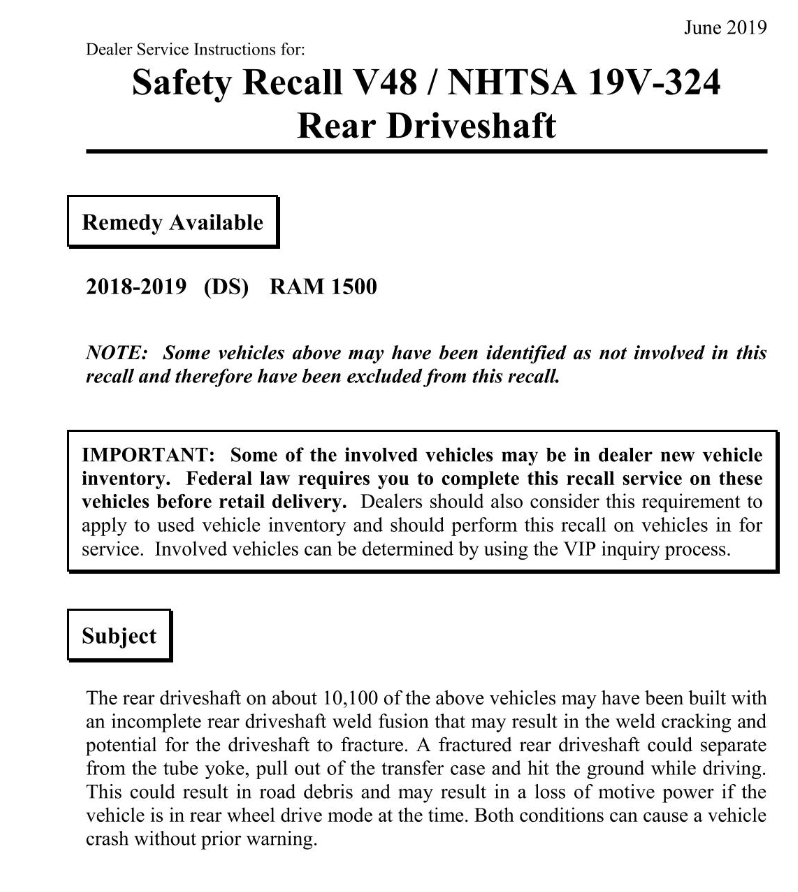
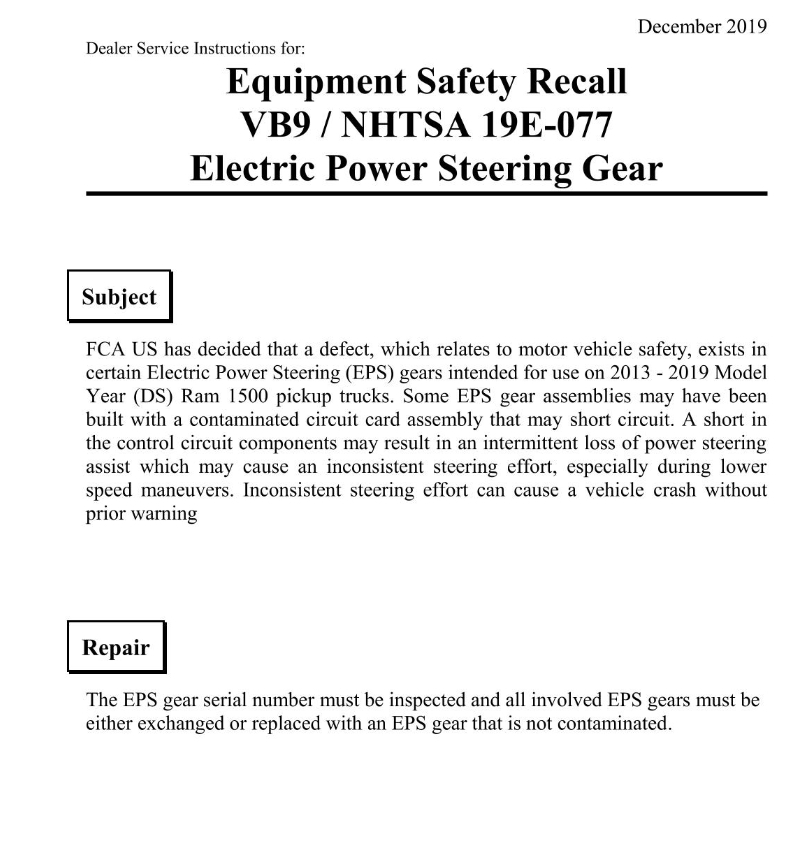
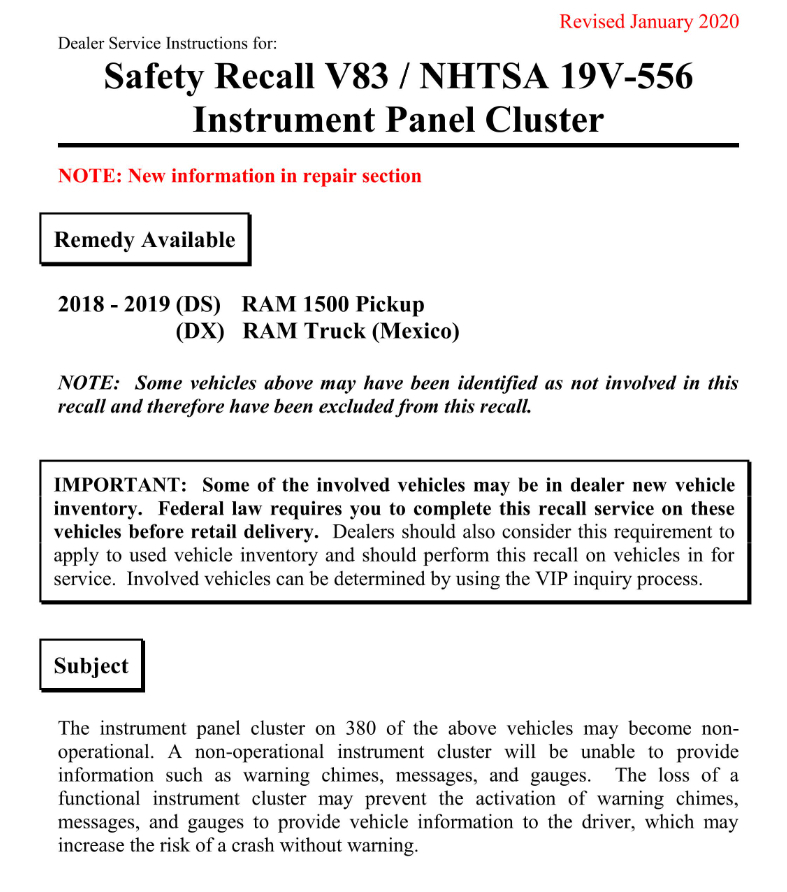
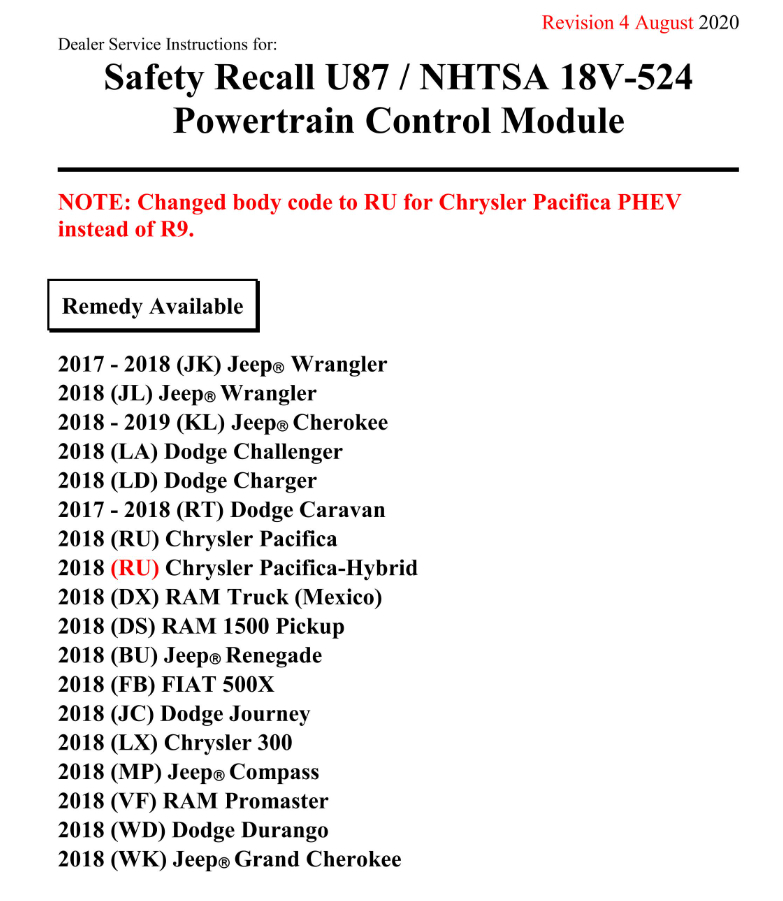
Are you located in Canada? I'm only asking because there are a lot of Safety Recalls for vehicles built in Canada, there are a bunch for your vehicle anyway, but since there's so many I will only post the ones having to do with safety issues.
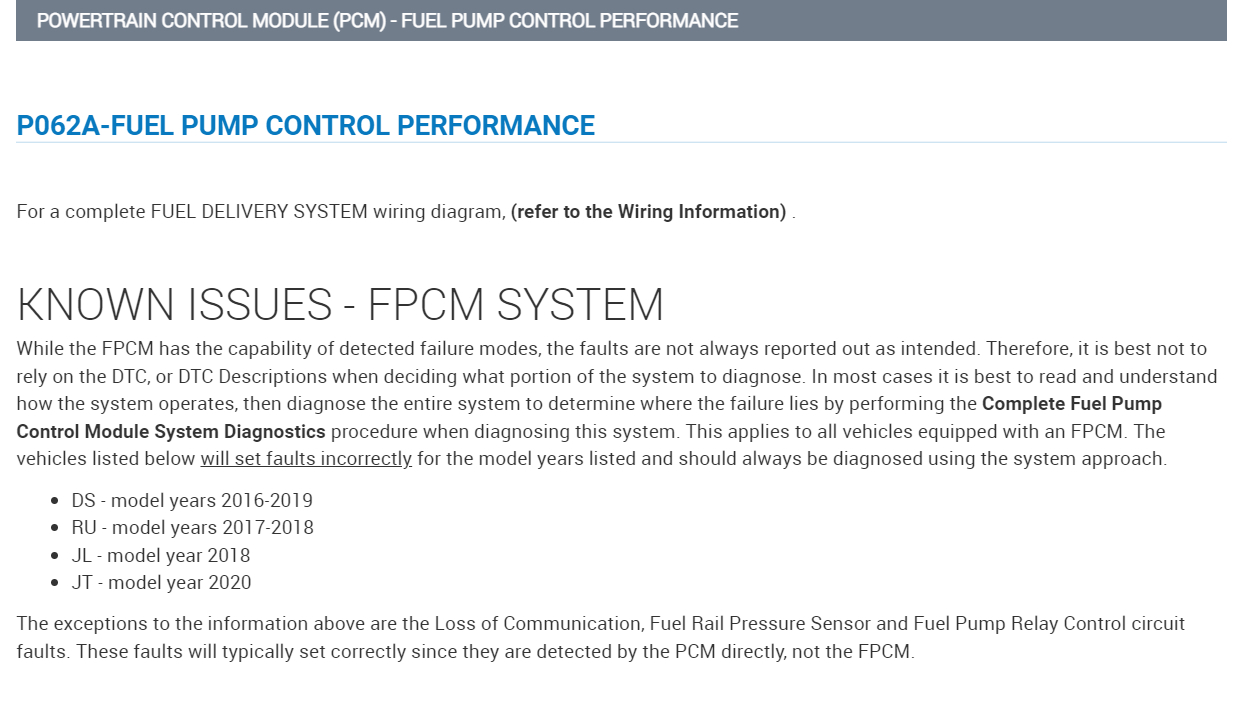
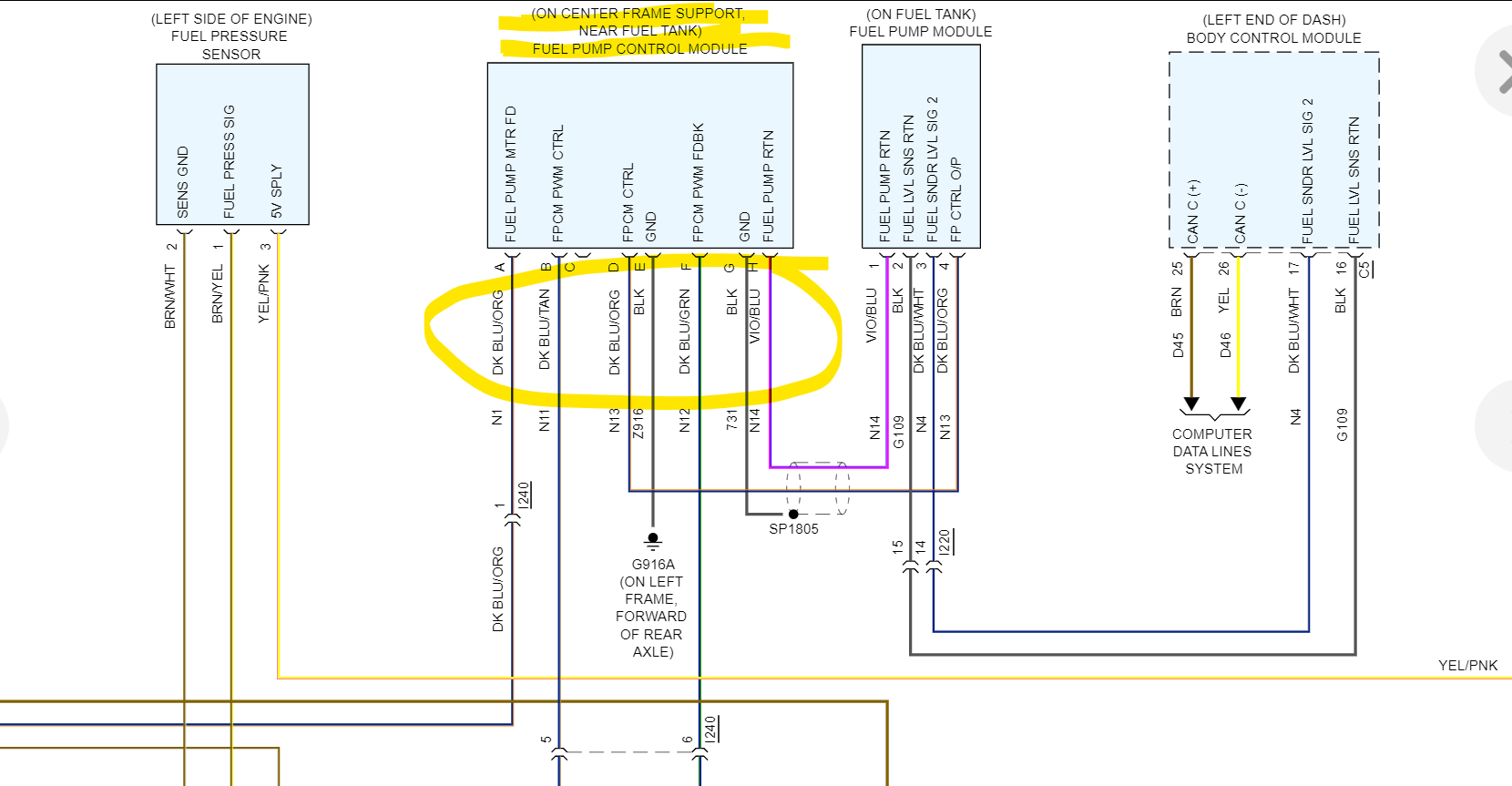
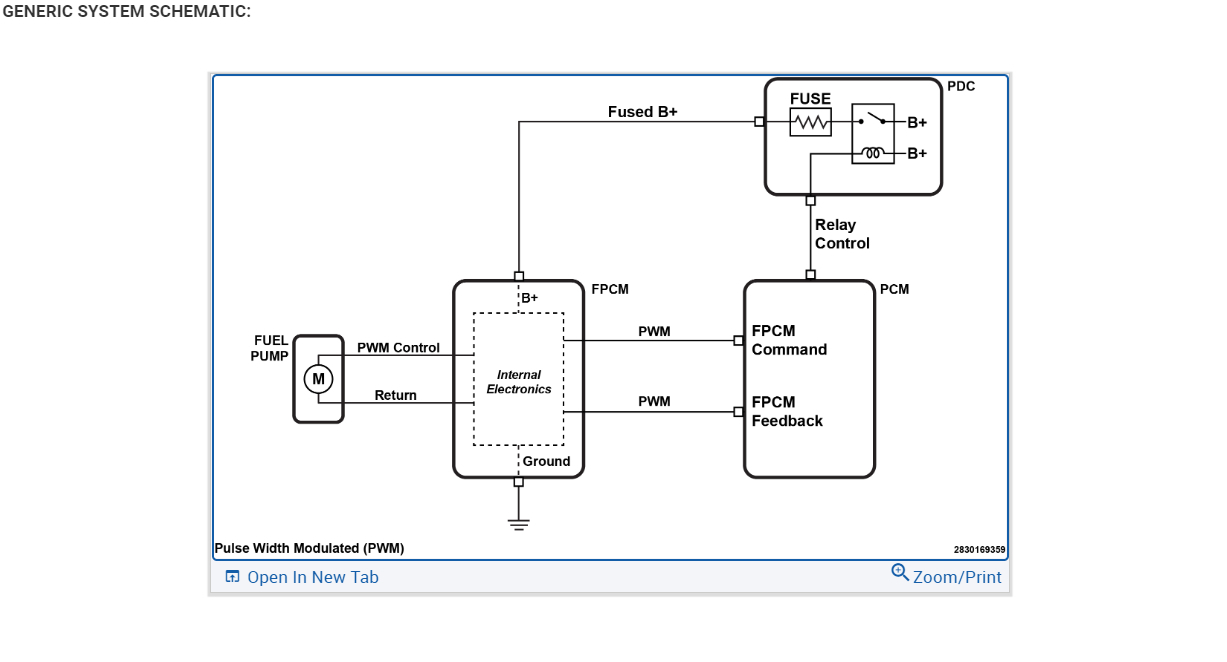
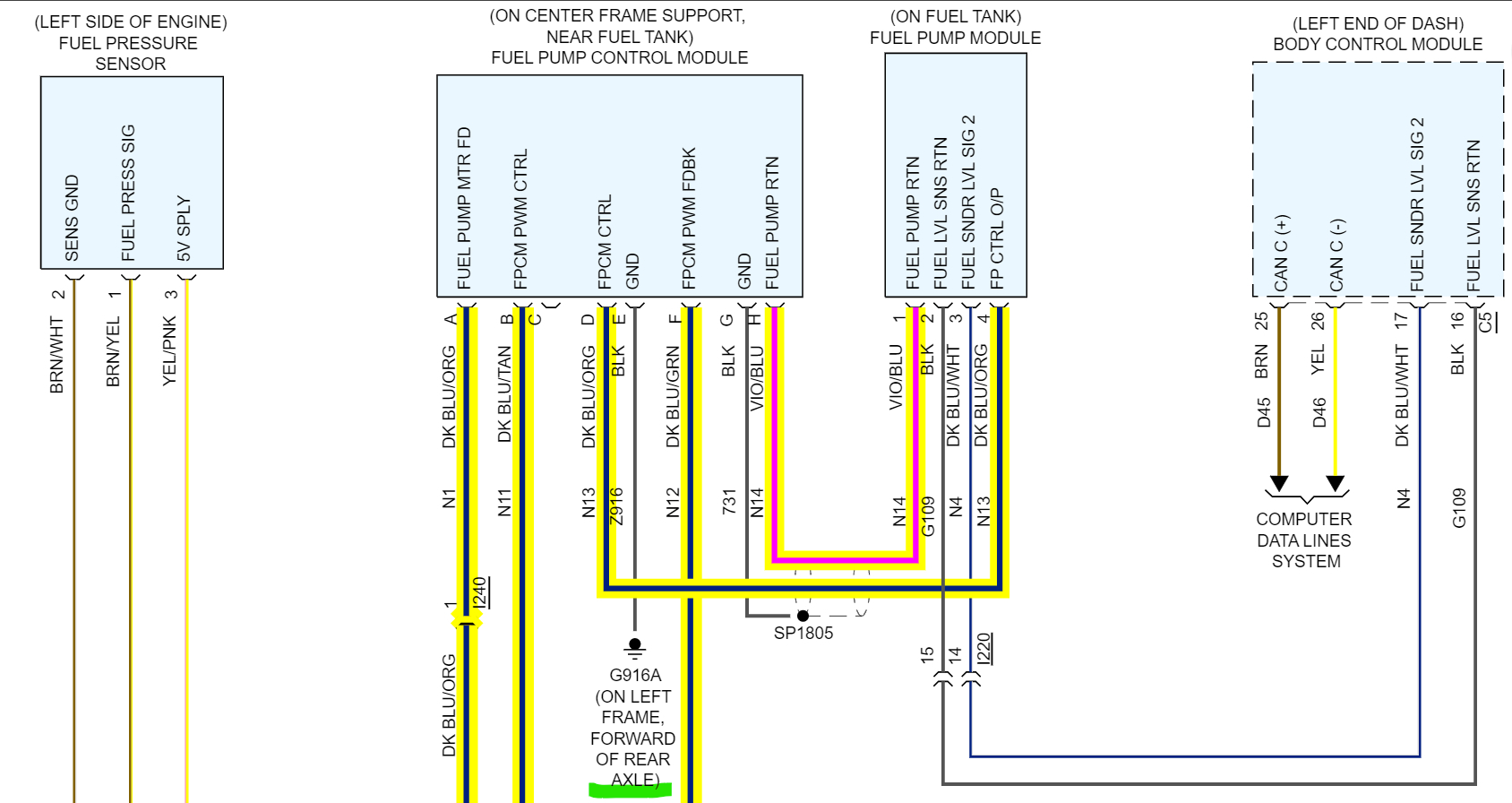
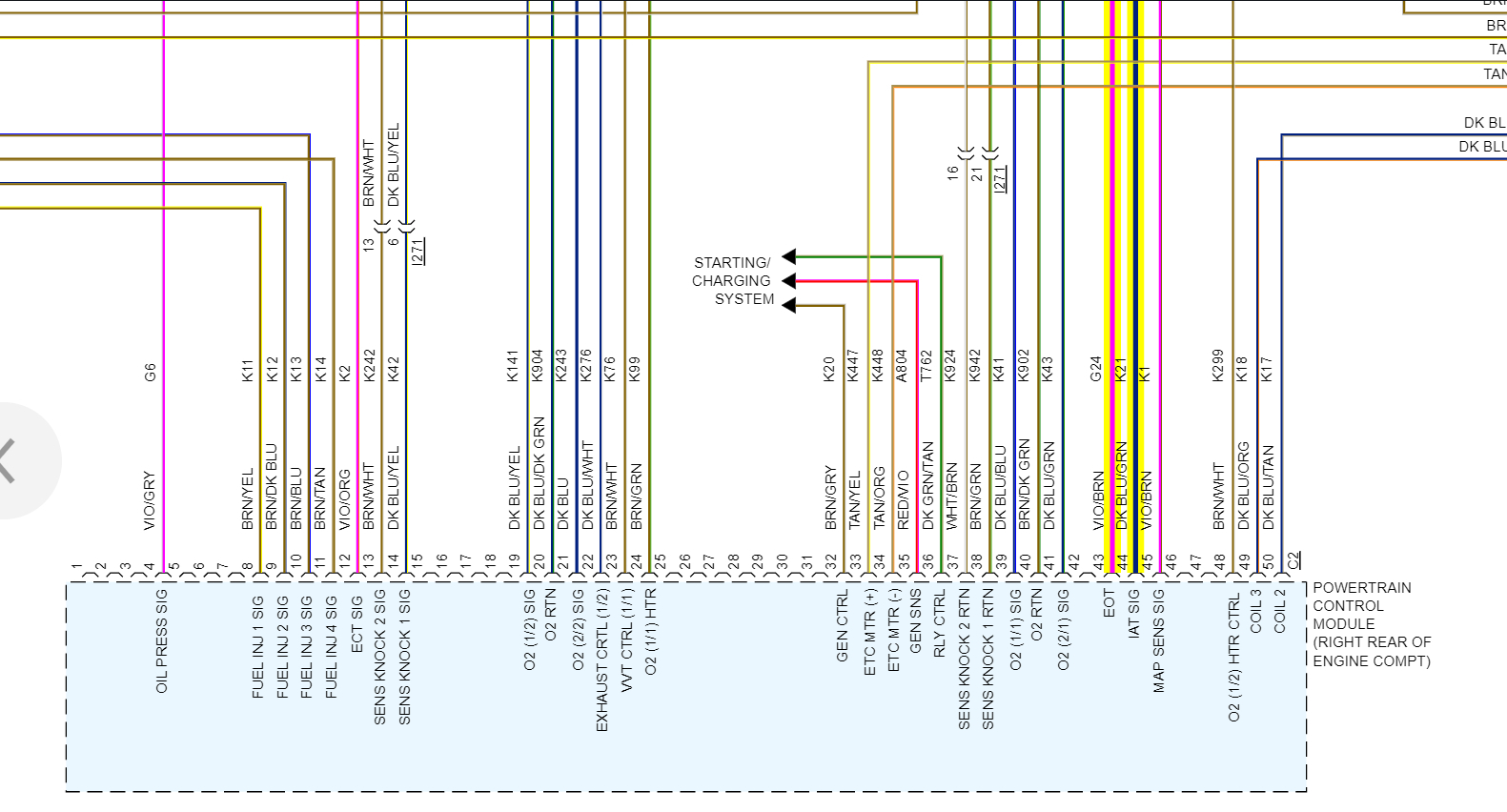
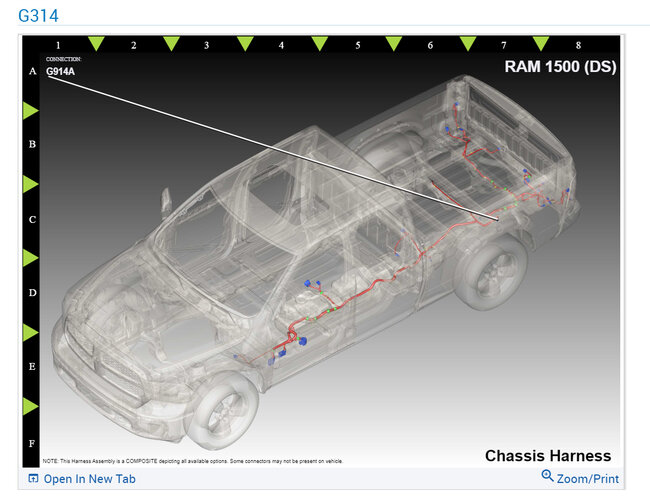
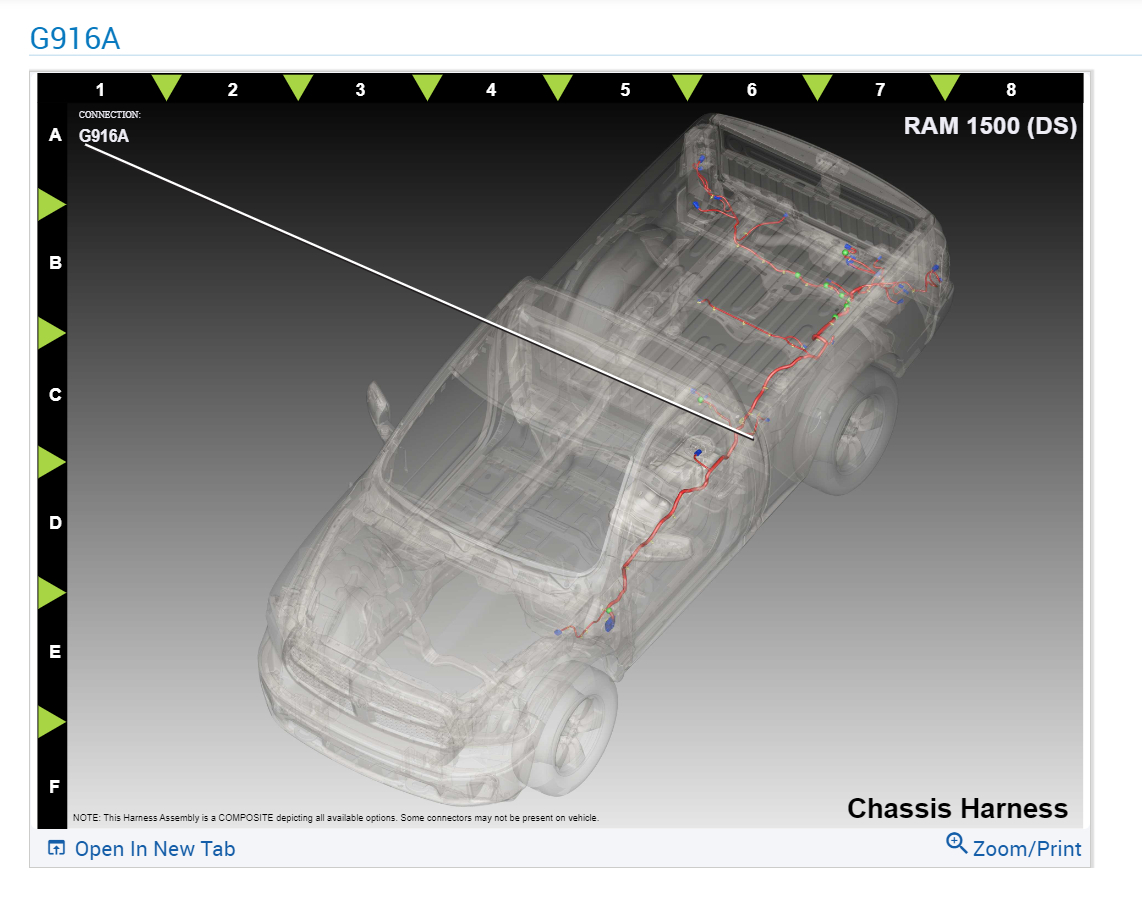
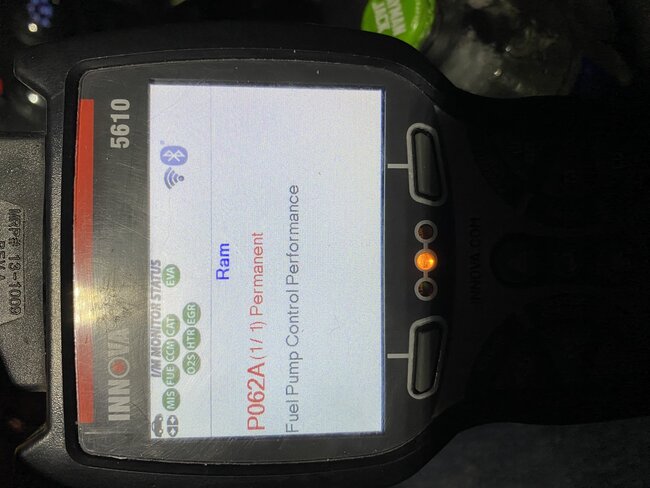
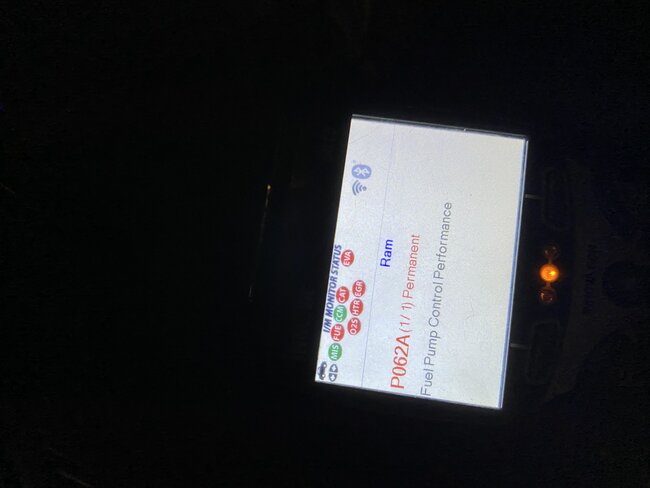
Below is the code P062A and the wiring to the Fuel pump module, it will be located in the rear of the truck, near the fuel tank but on the frame rail or above the spare tire.
https://www.2carpros.com/articles/how-to-check-wiring
But I am including below the necessary information you'll need, having to do with the P062A code. It sounds like the shop or dealership did not want to pay for diagnostic time and made excuses to not repair the vehicle.
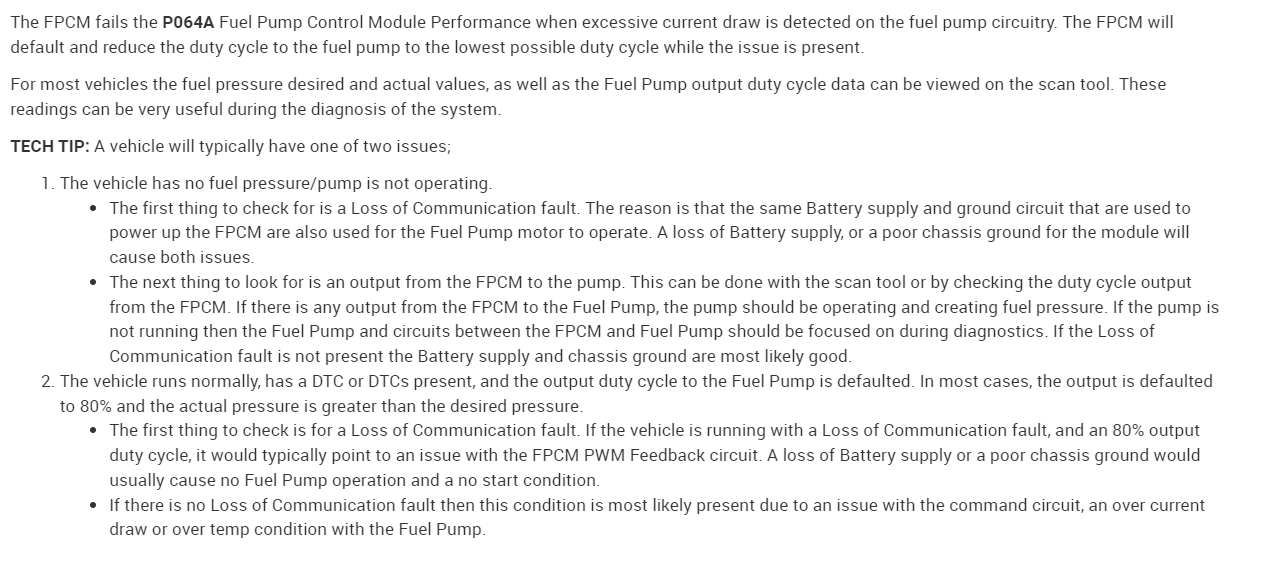
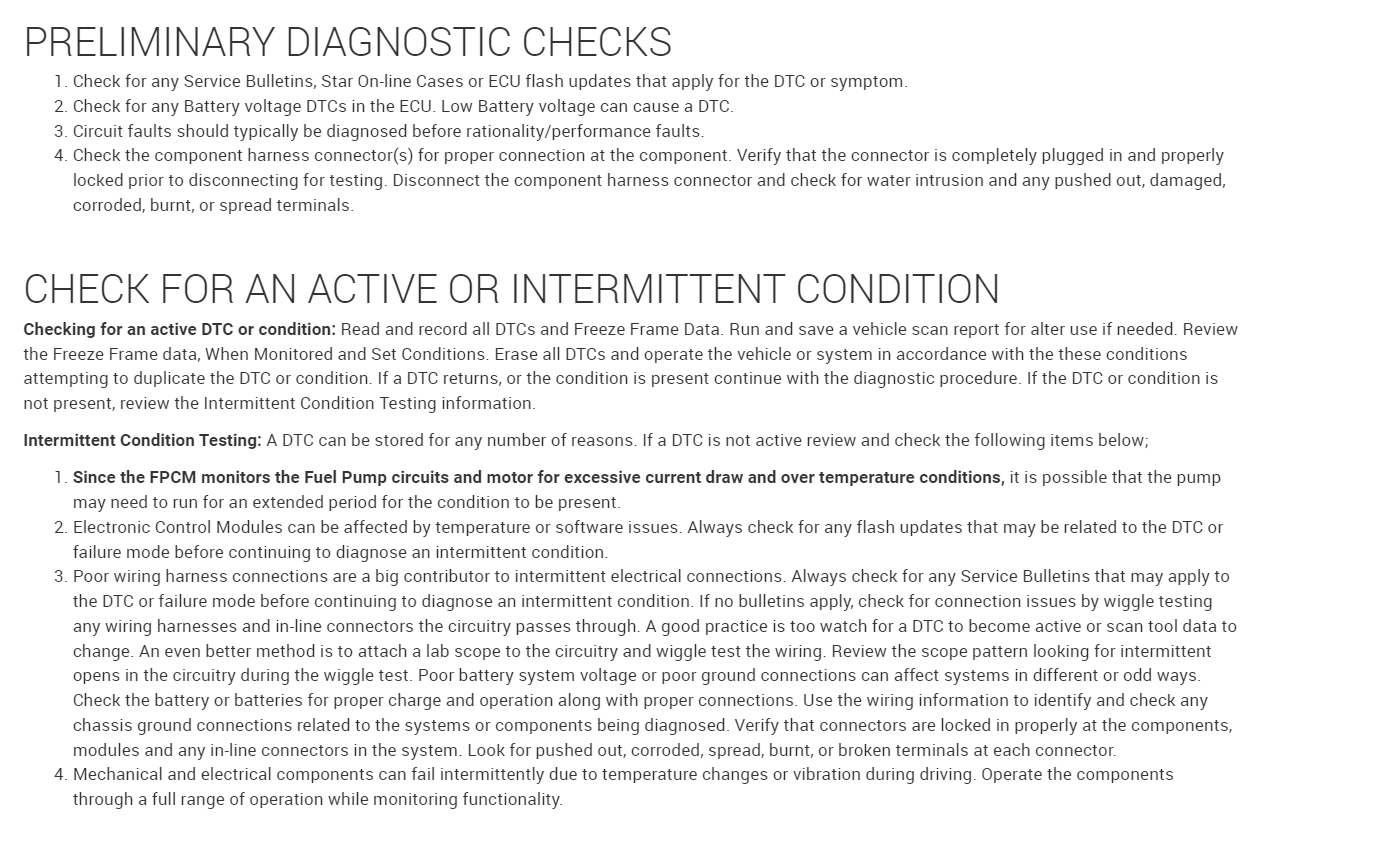
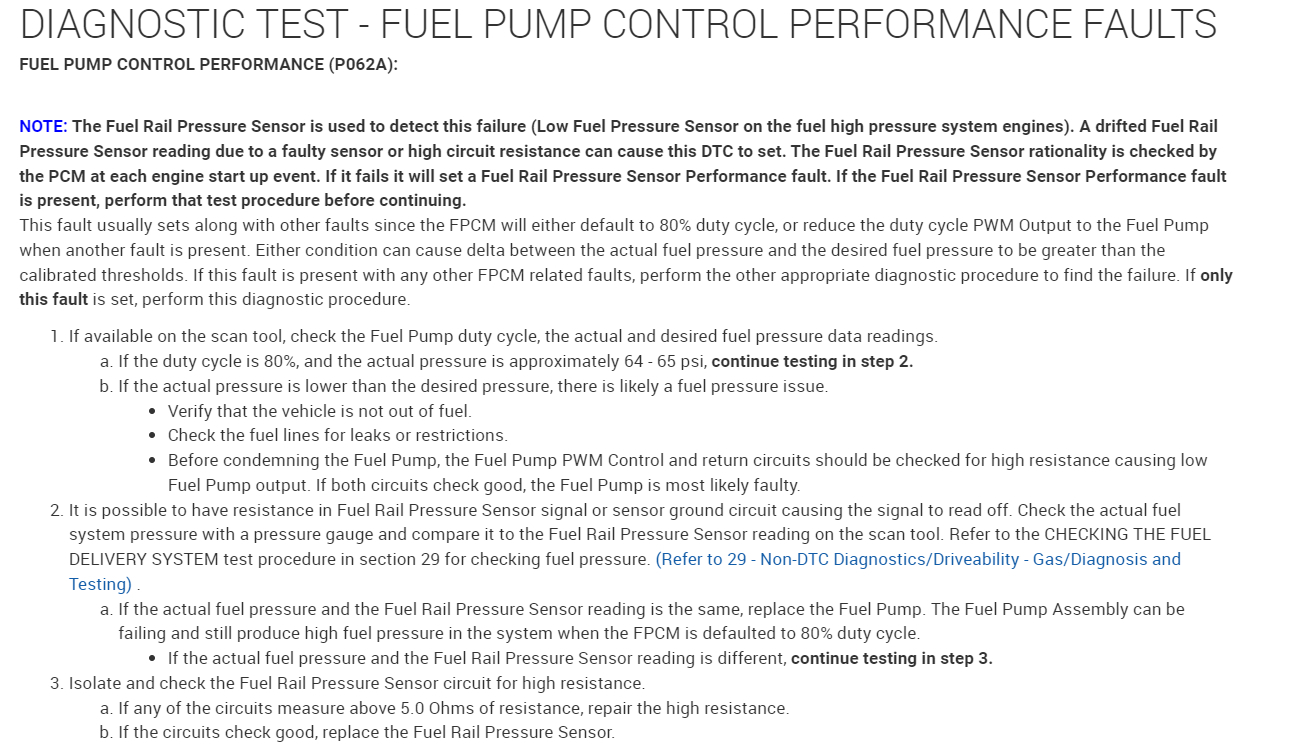
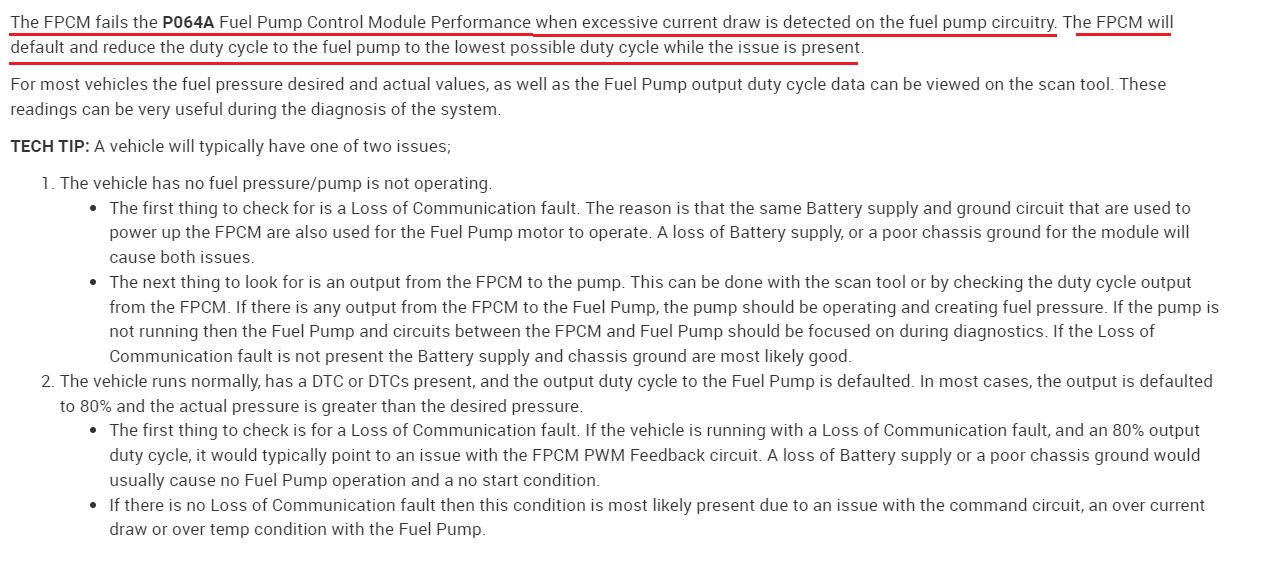
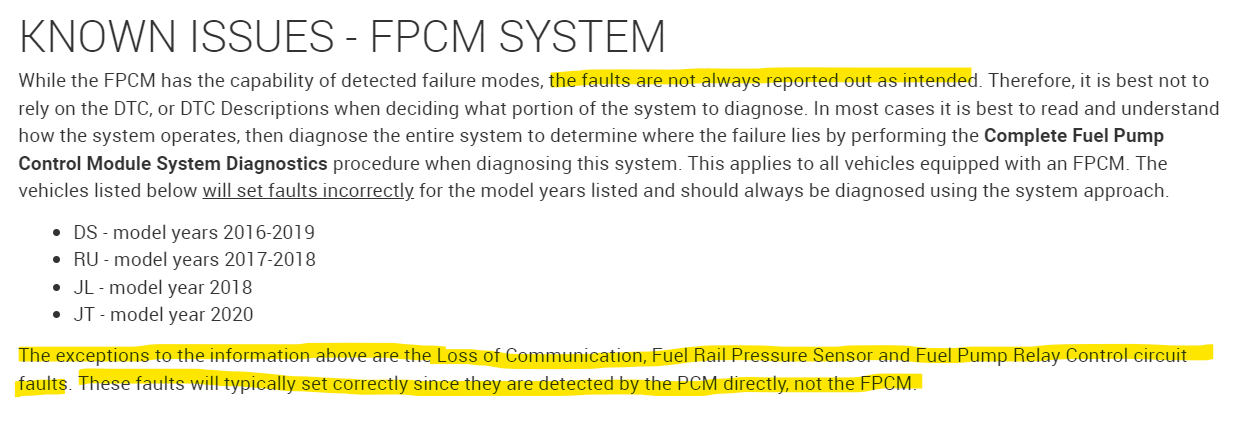
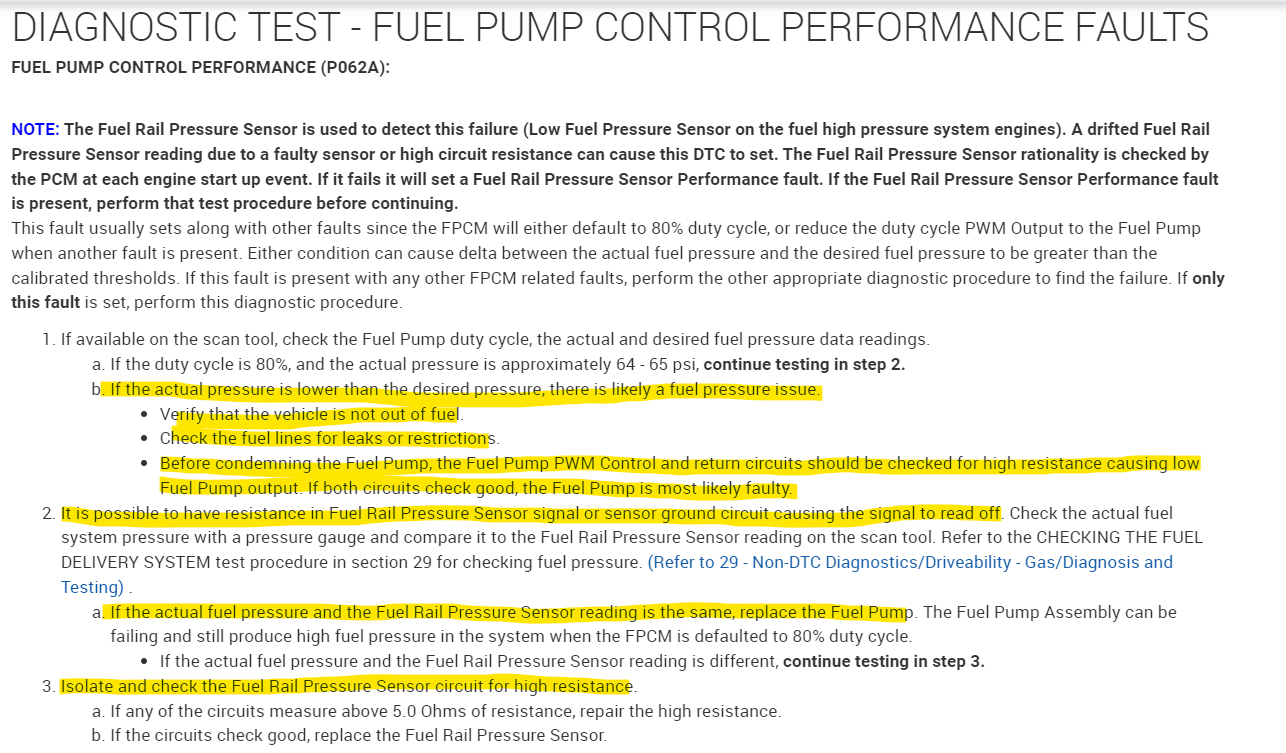
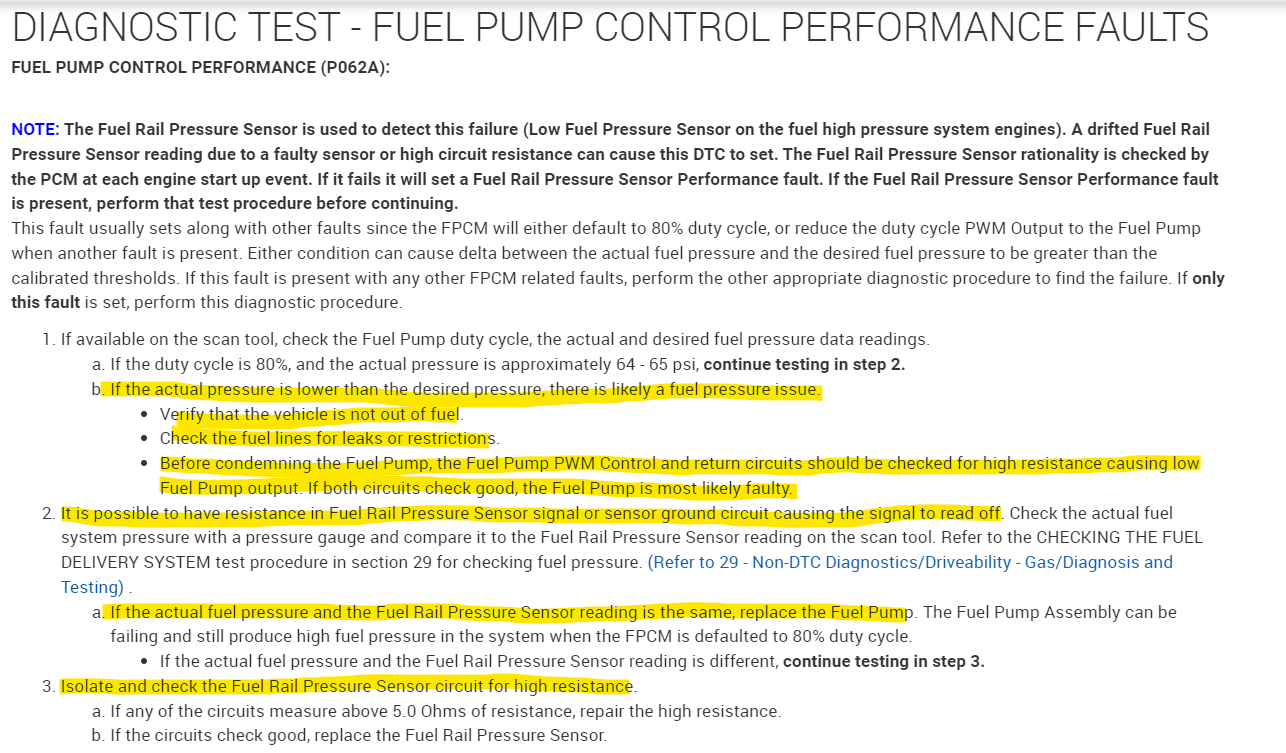
The purpose of having a separate fuel pump control module (FPCM) instead of a conventional system is to be able to have a variable fuel pump system to save on the electrical load put on the engine. They cause more problems than they solve though. There are other faults which can cause FPCM codes, things like a fuel rail pressure sensor, but there are a number of different codes for the module. Page 4 has a list of the most probable causes for that code. I went through all the information on the module and besides these 5 pages the rest was all based on other FPCM codes.
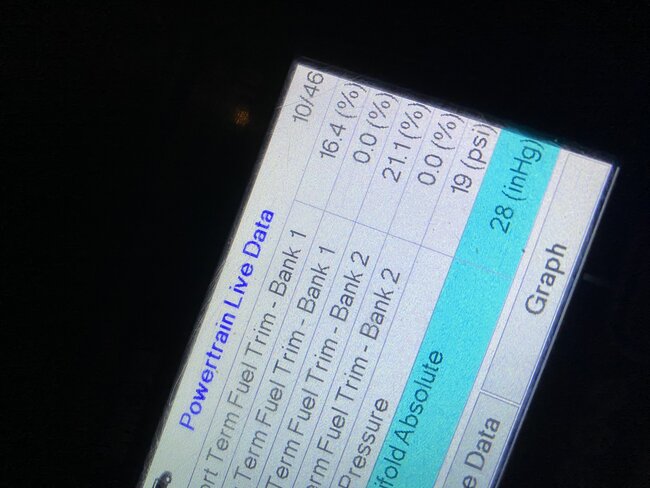
I'm not sure how much live data you can look at with your scan tool, most global obd2 scan tools can at least pull up live engine data, so if it can, take a look at anything to do with the fuel system. Any "Desired" and "Actual" readings, or the Long Term and Short-Term Fuel Trims. Take a look at the Fuel Rail Pressure sensor if you can.
Plug in the scan tool and just do a key on engine off boot up and get to the live data, then start the vehicle.
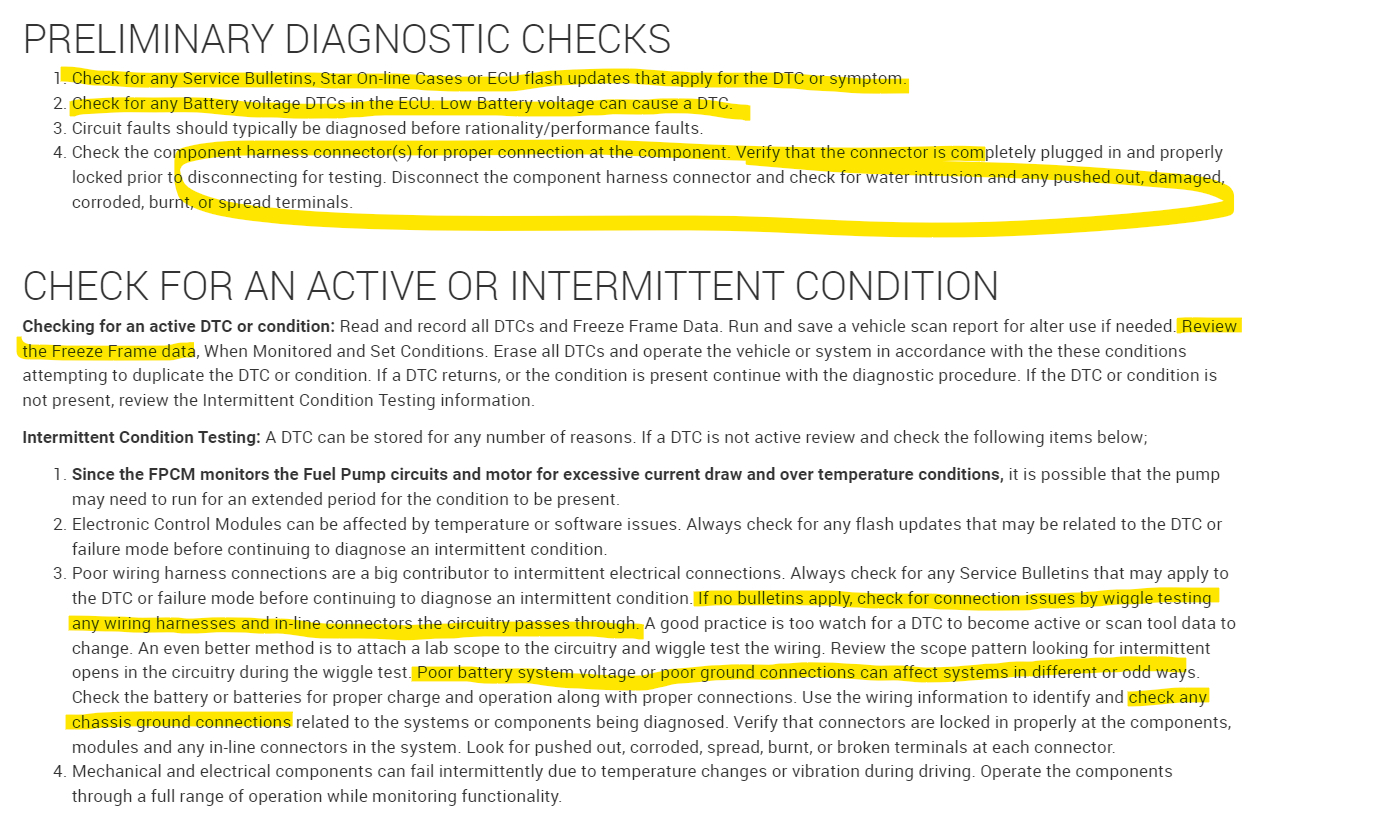
One other thing is, if you have not cleared the code yet, there will be Freeze Frame data for when the code is set, this can help to see what the conditions were when it set and can help with diagnosing the issue.
But check the FPCM connector first for any corrosion, that is the most common fault with these, especially up north where they use salt on the roads.
The issue with that one spark plug wouldn't really have anything to do with a FPCM code, which would be more of a cylinder misfire code, which I'm surprised you didn't have.
i hope this information helped somewhat, if you can't find any issues and the code keeps coming back, i have the wiring diagrams for the module and we can check it for power and grounds and see if there's anything going on there.
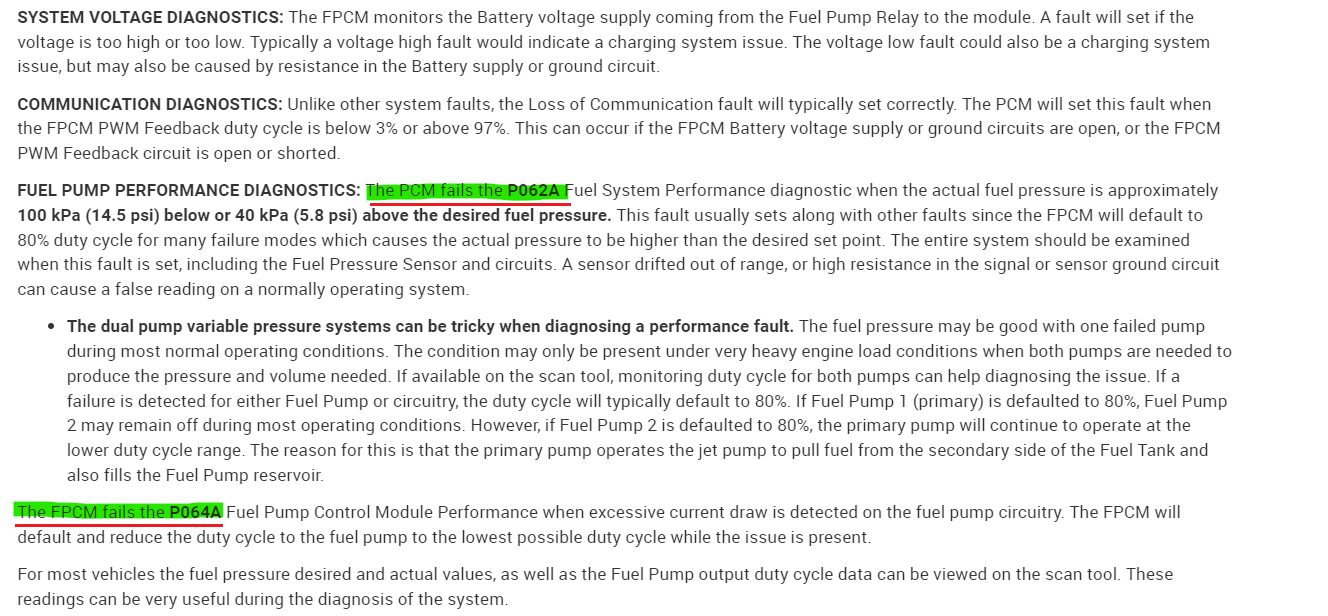
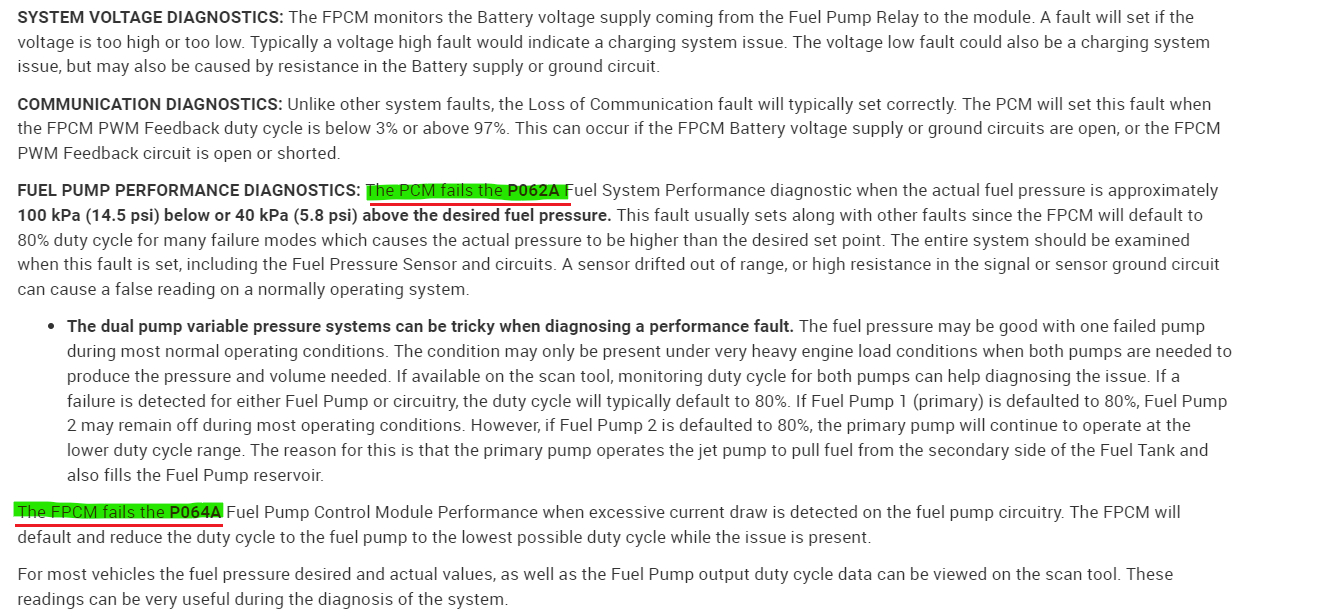
The code can be set by too much current going to the fuel pump too, so it might be the pump on its way out.
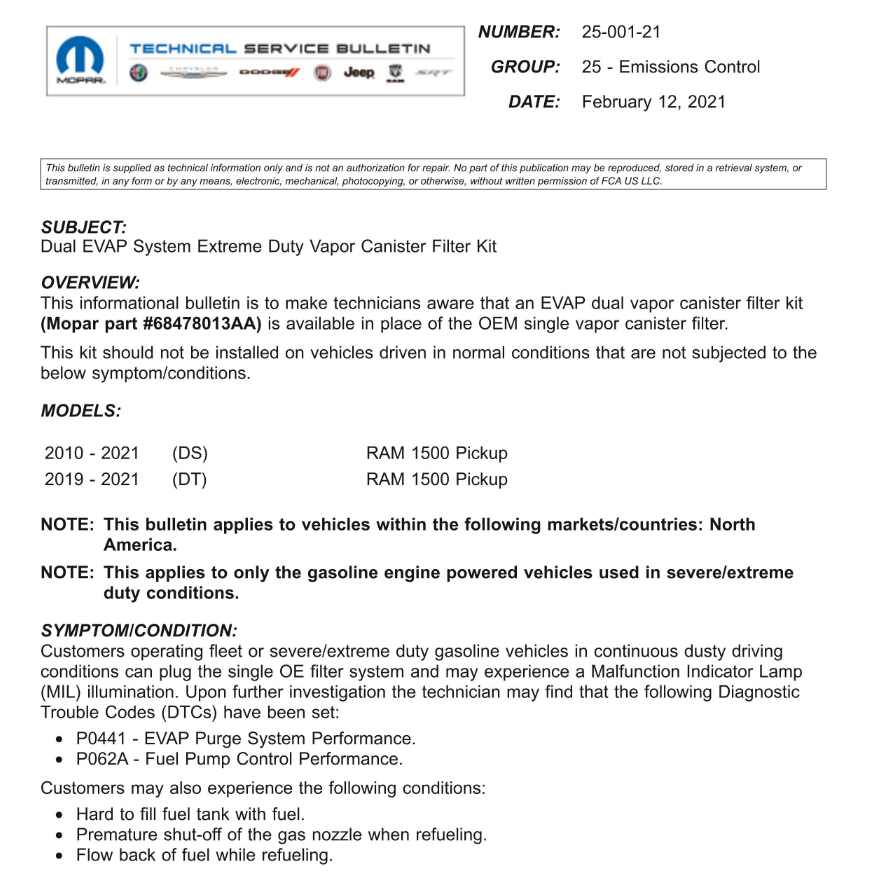
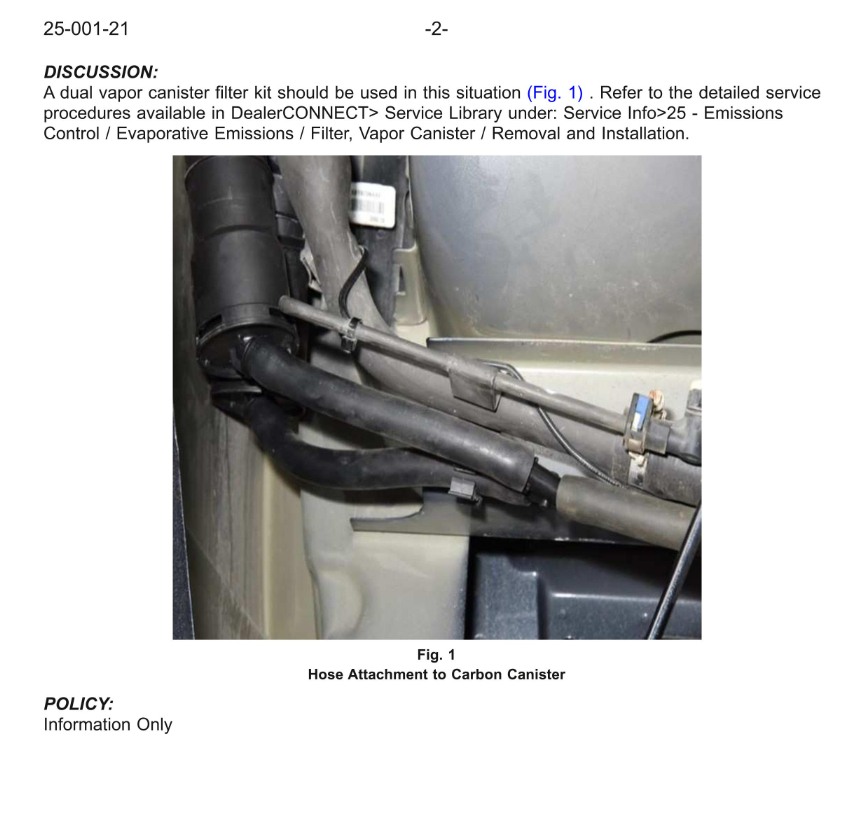
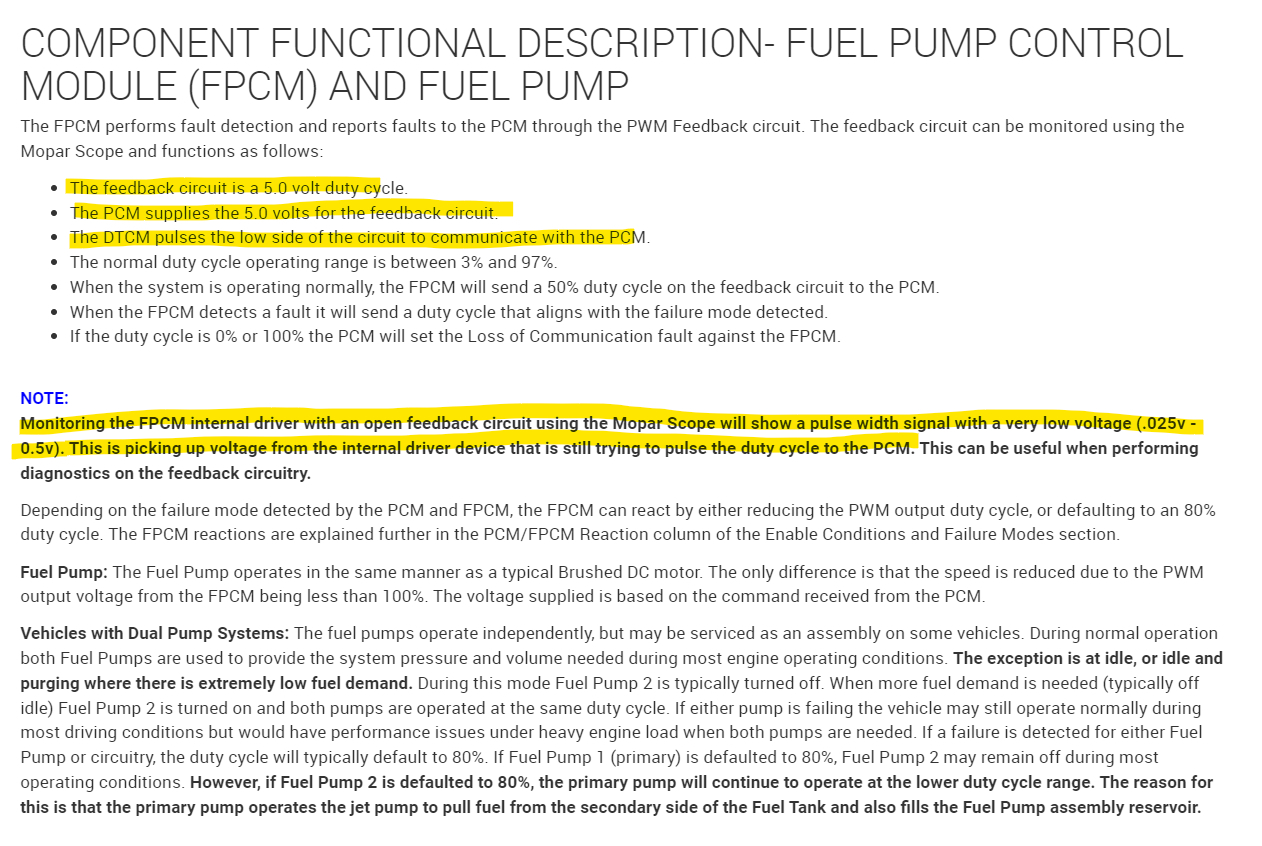
Okay, I did find a TSB finally, there was just so many to go through. Are you having any issues with filling the gas tank, such as hard to fill, premature shut off of the nozzle, or back flow of fuel while refueling? This TSB has an updated Evap kit do to dust/debris getting in the vent valve it looks like, and it can set either and evap code P0441 or the P062A. So, you can try this kit and/or we would have to check the voltage drop on the wires going from the fuel pump module to the ECM and see if there is anything going on there. There is a 12v feed power wire, a pulse width modulated (pwm) signal from the ecm (which is an On/Off signal that is used to tell the module how to control the pump), and then there is a pwm feedback circuit back to the ecm letting the ecm know what the fpcm is doing. Then 2 Grounds. And finally the 2 wires to actually control the pump. The pwm signals I would normally check with a lab scope to actually see the signals. You may be able to use a test light and see a dim flashing happening, but I'm not 100% sure on that.,
You can verify that ground location near the rear axle.
But that is the only TSB I see that has to do with the fpcm.
I am going to keep looking though, there might be an ecm update they were referring to as well, I do see quite a few of those,
Are you having any drivability issues you notice, any slight vibrations from a cylinder misfire either at idle or in Park with no load on the engine?
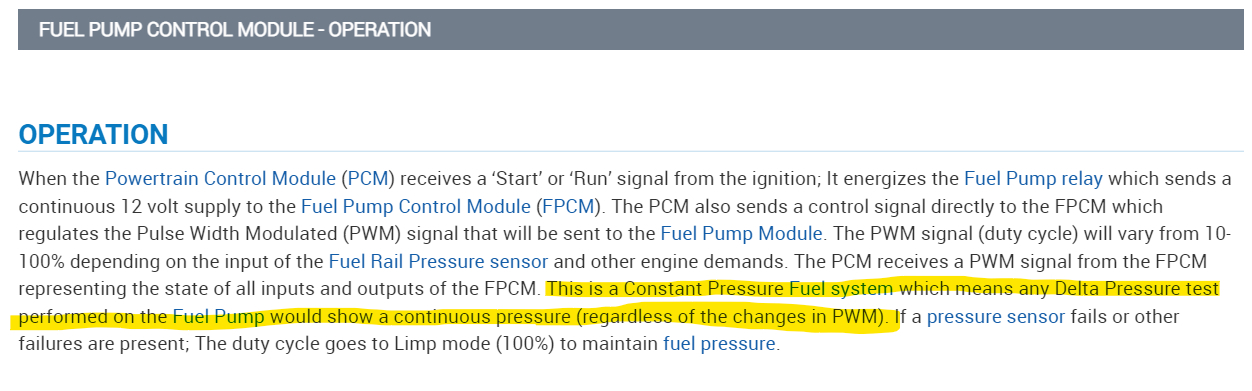
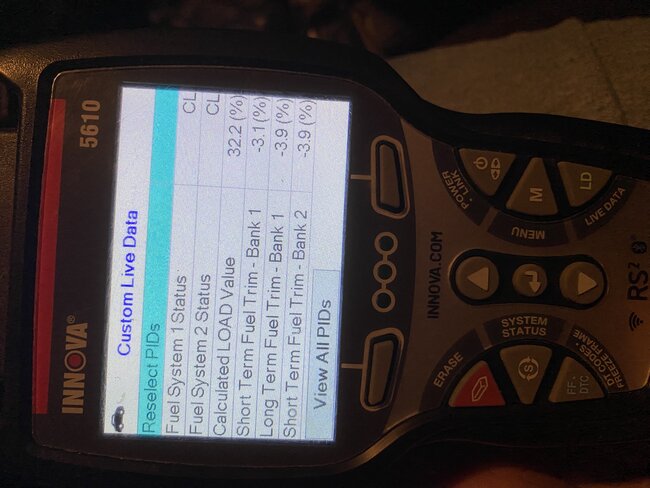
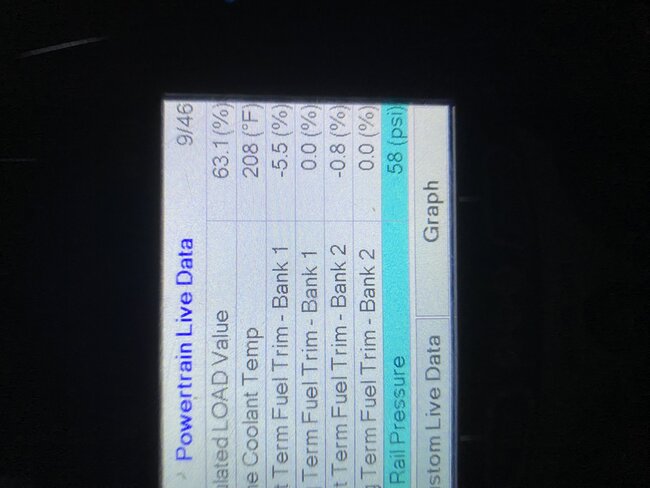
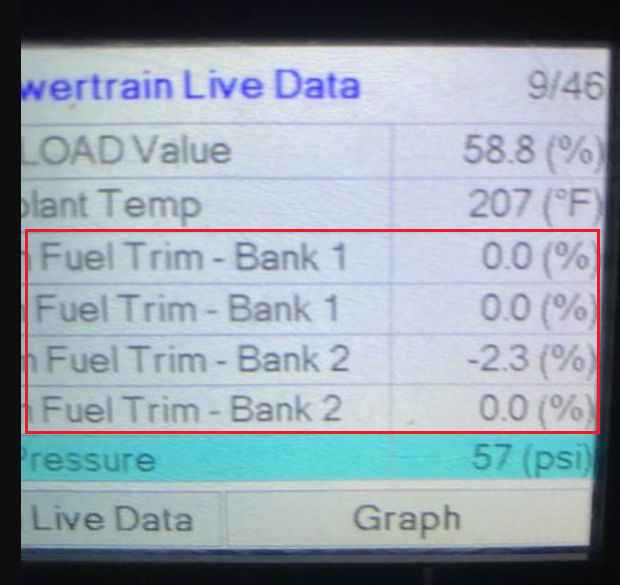
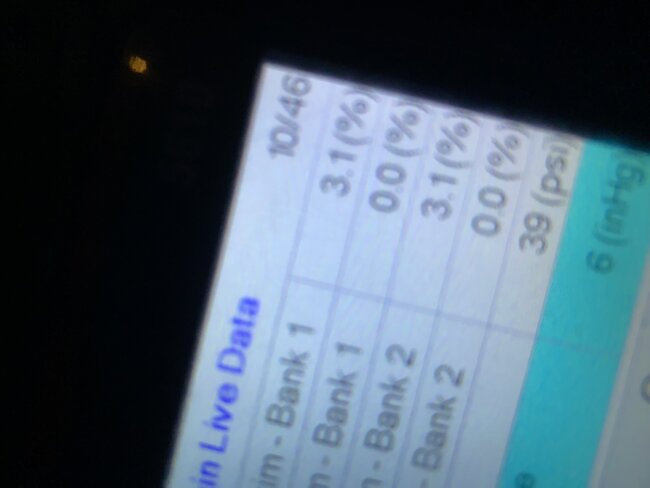
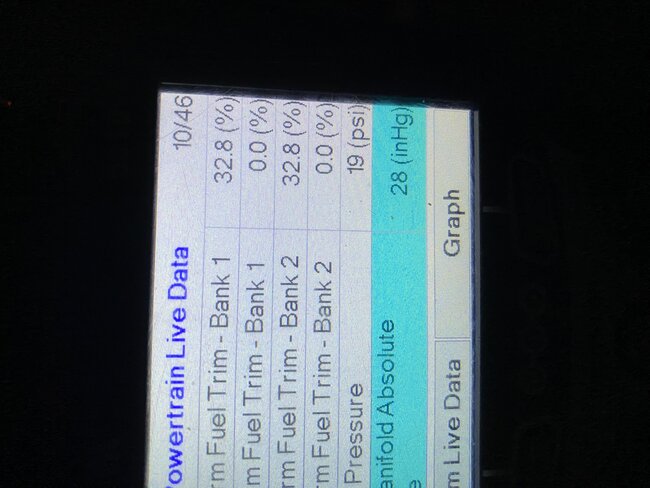
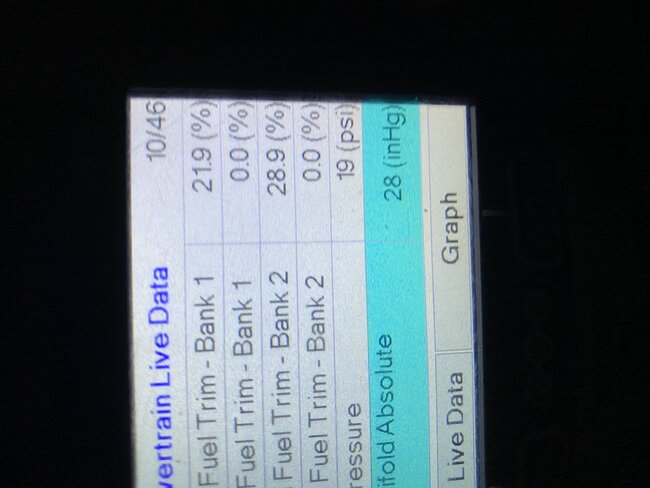
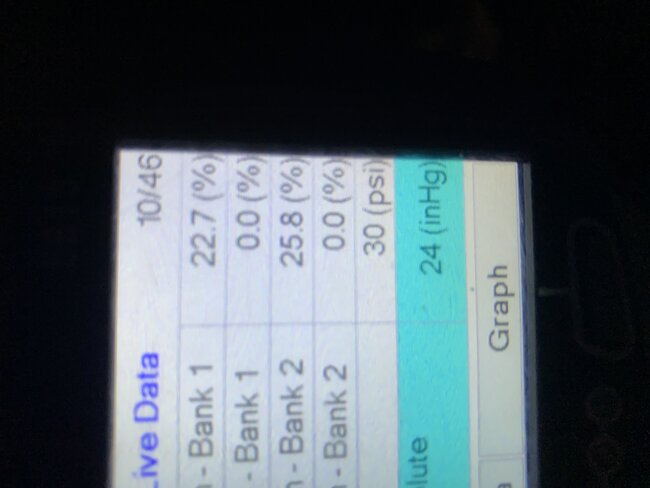
Since you can see the fuel pressure spec on your scan tool, when you go for your next test drive, keep an eye on the Long Term and Short-Term Fuel trims, they can be a positive or negative number. On a vehicle with no issues, the fuel trims will stay under 10% positive or negative. If we can see what the fuel trims are doing under certain conditions such as deacceleration, at stop lights, full throttle such as getting on a highway. The fuel system spec is 58psi. Service info is stating regardless of what the FPCM is doing for duty cycling the pump the pressure should stay a constant 58psi. So, if you're seeing a drop like you mentioned, I think that's the issue here. It should not be dropping to 30 psi.
So, it could be the Fuel Rail pressure sensor failing, which I can see that setting a Fuel pump code, it can be the pump itself failing, I don't see any location of a fuel filter, some are in the tank with the pump. A voltage issue at the pump module, which we can check with a multimeter.
Another test you can do with your scan tool is to watch the Oxygen sensors, even graphing them if you have the option. When you do a full throttle test the oxygen sensors should go rich, watching the rear oxygen sensors is probably easier because the front sensors are probably Wide band Air/Fuel ratio sensors and they signal the ECM using current flow versus a voltage reading, The rear oxygen sensors may be conventional narrow band oxygen sensors that will read 0 to1v (usually 0.200 to 0.800mv) higher voltage being a rich condition (0.900mv). So that and fuel trims can tell us if there's an actual lack of fuel pressure.
https://www.2carpros.com/articles/how-an-oxygen-sensor-works
https://www.2carpros.com/articles/how-to-check-fuel-system-pressure-and-regulator
I'd try unplugging that sensor and see what happens to that data Pid.
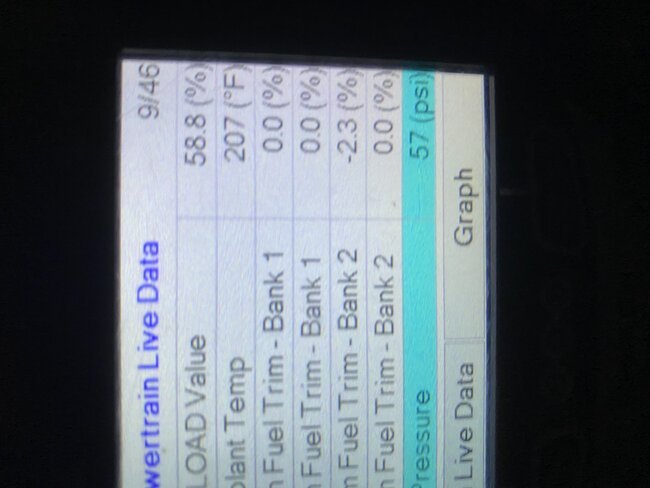
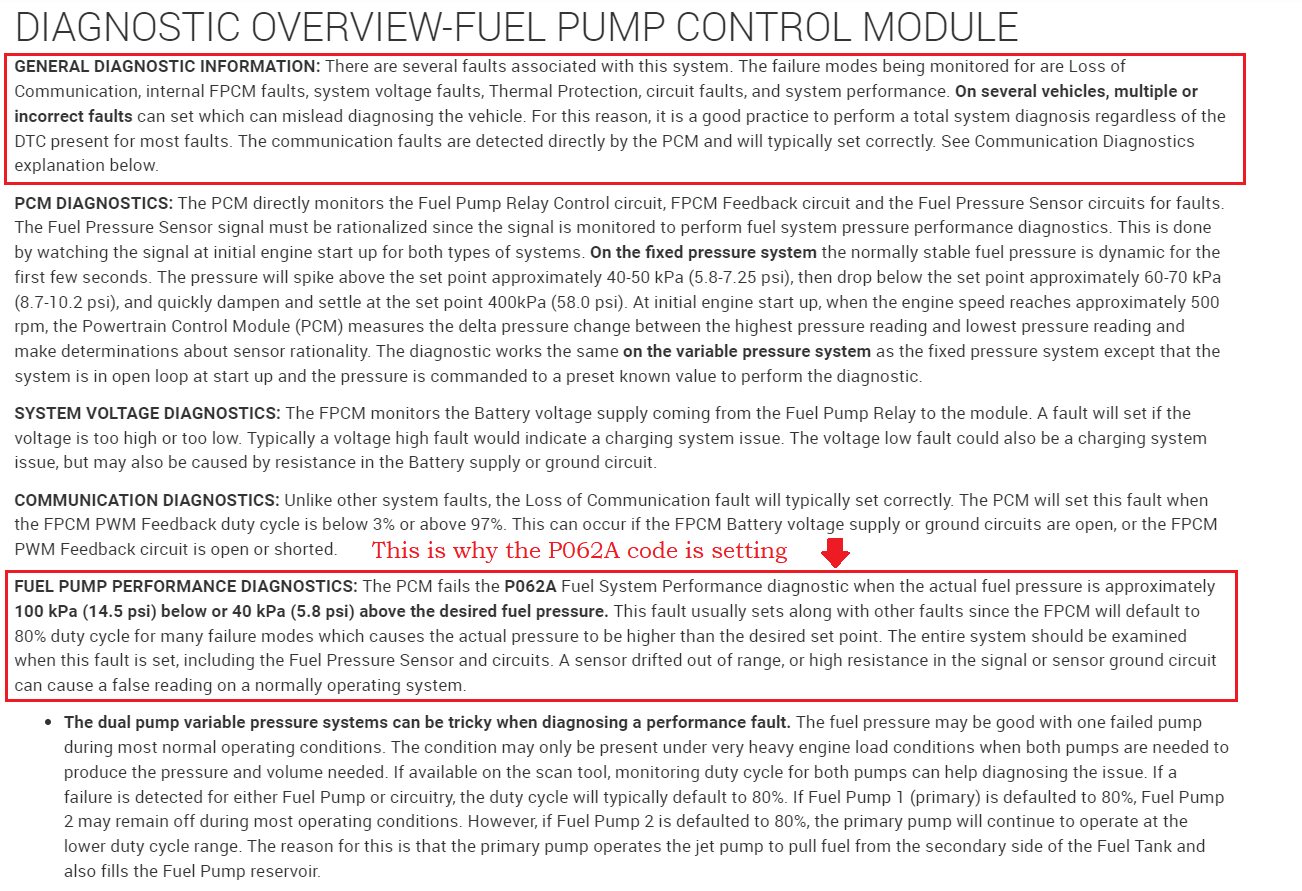
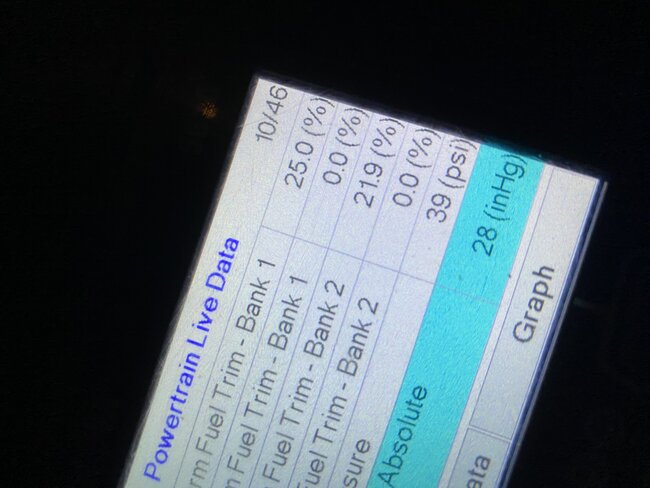
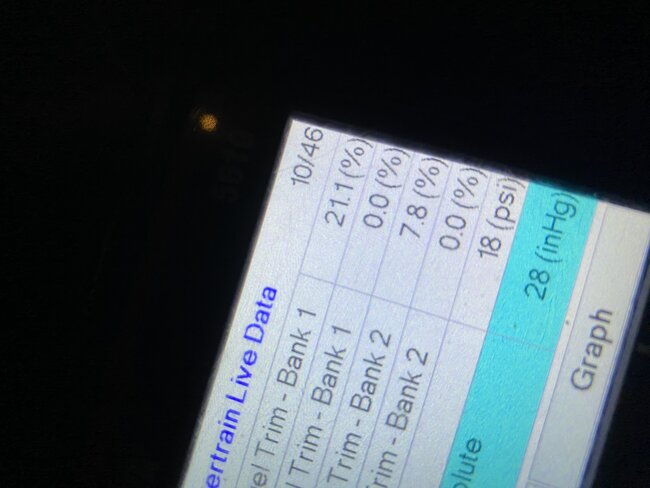
But in the 2nd diagram below, is the reason the code is setting, when that fuel pressure dropped to 30 and 40 psi, that's exactly why the code is setting. The tough part is figuring out why it dropped.
If the code is still set today when you go to check or the check engine light is on, don't erase the code yet, we need to look at the Freeze Frame data when it set.
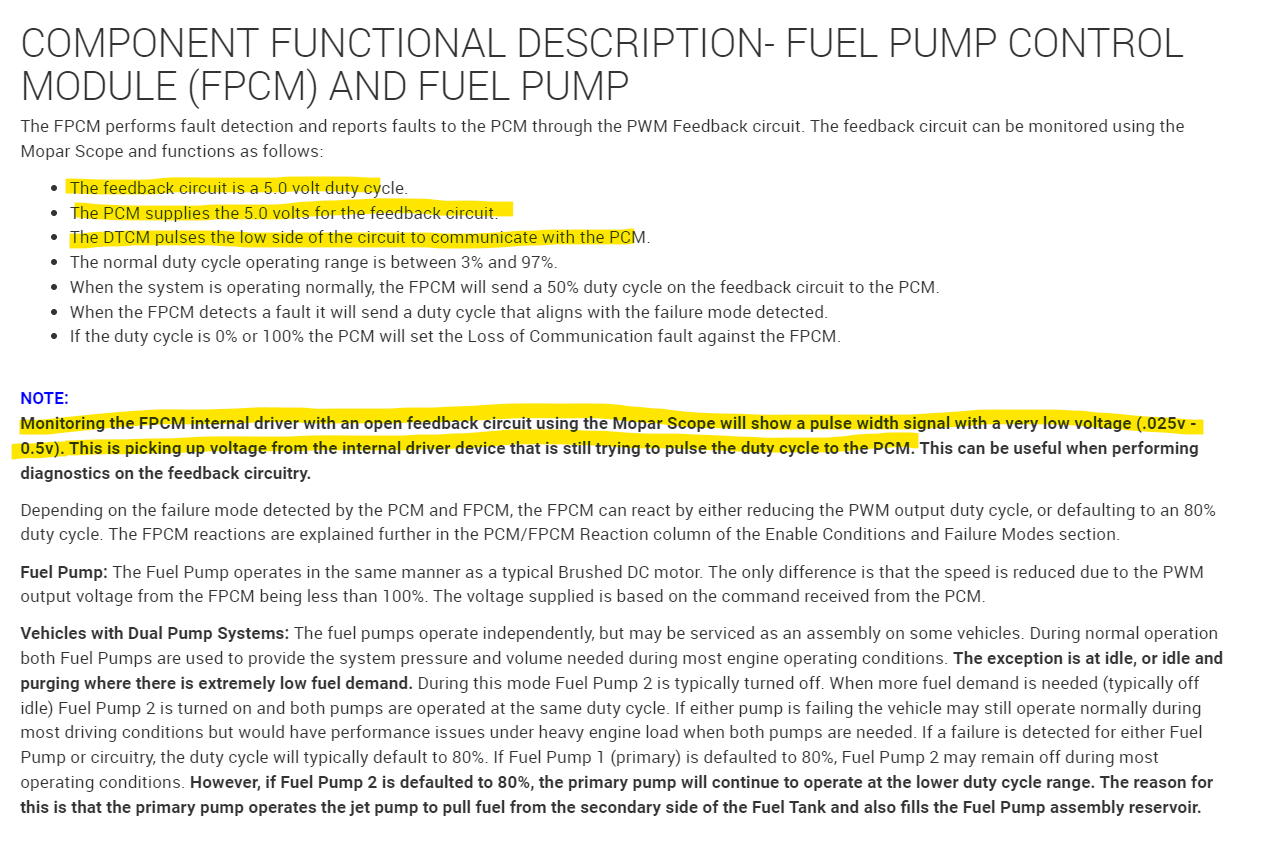
When I went through the service info again, I noticed when the PCM sets the P062A code it is because of that drop in fuel pressure that you saw. And if the FPCM set that code, it's the fuel pump control module detecting an over current flow issue. I missed the wording the first time around. Sorry about that. But we know what's setting the code now. So, it might be the fuel pump failing or a sensor. but to know if it's an actual pump losing pressure, we would need to verify with a mechanical fuel gauge and compare readings to the scan tool data. It's odd that the pressure dropped when you let your foot off the pedal. We can check the FPCM voltage readings at the connector, and see if the feedback circuit is okay, along with power and ground to the module. I've highlighted the important notes on the diagnostic info.
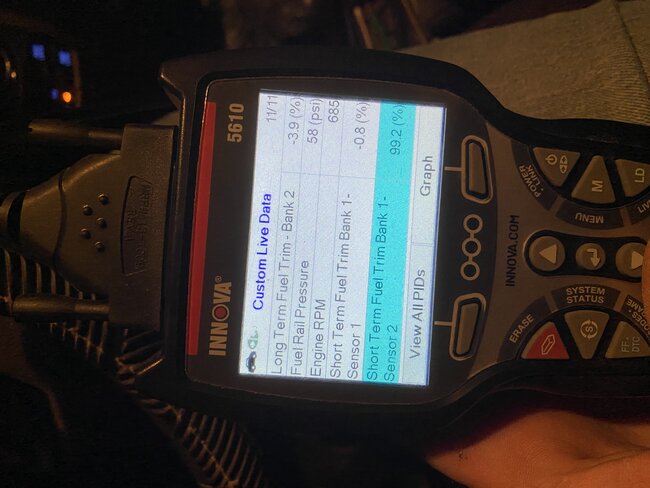
i will go through the wiring diagrams and see if there are any shared grounds for the rear oxygen sensor. If there is only one. that reading of 99% seems like a substituted value.
So, i will leave it up to you how far you want to go with testing.
Trust me, no shop wants a visit from them. They can start looking at every repair order if they want. When it comes to check engine lights, I try to have my guys make sure the permanent code goes away so I know it is a good fix. But I can only speak for myself as a smog tech here in California where we have the strict smog laws. My advice is this. If you have a permanent code, then there is a strong possibility your vehicle is not properly repaired. There will be some exceptions, but it will take many drive cycles.
As I mentioned, California implemented smog laws are different from other states. In the end, permanent codes should not exist if there is no problem. If still present, then the repair most likely was not done right.
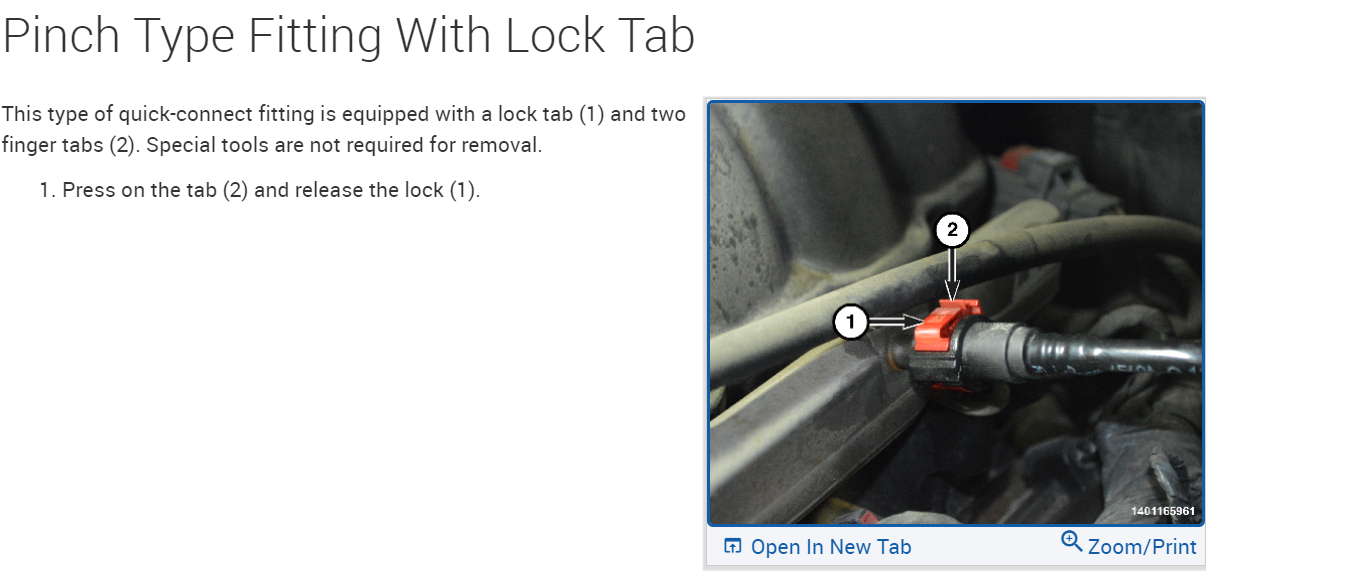
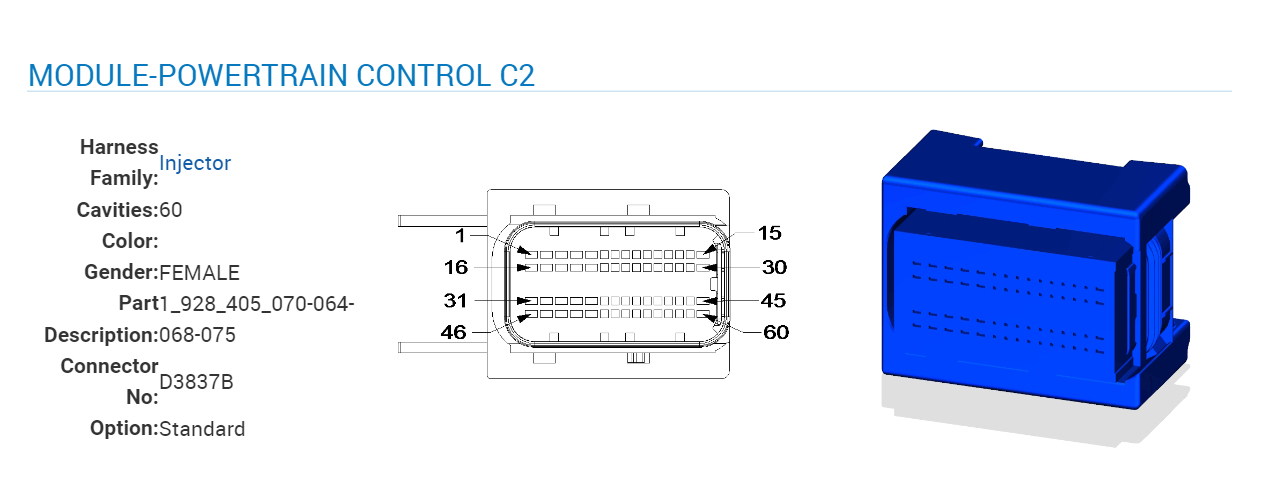
there are a number of different type of connectors used on these vehicles, so when you verify if the pressure is still having issues, we can go over these.
One other thing, when watching the fuel pressure, have the Fuel Trim pids up on the scan tool as well, and see if those numbers go positive when you lose fuel pressure.
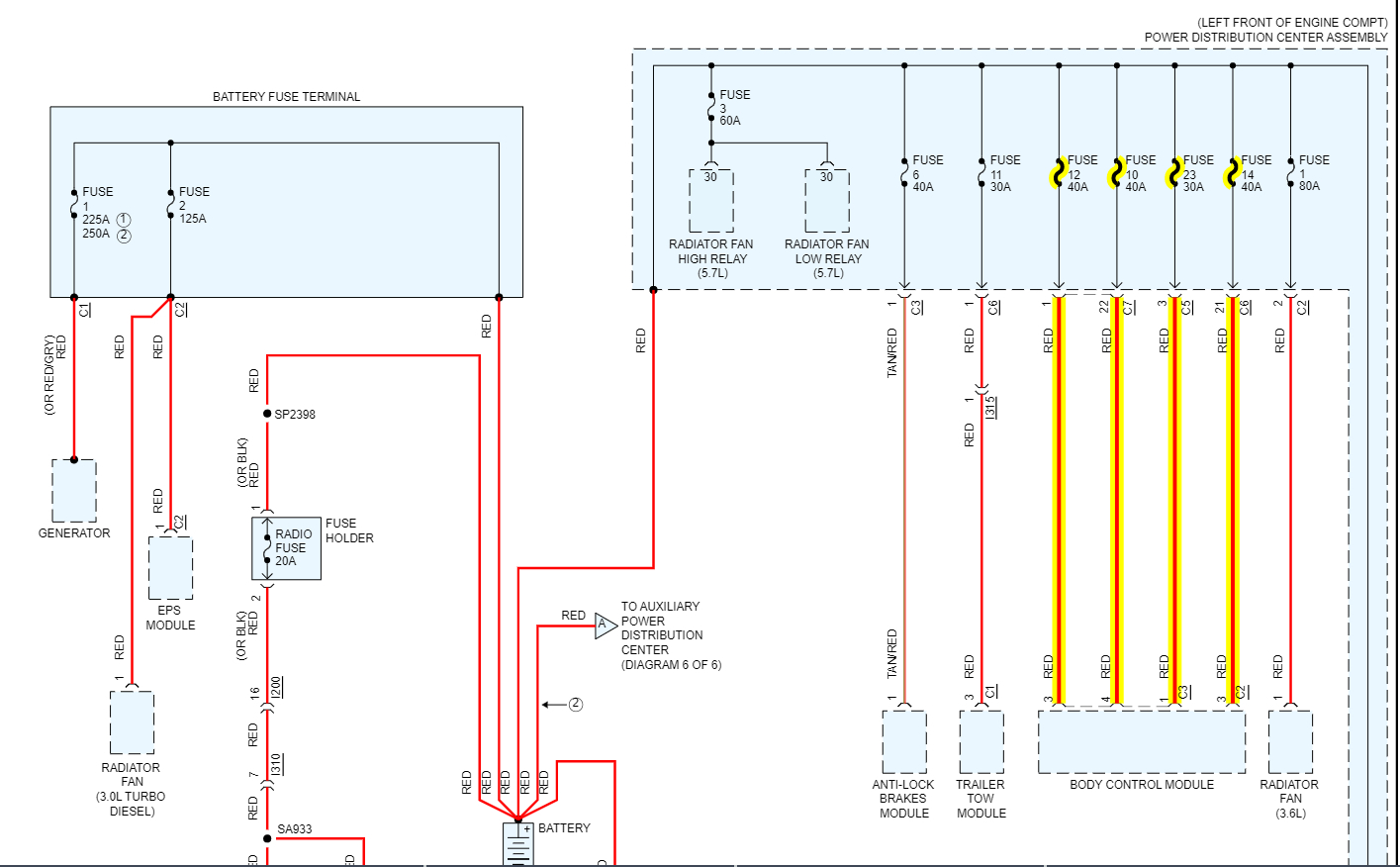
The upper mounted brake light goes directly to the Body Control module, did you happen to check for any blown fuses, and do you have anything else not functioning correctly? These are the fuses that power the Body Control Module. A shorted brake light circuit that set a code must have blown a fuse, I'm surprised it set a code, it must be a monitored circuit by the BCM.
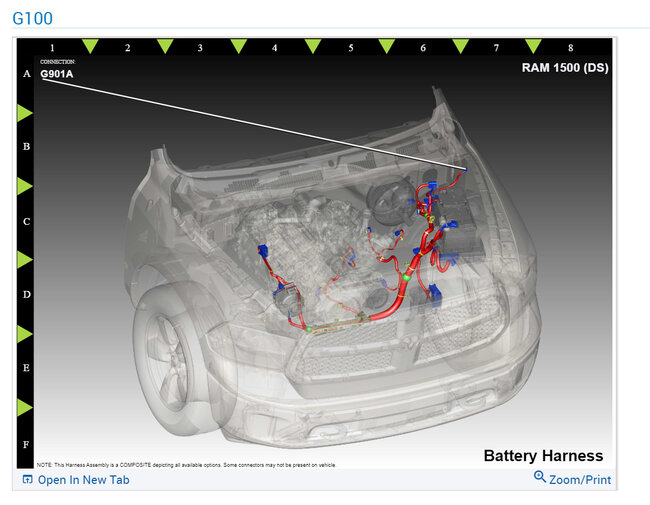
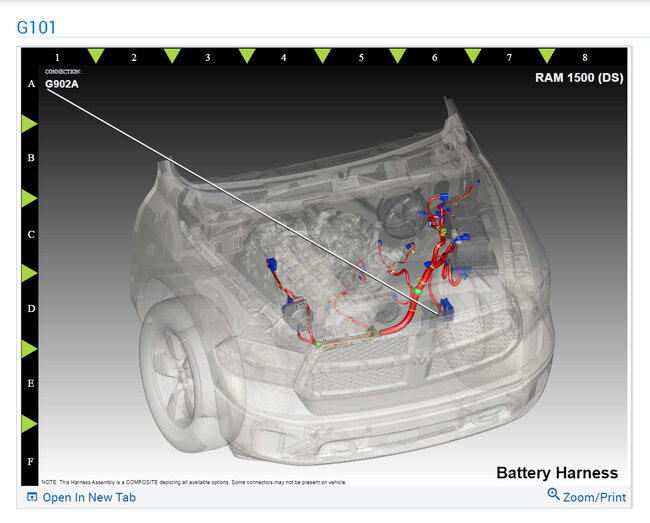
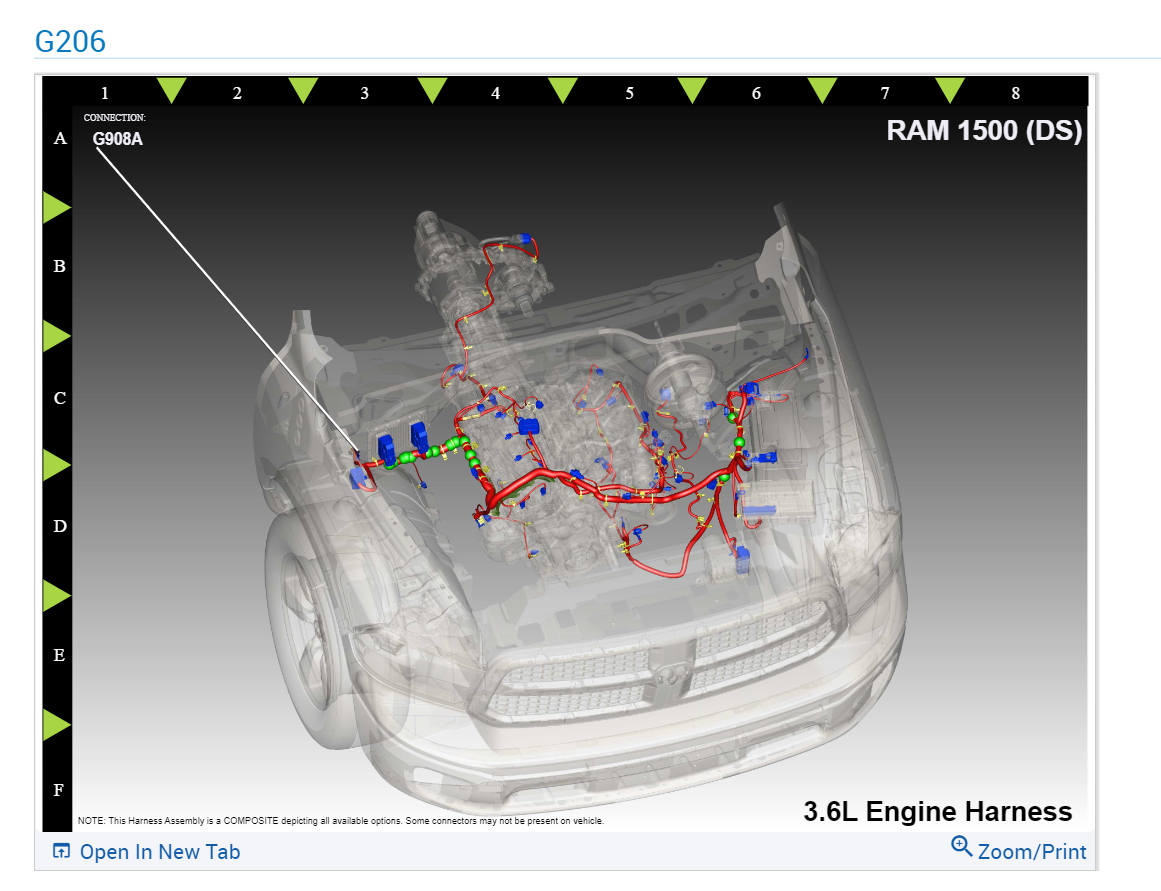
Bank 1 is the passenger side of the truck, check there first, but do a thorough check of the entire under side of the truck. Something is progressing here, and it sounds like a bad ground getting worse to me. Here are some main ground locations, but also check that PCM connector.
i can see the fuel trims jumping up every time you lose fuel pressure,
Mi trying to find any circuits that link these issues together.
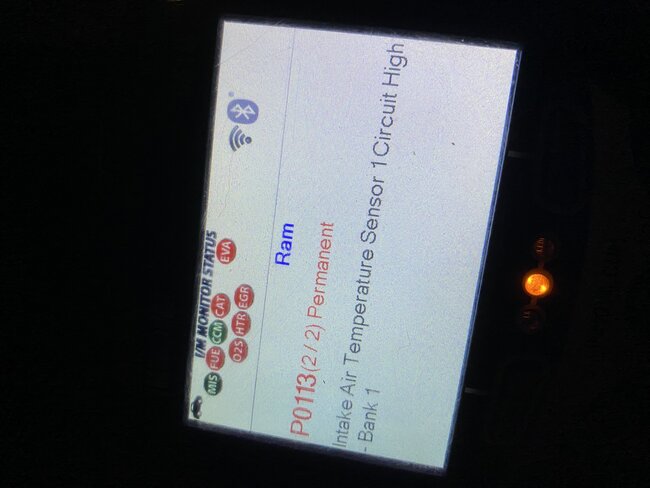
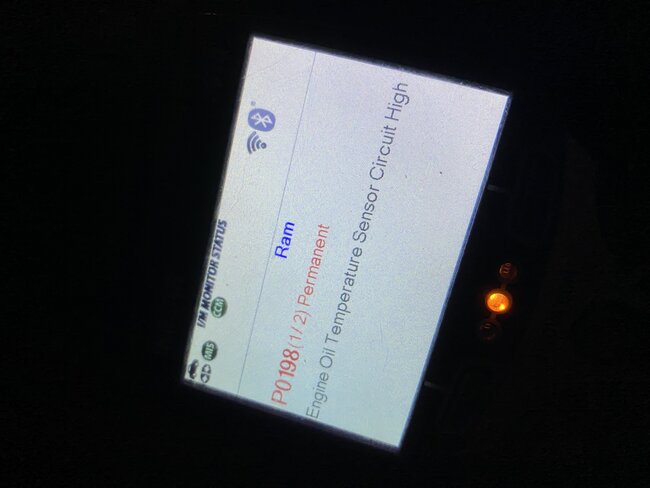
but measure the voltage at the Intake air temperature sensor and the oil temperature sensor, there should be a data pid with the voltage readings.
Also, due to all the faults, the PCM is going to do all kinds of strange things because of incorrect readings from multiple sensors.
When there is low pressure detected, lower than the PCMs desired pressure (which there should be a data pid for Desired Fuel Pressure and Actual Fuel Pressure), there will usually be other faults detected and codes set. This will cause the pump module to default to 80% duty cycle, The fact that other codes are setting points to a wiring issue if those codes are staying active, but it looks like you only have the one code today.
So going through more of the scan tools data pids after the vehicle has been driven and things are up to their highest temperatures, as well as starting to check the PCM connectors and checking the voltage readings at the pump module is the only way this is going to be diagnosed.
The entire system needs to checked. I would even go so far as to putting an amp clamp on the fuel pump main feed wire and see what its current draw is, But a lot of things need to be checked here before there is a major failure and the truck gets stuck on the side of the road.
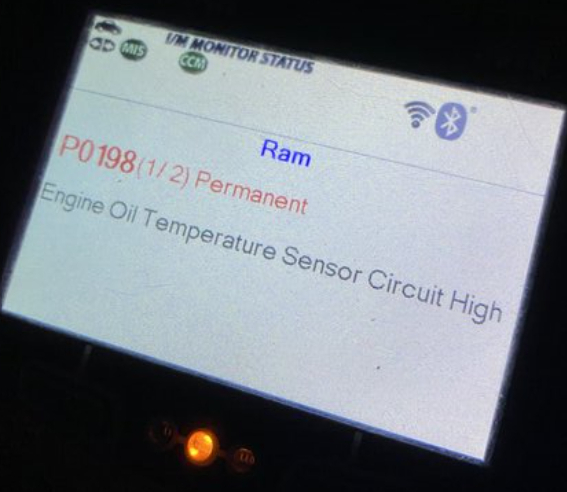
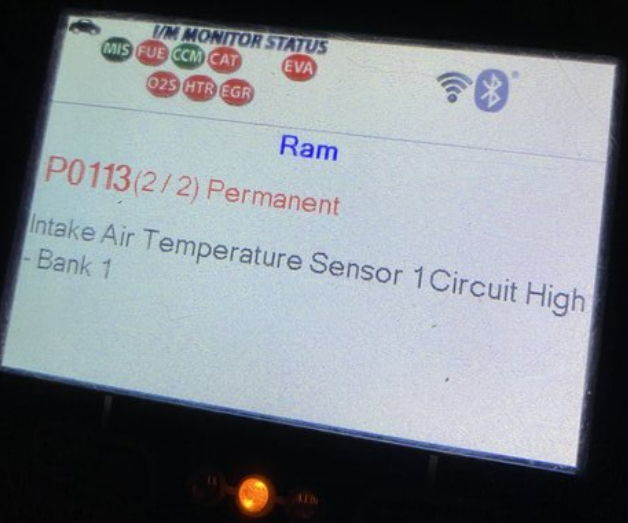
The other two codes that were set were indicating a possible short circuit to power or open sensor ground wire sending the voltage signal high. But if those codes are intermittent, the fuel system needs to be checked first.
There is a whole list of tests to be done here with just the P062A code alone before something fails permanently. The diagnostics say what to expect, such as the feedback circuit being open, the voltage will read low 0.25 to 0.5volts. Normal is a 5.0volt circuit. Checking all the chassis grounds on the frame. It's all here.
Suggested Repair
Diagnose P062A by inspecting the fuel pump control module connector for corrosion, verifying actual rail pressure with a gauge against scan-tool data, and checking module power, grounds, feedback voltage, and the PCM connector. If pressure still drops when the throttle is released, suspect a failing fuel pump or control module; also inspect chassis grounds and related wiring if other sensor codes appear.
Conversation Summary
The owner of a 2018 Ram 1500 with a 3.6L engine questioned a shop's claim that a mechanic-only TSB required plugs and coils before diagnosing P062A. The expert found no plug-and-coil bulletin and identified P062A as a fuel pump control module fault, commonly caused by connector corrosion. Live data showed fuel pressure falling from about 58 psi to 30-40 psi when the throttle was released, which matches the code-setting condition. Further discussion covered possible pump or module failure, an EVAP-related TSB, oxygen-sensor readings, intermittent sensor codes, and the need to check grounds, PCM connections, and module voltage before a roadside failure occurs.