Ever since I bought the truck My brakes have gone close it the floor

2004 FORD RANGER
Avatar
RDL9879
  • MEMBER
  • 2 POSTS
I bought a 2004 ford ranger about a year ago. Ever since I bought the truck My brakes have gone close it the floor why?
Apr 21, 2010 at 5:18 PM
Advertisement
Avatar
MHPAUTOS
  • CERTIFIED EXPERT
  • 31,937 POSTS
I would suspect there is air in the lines. These guides can help you fix it.

https://youtu.be/w7gUsj2us0U

and

https://youtu.be/WDxvEQrMkBg

and

https://www.2carpros.com/articles/brake-pedal-goes-to-the-floor

Please run down these guides and report back.
Apr 21, 2010 at 5:25 PM
Avatar
RDL9879
  • MEMBER
  • 2 POSTS
thanks it was the right front caliper had air in it all fixed!
Apr 21, 2010 at 7:41 PM
Advertisement
Avatar
ONEPOINT21GIGAWATTS
  • MEMBER
  • 1 POST
Hey guys. I have a 2003 Ford Ranger. This morning when i pressed down on my brake pedal, it initially stopped as usual about halfway to the floor, then proceeded to push all the way to the floor. The truck still stopped, but took longer. Then the brake dash light came on. I drove it straight home and parked it, but it continued to press all the way to the floor. I see no fluid loss on the driveway. After doing some research online, it appears that the culprit may be the master cylinder. Would you agree or should I try something else first before digging in and replacing it tomorrow? Any help would be appreciated. Thanks!
Apr 14, 2021 at 10:14 AM (Merged)
Avatar
KTECH
  • CERTIFIED EXPERT
  • 57 POSTS
Your master cylinder could be a possible cause, but before you do all that work I would inspect your brakes. check how much pad you have left and if they look like there starting to wear replace them. I had a similar problem on my explorer, although the pads went that and still had some meat left on them it was still taking almost all the pedal. The rear pads do the majority of the braking. I replaced the rear pads and bled the brakes and they havent caused me a problem since.
Apr 14, 2021 at 10:14 AM (Merged)
Avatar
895NLINDENWOODCIR
  • MEMBER
  • 1 POST
Brakes work fine but some times ,just before coming complete stop the
pedal will sink a little then stop . During the pedal sink I hear a swish. I replaced master cylinder, pads , shoes and bled brakes with new fluids.
Apr 14, 2021 at 10:14 AM (Merged)
Avatar
KASEKENNY
  • CERTIFIED EXPERT
  • 18,907 POSTS
Sudden drops and then firming up is almost always the master cylinder with internal leaks. Since you already replaced this the only thing that makes sense is the brake booster. This would be what is making the swish noise that you are hearing. However, when this has a leak it normally causes a hard pedal because you are losing your assist. Also, the swish that you are hearing may be just because the pedal is dropping.

Is there a chance that you still have air in the lines or another leak? Was this the same issue that you replaced these parts for or is this a new issue after you replaced these parts?
Apr 14, 2021 at 10:14 AM (Merged)
Avatar
BIKER-24-7
  • MEMBER
  • 1 POST
It has full fluid and does not seem to have any leaks near the master cylinder
Apr 14, 2021 at 10:14 AM (Merged)
Avatar
JASON123
  • MEMBER
  • 4 POSTS
could be the seal to the master cylinder to check pour soapy water where the cylinder and the firewall meet
Apr 14, 2021 at 10:14 AM (Merged)
Avatar
JACOBANDNICKOLAS
  • CERTIFIED EXPERT
  • 110,175 POSTS
You can't check it like that. There are internal plungers in there that, if bad, will allow brake fluid to bypass and the pedal go to the floor. Make sure there are no leaks at any of the wheels or the steel brake lines. One other thing is the rubber brake hose. Make sure they don't expand when you press on the brake.
Apr 14, 2021 at 10:14 AM (Merged)
Avatar
CHAZWORKS
  • MEMBER
  • 6 POSTS
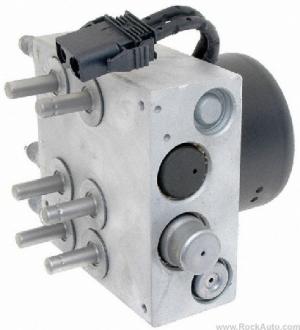
2001 Ford Ranger Intermittent loss of pedal pressure when braking. Master replaced, system checked and bled. Problem persists and getting more frequent. Told problem is probably ABS related but I can find little information on line. Actuator? If so does it require special tool to bleed after replacement? Is it possible to avoid dealer? Any on line manuals or diagrams?
Apr 14, 2021 at 10:15 AM (Merged)
Avatar
JACOBANDNICKOLAS
  • CERTIFIED EXPERT
  • 110,175 POSTS
As far as online manuals, I can never find them when needed. I will tell you that Mitchel online is a manual available via the internet, but you pay to use it. It is extremely informative. I believe you can access it via our home page. It is cheaper than purchasing a manual at a store and includes all makes and models.

As far as the problem, I can't see how the ABS is giving you a soft pedal. When it happens, does the ABS actuate? Have you checked the rubber brake hoses to the calipers on the front? I have seen them (when they get old) actually expand when pressure is applied to them. Thus, you get a soft pedal. Also, has everything been checked as far as the wheel cylinders and calipers for leaks? I must say this, for some reason, Fords, between 1999 and 02 seemed to have a rust problem with the underside of the vehicle. Make sure there are no steel lines with slight holes.

Let me know.
Joe
Apr 14, 2021 at 10:15 AM (Merged)
Avatar
CHAZWORKS
  • MEMBER
  • 6 POSTS
Joe, Thanks for responding. Have you collected my donation? I don't know how this works.

I have a good mechanic and we both checked every line, cylinder and caliper. Master was replaced and lines bled. His conclusion was that the only item left was the ABS and I had an online mechanic tell me that the actuator can wear and bypass just as a master can.

Most of the time the brake pedal is effective. It does no sink when steady pressure is applied. What started as once a day has become every fifth or so braking event as I am coming to a stop the pedal will just sink/travel. I stop but with a bead of sweat forming on my brow. So the problem is becoming more frequent.

I downloaded a service manual and for some reason it mentions the ABS but never offers narrative or diagram. I know if I drop the truck off at a dealer I am at the mercy.

Any other suggestions? There is a slight pulsing in the brake pedal when this happens but I cannot tell you if that is the ABS activated or not.

Help.

Chuck
Apr 14, 2021 at 10:15 AM (Merged)
Avatar
JACOBANDNICKOLAS
  • CERTIFIED EXPERT
  • 110,175 POSTS
Chuck:
The ABS actuator can bypass as a master cylinder, but I have to admit, it doesn't happen often. If you keep steady pressure on the brake pedal, you said it doesn't drop. Usually, when you have a bad plunger / seal in a master cylinder or actuator, it will slowly drop. You most likely already know that based on everything you mentioned. I just thought I would mention it. I can understand your concern with this issue. I can't completely eliminate the actuator. It can be the problem, just an unlikely one. If everything else is good, that must be where the problem is coming from.

Chuck, I have access to Mitchel Ondemand. Let me know if there are certain diagrams you want. I will check to see if I can find them for you and upload them. They have a lot of information on there. I attached a schematic for you to review. Also, I am questioning the BPS. Have any codes been recovered from the system?
Apr 14, 2021 at 10:15 AM (Merged)
Avatar
CHAZWORKS
  • MEMBER
  • 6 POSTS
The mechanic here was baffled. At the time he was involved the phenomena was so rare he could not road test to experience it. No, the pedal does not sink if steady pressure is applied. I thought maybe the actuator might be different than the master because of the solenoids and chambers. More strangely it only happens as I am almost stopped and then the pedal will just release and travel maybe an inch or inch and a half. It does not bottom. Then it may not happen through the next three or four stops.

It seems to happen when I hit a certain speed like 8 mph (just a guess) If I brake to slow while at traveling speed no problem. Your bulging line idea is interesting but I think that would happen every time and at all speeds. The fluid level does not change so I am not leaking from a pin hole or wheel cylinder. A guy on this sight back a month or so is the one who mentioned the actuator and even sent a link to a part picture for an on line parts store. The part is over $300 with obviously no returns. I was looking for service manual guidance because I read somewhere the ABS has to be sequence bled with a special tool and so that seems to force me to a dealer. My mechanic will replace the part if I buy it but won't purchase it because of the iffiness of success. We didn't try to get a code read because no lights come on to indicate any problem with the ABS. You think there might be a code fault for an intermittent hydraulic anomaly?

If a dealer gets this truck we both know I ain't getting out alive particularly when anything they tell me I would have to trust since I have no clear idea what to reject.

Also, the part the other online troubleshooter was not recognizable to me so I thought a year specific repair manual guide would give me a clear diagram to compare to my as built truck. It has been 5 degrees outside here for a while and I am old so I haven't stuck my head under the hood for a while. I didn't want to order that part until I am certain it is a match.

Lots of words and no additional information.

That part only shows up on the parts store he recommended so I am assuming if Advance and NAPA don't even list it all arrows point to the Blue Oval. ****! Those dudes get their pound. I'll feel abused for a month after until I manage to forget it which at my age requires less and less time.

If you're out of ideas I'll understand. You won't be the first.

Chuck
Apr 14, 2021 at 10:15 AM (Merged)
Avatar
JACOBANDNICKOLAS
  • CERTIFIED EXPERT
  • 110,175 POSTS
I just read the bleeding instructions for the truck. It is straight forward, no different that what I would expect. If there was air in the system, one would think the problem would always be there. The only thing left is the actuator. However, I hate to be wrong, especially at that price.
Apr 14, 2021 at 10:15 AM (Merged)
Avatar
CHAZWORKS
  • MEMBER
  • 6 POSTS
Joe, one last inquiry.

Did you or can you read about whether the bleeding instructions change with replacement of the actuator? I or my mechanic can do a replace and simple system bleed.

You're the man.

Chuck
Apr 14, 2021 at 10:15 AM (Merged)
Avatar
JACOBANDNICKOLAS
  • CERTIFIED EXPERT
  • 110,175 POSTS
Not a problem. Here is what is listed:


Before bleeding, remove all vacuum to the booster (just pump the brake pedal until it gets stiff).

1)Start at Master Cylinder (primary and seconday seperately)

2)Bleed rear anti lock electrohydraulic RABS

3)Bleed wheel cylinders then calipers in this order (RR, LR, RF, LF)

That is what is listed. Let me know if it helps. Feel free to ask as many questions as you want. That is why we are here. I'll do my best to help.

joe

Apr 14, 2021 at 10:15 AM (Merged)
Avatar
CHAZWORKS
  • MEMBER
  • 6 POSTS
Joe, Now I am stumped. Raybestos has stopped remanufacturing the actuator and OEM suppliers are saying that Ford the part is no longer available.

Any idea where I can get a replacement? Something is wrong here and no one is talking. I am wondering if these are a bad design and no one is talking?

Chuck
Apr 14, 2021 at 10:15 AM (Merged)
Avatar
JACOBANDNICKOLAS
  • CERTIFIED EXPERT
  • 110,175 POSTS
I don't know of any specifics. The manufacturer is required to make replacement parts available for 10 years. That makes the end of this year 10 years. I would contact the customer service rep listed in the owner's manual and see what they have to say. Also, have your dealer search their computer to see if there is another dealer in the country that has "Dealer Old Stock" (DOS). I feel confident they could find them that way. The truck isn't that old. Also, have you checked salvage yards?

I just went through a similar situation, but my truck was much older. It was a 92 Dakota 4wd. 225K and ran perfect and still in good shape, but I needed cab mounts. I could find them anywhere for a 2wd (50 dollars on the internet), but for some reason, I couldn't find them for 4wd. No aftermarket and the dealer was able to get dealer old stock from different dealers all over the country. The only problem, I would have had 800 dollars into rubber mounts with steel sleeves and giant washers. I sold the truck telling the buyer it needed them and I couldn't find them.

Let me know what you find. If you need, I'll call some dealers in my area that may be able to help.

Joe
Apr 14, 2021 at 10:15 AM (Merged)
Avatar
STEVENROGERS1
  • MEMBER
  • 3 POSTS
Get OEM replacement ABS brakes from AS Auto Parts one of the best known OEM replacement auto parts store in the US.
You will never complain again search the part today....
Apr 14, 2021 at 10:15 AM (Merged)
Avatar
JERARDBUTTZ1984
  • MEMBER
  • 2 POSTS
I changed the two front calibers. Went to bleed the brakes it would pump up. Bled RR, LR, RF, LF. started the truck and the pedal goes all the way to the floor. so I replace the master cylinder and the brake booster. Situation still the same. It does have a proportioning valve on the right side of the master cylinder (at least that is what it looks like to me). I have done brakes on all of my vehicles since I was fifteen years old not sure what I am missing. No leaks anywhere.
Apr 14, 2021 at 10:15 AM (Merged)
Avatar
KASEKENNY
  • CERTIFIED EXPERT
  • 18,907 POSTS
Hi Jerard,

If you are sure that there are no leaks then we need to pump the brakes numerous times with the engine running. Do the brake actually hold or does the pedal get a little stiffer? If it does, then you most likely still have air in the system.

If when you step on the brakes and it goes to the floor and the brakes are NOT applied, meaning you can spin the wheels with your hand while the brake is depressed, then your master cylinder is not sending brake fluid to the calipers or wheel cylinders. However, if you replaced this and the booster then it sounds like you still have air in the system. Especially the fact that all you did was change the calipers and the system was working prior.

https://www.2carpros.com/articles/brake-caliper-replacement

Let me know if I missed something but I would suggest you put another bottle through the system and see if you can get any more air out.
Apr 14, 2021 at 10:15 AM (Merged)
Avatar
JERARDBUTTZ1984
  • MEMBER
  • 2 POSTS
Thank you for your reply.
Apr 14, 2021 at 10:15 AM (Merged)
Avatar
TODD HAMM
  • MEMBER
  • 3 POSTS
We cannot get the brakes to properly bleed after replacing the front and rear brakes, wheel cylinders, calipers, booster and master cylinder.
Apr 14, 2021 at 10:15 AM (Merged)
Avatar
CARADIODOC
  • CERTIFIED EXPERT
  • 34,308 POSTS
Does the truck have four-wheel anti-lock brakes? If it does, you likely need a scanner to command the computer to open two valves so those chambers can be bled in the hydraulic controller.

Here is a couple of articles that may provide some more ideas:

https://www.2carpros.com/articles/how-to-replace-a-brake-master-cylinder

https://www.2carpros.com/articles/brake-pedal-goes-to-the-floor

Was this a used or a rebuilt master cylinder?
Apr 14, 2021 at 10:15 AM (Merged)
Avatar
TODD HAMM
  • MEMBER
  • 3 POSTS
I know it has rear anti lock brakes but I am not sure about the front. I tried a scanner but it did not have an option to activate the anti-lock brakes. Yes it is a rebuilt master cylinder but I disconnected the lines and plugged the holes to test the master and it has a firm pedal when I do that. I also clamped of the front brake lines and I can get a firm pedal but when I release them I lose the pedal but I am not getting any air from the front when I bleed them?
Apr 14, 2021 at 10:15 AM (Merged)
Avatar
CARADIODOC
  • CERTIFIED EXPERT
  • 34,308 POSTS
Dandy. To tell which type of ABS system you have, start by following the lines from the master cylinder. If you come to a rather large hydraulic controller with another three or four lines going out, that's a four-wheel system and will usually require the scanner. If you come to the typical combination valve, (brass block), on the frame rail, with one line leaving the rear, that will go down along the frame to a "dump valve". That is used with rear-wheel systems and for bleeding purposes, you treat it like it is not even there.

The clue here is clamping the front hoses gets you a good pedal. This is going to sound stupid, but on a lot of models including many Fords, you can mount the calipers on the wrong side. That puts the bleeder screws on the bottom where they will not let the air out. That has been the solution to what you described on a pile of occasions.

Next, watch the pistons while a helper works the brake pedal. Look for something wrong with the caliper mounting system that lets them turn or twist. Loose wheel bearings is another common cause of low brake pedal as the wobbling rotor will push the piston back into the caliper housing, but that only causes a low pedal when the truck is moving. That is the type of thing to be looking for.
Apr 14, 2021 at 10:15 AM (Merged)
Avatar
TODD HAMM
  • MEMBER
  • 3 POSTS
Yes, the calipers are on the correct sides.
Apr 14, 2021 at 10:15 AM (Merged)
Avatar
CARADIODOC
  • CERTIFIED EXPERT
  • 34,308 POSTS
Rats. So much for the easy solution.

Is it possible the pistons just have not been pumped out far enough yet? You said the brake pedal is good when the front hoses are pinched. I have never done that so I do not have a feel for how that compares to normal operation. The pedal should be higher and harder than normal. There has to be some fluid movement, but it sounds like you are hitting the two extremes, from too much fluid movement, (low pedal) to no fluid movement, (pinched hoses).

Normally it is a very bad idea to push the brake pedal all the way to the floor because crud and corrosion build up in the lower halves of the bores where the pistons do not normally travel, and that can rip the rubber lip seals, but that warning applies to master cylinders more than about a year old. That should not be a concern with your new one, but if you were following that precaution, push the pedal a little further to run the pistons out to adjust them. Watch those pistons too while a helper works the brake pedal. The pistons ride on and are sealed by a rubber square-cut seal. Besides sealing, it is designed to stick to the piston, then bend, or flex, when the piston starts to move out. When you release the pedal, that seal wants to straighten out, and doing so pulls the piston back into the caliper just enough to release the pads from rubbing on the rotor. Watch if the piston is retracting too much. You should be easily able to see it come out a little when the brake pedal is pumped, but once adjusted all the way out, you will have to look really closely to see it retracts a very tiny amount.

If these calipers sat on the shelf for a long time after being rebuilt, it is possible the brake assembly lube dried out and the square-cut seal is sticking to the piston too aggressively. That will cause it to flex too much when you push the brake pedal, then the piston will get pulled back in too much when you release the pedal. Retracting too much means it has too far to move out next time, so the pedal is too low again. The simple solution for that is to just push the brake pedal further. Once the piston moves out a good eighth inch or so, the seal will have no choice but to let go and let the piston slide through it. Under normal conditions, that is how all disc brake calipers self-adjust over time.

Also, watch if the entire caliper moves or shifts position when the brake pedal is pumped. That would point to worn guide pins, worn rubber isolators, or some other mounting problem. As I mentioned earlier about loose wheel bearings, mounting problems only cause a low pedal after driving and bumping down the road. But while a wobbling rotor will push the piston in while driving, caliper mounting problems can allow the caliper to turn, which allows the piston to come out too far, thus the low pedal, then there can be enough return force to push the caliper back straight when the pedal is released, and that pushes the piston back in too far, and you have the low pedal again next time. That can occur in the shop when standing still. You will see that movement when you watch the caliper as your helper pushes the pedal.

For my last comment of great value, have you actually driven the truck yet, and if not, are you doing this work with it up on jack stands with the rear axle hanging down? I know we are thinking this problem is related to the front brakes, but there is one more thing to look at. Trucks and minivans can have a really wide range of loading in the rear, from empty to heavily-loaded. All cars have a proportioning valve in the combination valve below the master cylinder that limits the amount of brake fluid pressure to a point that prevents easy rear-wheel lock-up under hard braking. That valve is very carefully selected for all the optional equipment and weight distribution for each model. It is impossible to tailor that one-size-fits-all-conditions valve to vehicles that will be loaded differently at different times. On those vehicles, you will find a height-sensing proportioning valve on the rear frame, with a link attached to the axle housing. When these vehicles are raised on a hoist or in such a way as to let the rear axle hang down, it looks to that valve as though the vehicle is lightly loaded. It is going to restrict fluid flow to the rear wheels, and that can reduce flow so much that bleeding goes so slowly that air can become trapped in a high spot and not be flushed out by the low force of the fluid flow. If you see brake fluid dripping very slowly from the rear bleeder screws, jack the rear axle up, then try again. Also, have the cap loose on the reservoir so fluid flow does not create a vacuum in there that restricts that fluid from flowing freely.

It takes quite a bit of air in the line going to the rear brakes before you will notice a low brake pedal. You might have nothing actually wrong in the front, and pinching the hoses eliminates all the normal volume of fluid flow to them, and that is offset by air in the rear line.
Apr 14, 2021 at 10:15 AM (Merged)
Avatar
STISD94944
  • MEMBER
  • 2 POSTS
:cry: I have a 1999 Ford Ranger XLT with 89000 miles. I took my truck to the dealer to have them determine why the dash light was on. They determined that my ABS computer was bad and needed to be replaced. After the repair ($700) I've noticed my brake pressure cycle between good to very weak. I took the truck back and they told me the computer has nothing to do with pedal pressure. They looked at it again and said all the cyclnders seals look good. They tough the problem might be from the rear brakes overheating due to bad emergency brake cables. They replaced the cables ($400) and lines in the rear and sent me home. The next day when I got in the truck the problem was still there. Brake pedal pressure is fine for a day or two then it will go all the way to the floor for about a day then go back to having good pressure. There is no air in the lines, the brake cyclinders dont seem to have a leak. What else might be the problems. I've had brake shops look at it and they cant find the problem. Please HELP!!!!
Apr 14, 2021 at 10:16 AM (Merged)
Avatar
NOS
  • CERTIFIED EXPERT
  • 320 POSTS
the only thing i can think of is the master cyclinder bypassing fluid once in a while i don't under stand why no one can find the problem. there has to be something wrong some where .whitout seeing the truck myfriend my really best guess is the master cyclinder one time you push on brake it is good and next time maybe or maybe not it will work the master cyclinder does go the the ABS computer when you applie the break a motor kicks on in the valveing and keeps the pedel from being applied to hard. have you ever tryed to lock the brakes down on this truck and feel the peddle bump against the bottom of your foot? well that is the ABS taking over. so don't rule out the master cyclinder that is a cheaper fix to at least try than all the rest of that stuff.man hope this helps youit sounds like you have been screwed over royaly and i'am sorry but it does happen all too man times.(NOS)
Apr 14, 2021 at 10:16 AM (Merged)
Avatar
STISD94944
  • MEMBER
  • 2 POSTS
Thank you very much!!! Are there tests I can run (or a brake shop) that will tell me if it is the mastercylinder or not?
Apr 14, 2021 at 10:16 AM (Merged)
Avatar
NOS
  • CERTIFIED EXPERT
  • 320 POSTS
well that is a good question. one thing to remember there are steel lines going to the master cyclinder so you can't clamp the lines off. But the lines going to the wheels are rubber. you will need three pairs of visegrips. on the front clamp the rubber hose going to the caliper on each front wheel not too hard though just enough so fluid won't pass by. now go to the back behind the axel and look up on the driverside frame you will see another rubber hose it runs down to the axel to supply the rear brakes do the same thing clamp it off this will isolate all the wheels. ok now press on the peddle is it real hard or does it drift down. if when you push on it and it goes all the way down replace the master cyclinder or if it is hard and you let it set for a bit and then push on it and it goes down replace the master cyclinder. another thing the master cyclinder will do is leak fluid out the back of it and it runs down the booster if it is real wet at the backend of the master replace it because it will also get into the booster and ruine it .Not much more i can tell you now about that check that out first and get back to me.(NOS) 8)
Apr 14, 2021 at 10:16 AM (Merged)
Avatar
VICKO
  • MEMBER
  • 1 POST
I replaced the master cylinder seals and the cylinders are not leaking any fluid. When i step on the brakes nothing is happening no brakes at all. what can be the problem?
Apr 14, 2021 at 10:16 AM (Merged)
Avatar
BMDOUBLE
  • CERTIFIED EXPERT
  • 1,139 POSTS
Either the new seals are not conforming to the bore, or the bore is not concentric or pitted, and of course the possibility of air in the lines. I've never has luck rebuilding master cylinders due to those variables. If the system has been bled thoroughly, the only thing left is the integrity of the master cylinder itself.
Apr 14, 2021 at 10:16 AM (Merged)
Avatar
SCGRANTURISMO
  • CERTIFIED EXPERT
  • 4,897 POSTS
Hello,

This could be a problem with air in your system. Did you make sure to bleed the air out of the system? Here is a link down below for you to go to explaining how to do this:

https://www.2carpros.com/articles/how-to-bleed-or-flush-a-car-brake-system

I have also included exploded diagrams of both brake master cylinders that are used on your vehicle as well as a factory troubleshooting guide for the master cylinder in the diagrams down below for you. Please go through these guides and get back to us with what you are able find out.

Thanks,
Alex
2CarPros
Apr 14, 2021 at 10:16 AM (Merged)
Avatar
TMORRISON80
  • MEMBER
  • 3 POSTS
Hello, i had to replace the front to back brake line from it rusting in two, i also had to replace the front right caliper. After doing so I filled the master, bled the brakes multiple times, starting RR, LR, RF, LF. And still the pedal does not get very hard and when I start the truck now the ABS light is on and the pedal goes right to the floor when running and the brakes wont work at all, but while bleeding the pedal will get stiff and as long as I'm holding pressure on it, it stays stiff but as soon as I let off the pedal for a few seconds when I push it again it goes back to the floor.
I have checked to see and there are not any leaks, I did notice that the new LF caliper has the bleeder located toward the bottom of the caliper, could it be the parts store gave me the wrong part and maybe have air trapped in the new caliper due to the bleeder being located toward the bottom of it?
I'm kind of lost as what else to do.
Thanks
Apr 14, 2021 at 10:16 AM (Merged)
Avatar
JACOBANDNICKOLAS
  • CERTIFIED EXPERT
  • 110,175 POSTS
Welcome to 2CarPros.

If you have bled the system and are getting no more air, I suspect the mater cylinder has failed. Often times, the plungers in the MC fail when the pedal originally goes to the floor because they travel into a portion that is old, corroded, and damage the plunger. If you have no leaks and the system is bled, you can pump the brakes up with the engine off and it goes to the floor when started, I suspect the master cylinder.

https://www.2carpros.com/articles/brake-pedal-goes-to-the-floor

https://www.2carpros.com/articles/how-to-replace-a-brake-master-cylinder

As far as the bleeder, it shouldn't be pointing down. Is it possible they sold you the caliper for the opposite side of the vehicle? That's what it sounds like.

Here are the directions specific to your vehicle for master cylinder replacement:

_____________________________

1995 Ford Truck Ranger 2WD L4-140 2.3L SOHC
Removal and Installation
Vehicle Brakes and Traction Control Hydraulic System Brake Master Cylinder Service and Repair Procedures Brake Fluid Reservoir Removal and Installation
REMOVAL AND INSTALLATION
REMOVAL
1. Disconnect the brake warning lamp indicator wire from the plastic reservoir fluid level indicator socket. Drain the brake fluid from the brake master cylinder.


pic 1


2. Using a large screwdriver, pry between the brake master cylinder reservoir and the brake master cylinder and remove the brake master cylinder reservoir.


Master Cylinder Reservoir

Pic 2


CAUTION: Whenever the brake master cylinder is replaced, the brake tube grommets (2k409) must also be replaced or leakage may occur causing brake system failure.

INSTALLATION
1. Lubricate the two brake tube grommets included in Service Kit 2K478 with Heavy Duty Brake Fluid C6AZ-19542-AA or -BA (ESA-M6C25-A) or an equivalent DOT 3 fluid. Insert the brake tube grommets into the brake master cylinder.
2. Press the brake master cylinder reservoir into the brake tube grommets with the fluid level indicator socket facing inboard. The brake master cylinder reservoir should snap in place indicating that it is secure.
3. Connect the brake warning lamp indicator wire to the fluid level indicator socket.
4. Fill the brake master cylinder reservoir with Heavy Duty Brake Fluid C6AZ-19542-AA or -BA (ESA-M6C25-A) or equivalent.

________________________________________

You know, I'm sitting here thinking about the caliper. If the bleeder is pointing downward, I don't think you could get the air from it. Is the caliper on the opposite designed the same?

Let me know.

Joe
Apr 14, 2021 at 10:16 AM (Merged)
Avatar
TMORRISON80
  • MEMBER
  • 3 POSTS
Thanks for all the information on that. Yes, they did sell me the caliper for the wrong side, I needed the front right and they ordered the front left, i looked online and the part number is one digit off. The new correct caliper should be in Wednesday. So this is a dual piston caliper and the bleeder for the one I had was just above the lower piston which would have made it on top if it was installed on the drivers side. Plus when i was bleeding that caliper that ended up being the wrong one the fluid barely trickled out while the other 3 wheels bleed with a lot more pressure.
I will try the new caliper and bleed again, if it still goes to the floor I'll check the master out.

Thanks again
Apr 14, 2021 at 10:16 AM (Merged)
Avatar
JACOBANDNICKOLAS
  • CERTIFIED EXPERT
  • 110,175 POSTS
Welcome back:

Anything to make things just a little more difficult. lol First, you are very welcome. Second, let me know what you find and if it takes care of the problem. It's interesting that you posted this the same day I had an S-10 do the same thing. After a brake line blew out and was replaced, the person couldn't get the system to bleed, so he replaced the caliper. Same thing. Pedal went to the floor when the engine was started, so as luck would have it, it was brought to me. When he told me what happened and what was done, I replaced the MC and all was good. I hope that isn't your problem, too. Hopefully the correct caliper will take care of the issue.

If you can, keep me in the loop so I know how it works out for you.

Take care,

Joe
Apr 14, 2021 at 10:16 AM (Merged)