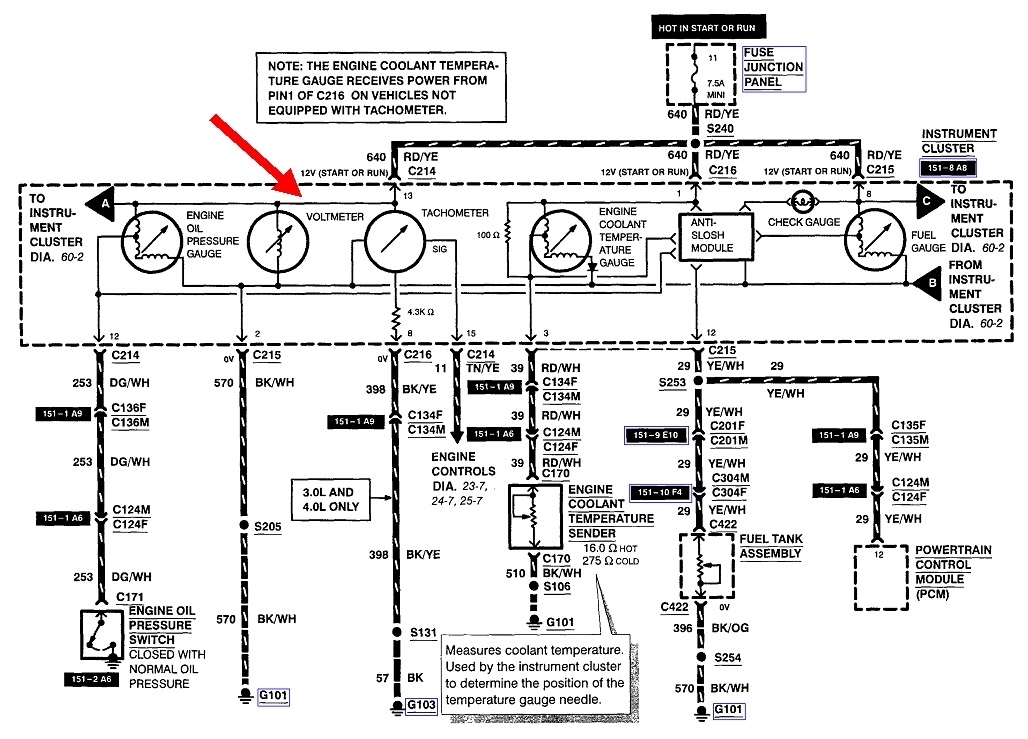
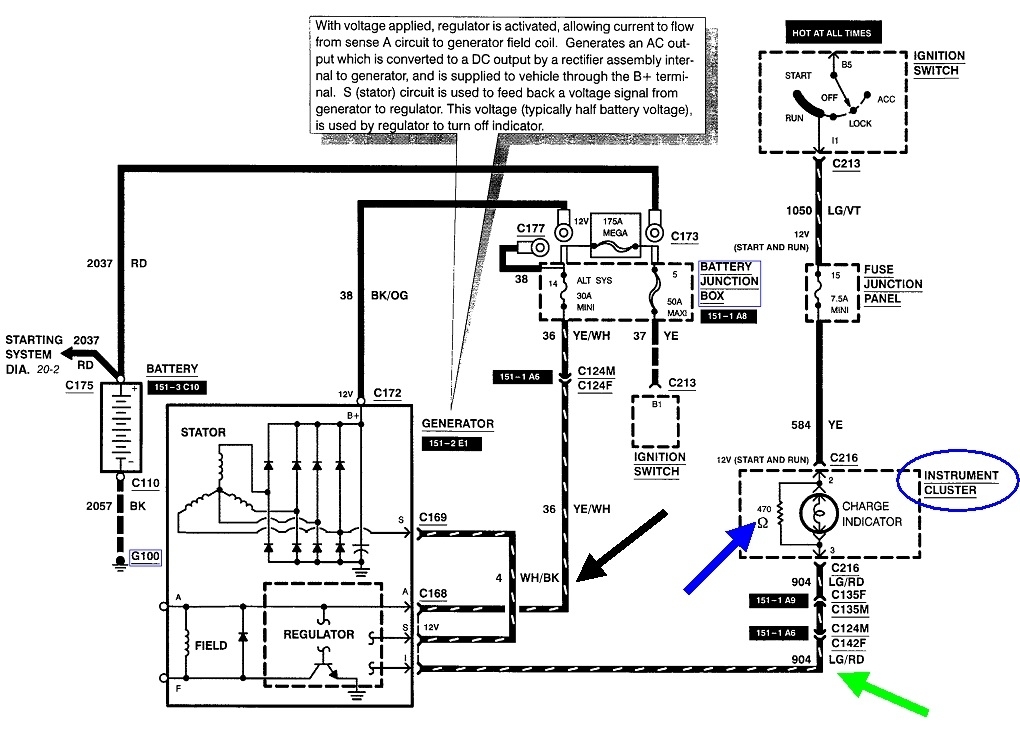
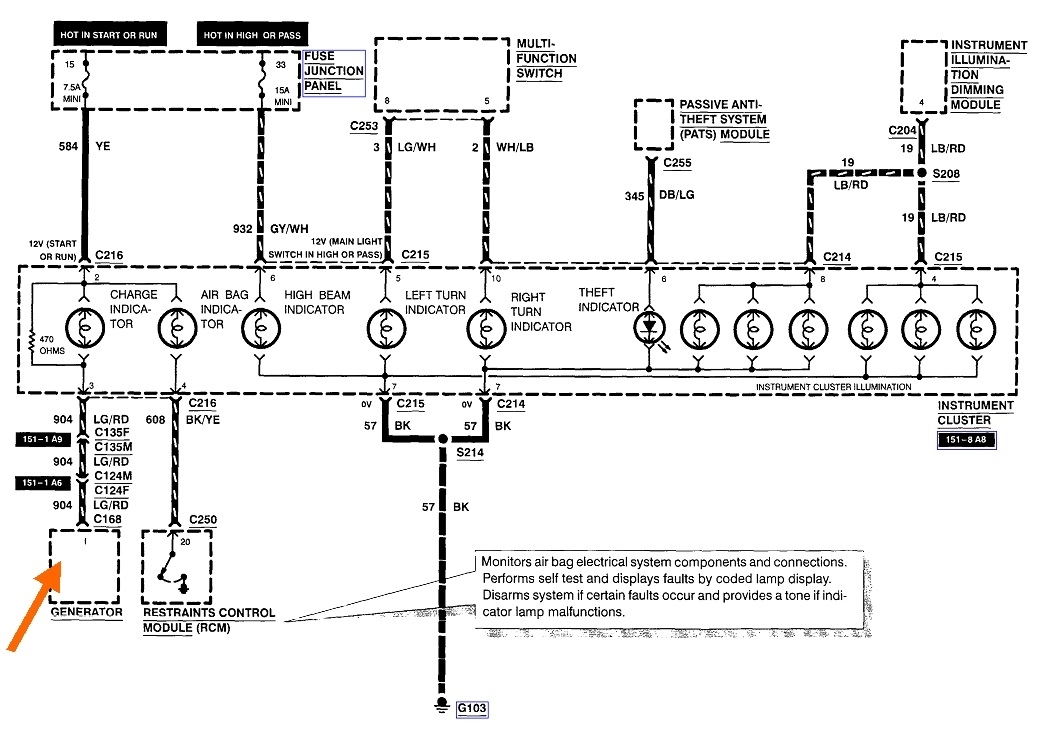
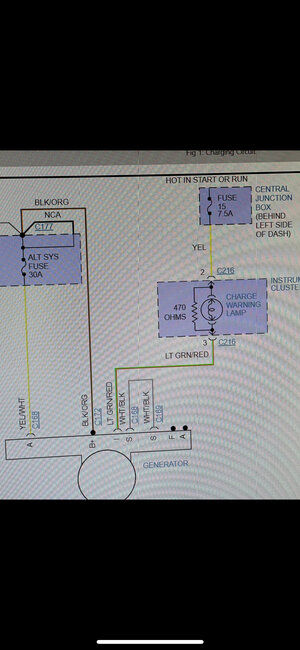
Not the voltmeter, but the instrument cluster is involved with the charging system on Ford and GM models. This first diagram shows the voltmeter just measures the voltage applied to the instrument cluster. The second one shows the entire charging system and the "Battery" warning light circuit coming from the instrument cluster. The third one repeats that bulb circuit in the instrument cluster.
What is needed to get this charging system started is a small amount of current flow through the warning light and then through the generator's internal voltage regulator. That's the wake-up signal that tells the regulator to turn on and start running the generator. Once that happens, a sample of the generator's output voltage, roughly 7 volts, appears on the white / black wire in the three-wire plug on the back of the generator. That tells the regulator the system is working and to put 12 volts back out on the light green / red wire to turn the "Battery" light off.
You also must have 12 volts all the time on the yellow / white wire in that three-wire plug. To be accurate, all of these voltages must be taken with that connector plugged in. Back-probe through the rubber weather seals next to each terminal to take the readings.
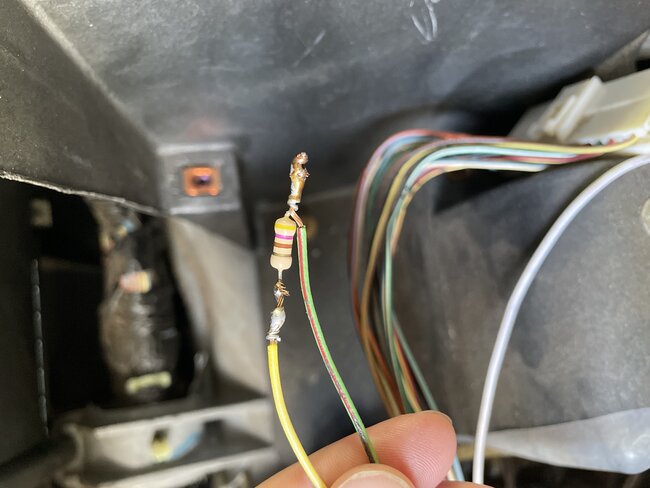
If you don't want to use a "Battery" light, or if the original one burns out, there is also a 470 ohm resistor, (blue arrow) that will pass enough current to get this system up and running. A 470 ohm is a very common value in electronics circles, but the value here is not critical. GMs use a 510 ohm resistor for the same purpose. Any value down to even 100 ohms will work fine. To prevent draining the battery, one end of that resistor must connect to any place that gets 12 volts with the ignition switch turned to "Run". The other end goes to that light green / red wire at the instrument cluster connector or at the three-wire plug on the back of the generator.
Normal operation is to start by measuring the voltage on that light green / red wire with the ignition switch on "Run", engine not running. You'll find very close to 2.0 volts. The other ten volts is across the lit up warning light, and / or across the 470 ohm resistor. Next, with the engine running, you will find full system voltage is on the light green / red wire. That should be between 13.75 to 14.75 volts. That will turn the "Battery light off because now there's full system voltage on both sides of it. The difference is 0.0 volts so the bulb turns off.
Let me know if this helps or if we need to look further.
Images (Click to enlarge)
Mar 31, 2023 at 9:53 AM