Transmission will not engage

2001 FORD F-150
300,000 MILES • 5.4L • V8 • 4WD • AUTOMATIC
Avatar
REGGIE RAMJET
  • MEMBER
  • 1 POST
Engaging in reverse 4-wheel and 2-wheel. Engaging drive only in 4-wheel but not 2-wheel. Checked fluid level it is fine.
Mar 9, 2022 at 3:47 AM
Advertisement
Avatar
ASEMASTER6371
  • Experienced Mechanic
  • 52,796 POSTS
Good afternoon,

When it engages in drive, can you drive it normally with all gears?

https://www.2carpros.com/articles/automatic-transmission-problems

Have you changed the fluid and filter?

https://www.2carpros.com/articles/how-to-service-an-automatic-transmission

Roy
Mar 9, 2022 at 4:35 AM
Avatar
SQM
  • Experienced Mechanic
  • 6,383 POSTS
I wanted to add a few things.
So, when you are in reverse in 4WD, then put it in drive, what happens? Does it stop moving?

This could be an internal failure of the transfer case and causing it to bind. Might want to check for any metal shavings on the fluid.
Also does it make any noise while in reverse and in 4WD?

It is possible that the internal components are binding up wile move forward and not allowing the vehicle to move with the 4WD engaged. Typically, this will create metal shavings along with other metal fragments.

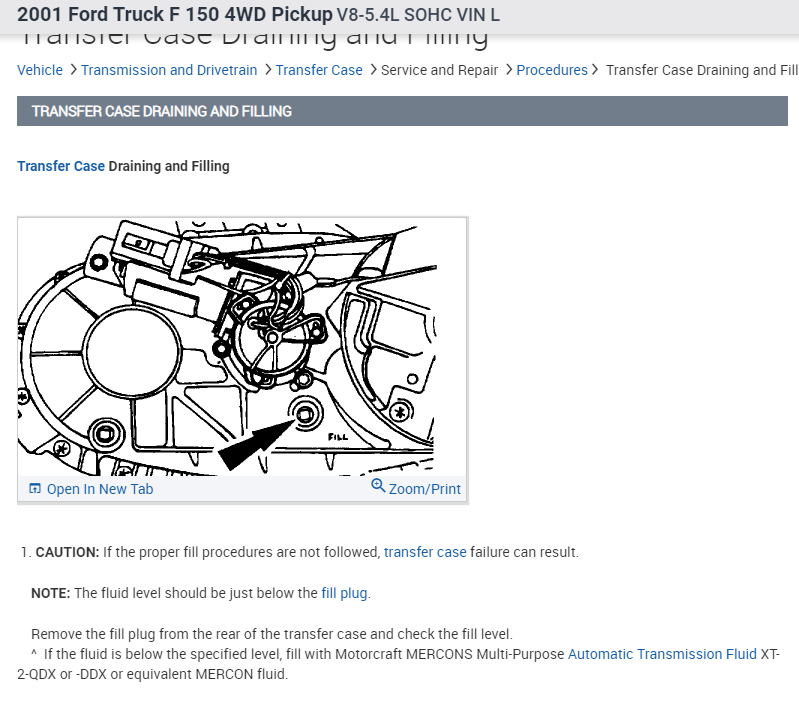
Check the fluid condition thru the check plug on the transfer case. If there are metal shavings it will be easier to see form, there.

I have attached diagrams below for your reference.

Please let us know what you find.
Thank you.
Mar 9, 2022 at 10:26 AM
Avatar
ASEMASTER6371
  • Experienced Mechanic
  • 52,796 POSTS
Please give us your feedback so we can help you.

Roy
Mar 9, 2022 at 5:55 PM
Join 2CarPros for free, one of the most advanced car repair communities on the internet. From first-time drivers to seasoned mechanics, everyone is welcome to reply, share details, and get better answers. You can add a temporary image or video first; uploads are limited to 20 MB.
Ask a Free Question
Repair Safety Notice: This information is for general instructional purposes only. Vehicle repair can be dangerous. Verify all information, follow manufacturer service procedures, use proper tools and safety equipment, and consult a qualified repair shop when needed.