stuck in first gear?

2004 JEEP GRAND CHEROKEE
135,000 MILES • 4.0L • V6 • 4WD • AUTOMATIC
Avatar
JAY CLAYPOOLE
  • MEMBER
  • 1 POST
my jeep has been completely fine ,drove it to an interview today and no signs of anything wrong drove perfect. get out of the interview and start driving and it would not shift out of first gear. there are not any service engine lights on, no signs of anything wrong, no overheating and no slipping. I do not understand what is going on.
Jul 13, 2016 at 5:05 PM
Advertisement
Avatar
JACOBANDNICKOLAS
  • CERTIFIED EXPERT
  • 110,175 POSTS
First, make sure the fluid is clean and full. If it is, you need to have the computer scanned. Although there is no check engine light on, there could be a code stored. Actually, there should be one stored.


Read the guide below, it may shed some light on what happened. It may have ad signs that you missed

https://www.2carpros.com/articles/automatic-transmission-problems
Jul 13, 2016 at 7:55 PM
Avatar
RIVERMIKERAT
  • CERTIFIED EXPERT
  • 6,110 POSTS
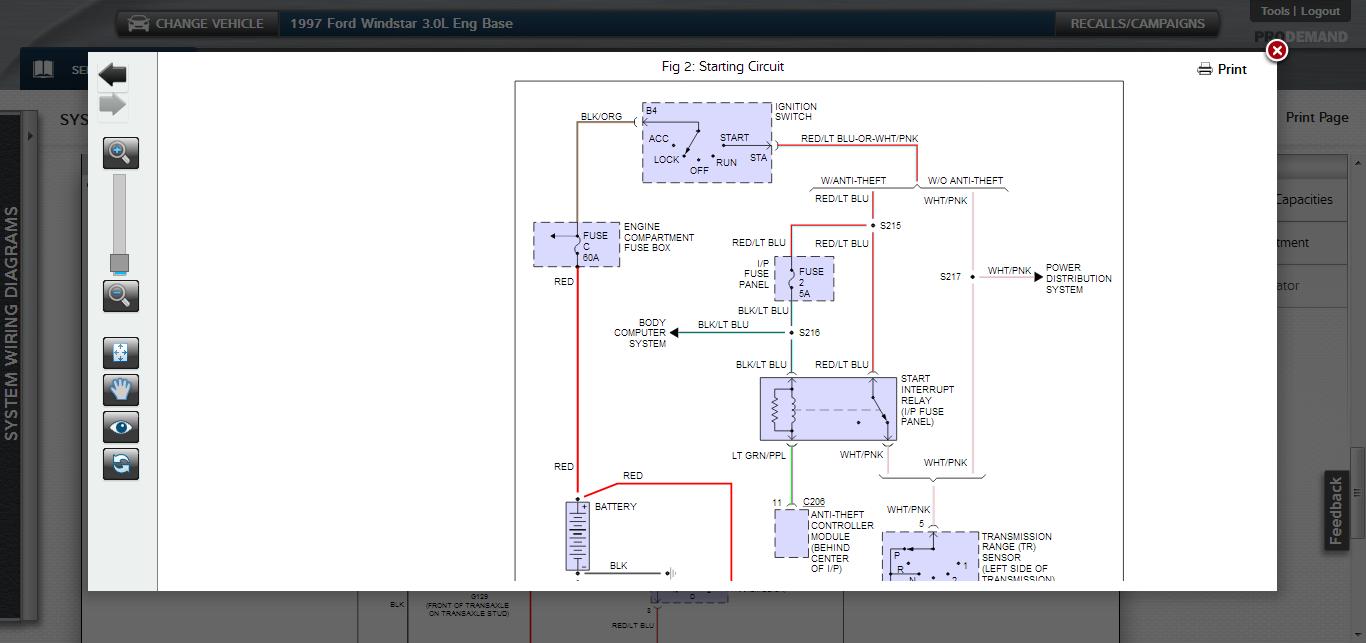
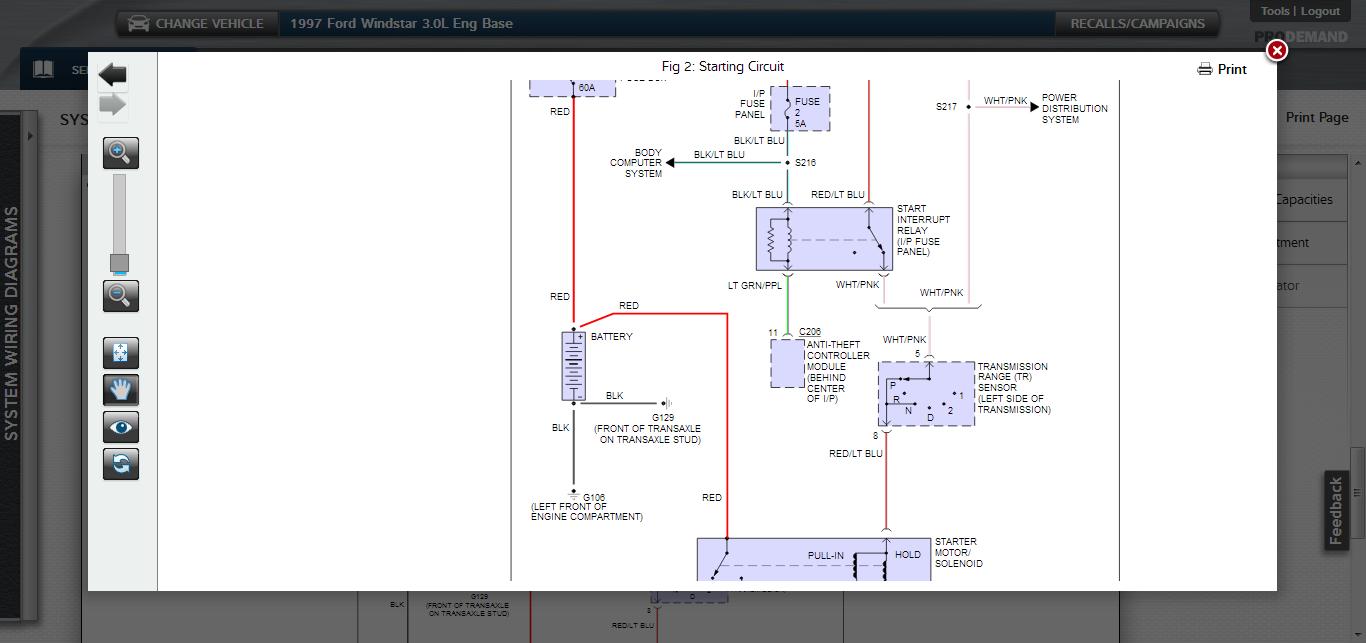
It sounds like the input shaft speed sensor has gone bad but to be sure here is a guide to scan for codes and the location of the sensor. Check out the diagrams (Below). Please let us know what happens.
Jul 13, 2016 at 7:57 PM
Advertisement
Avatar
UBERDOG
  • MEMBER
  • 9 POSTS
Hi I have 2002 jeep grand Cherokee 4.7l I had shift issues. I changed the shift solenoid pack I did a filter change and put the atf4 fluid in old fluid looked fine not much of anything in the pan. It seemed to help the shifting issues. I still had engine lite on saying bad throttle position sensor. I replaced that I also replaced the camshaft position sensor and tested the battery voltage. I still had the engine light on and the TPS fault. I bought A remanufactured PCM and installed it. I test drove it and it seemed great light was out. I pulled into my drive way and the engine light came back on but it still seemed to be running well. The next day I drove it and it started hesitating but still shifting then it started doing intermittent hard downshifting. I ran the codes and it showed p601 PCM internal failure and the code for TPS failure. I cleared the codes out and test drove it again. It would not shift the rpms just kept going up the idle was extremely high causing it to slam when I put it into drive or reverse. I got back parked it went to work came home. I disconnected the battery and held the brake pedal down for 60 seconds to hopefully clear it out. After this the engine light was still on but the p601 code was gone and it said p120 code again. I did not attempt to clear the codes out because when I do it will not shift until you disconnect the battery and reconnect it and the p0120code is still there. I ordered a remanufactured TCM hoping maybe this will correct the issue. I hope I am on the right track and would really appreciate your input Thanks Uberdog
Nov 13, 2018 at 6:06 PM (Merged)
Avatar
CARADIODOC
  • CERTIFIED EXPERT
  • 34,308 POSTS
Hold the phone! Blaming the computers for everything is a throwback to the days when GM had a big pile of problems, mostly in the '80s and early '90s, and replacing them solved a lot of intermittent problems. Since then that has been burned into a lot of mechanics' memories.

You could potentially install more problems by replacing the Transmission Computer. It learns the volume of fluid it takes to apply each clutch pack, and it continually updates the shift points to maintain a nice crisp, like-new shift quality. A new computer can cause mushy or sluggish shifts or it can cause harsh dragster-style shifts until that "clutch volume index", (CVI) is relearned. That rarely takes more than a couple of miles or a half dozen shift cycles, but until that happens, there can be excessive slippage in the clutch packs, especially at the mileage you listed, and that can put the system into "limp mode" where it stays in second gear.

All of what you described could be the result of the TPS code. You'll notice that code description did not say to replace the sensor or that it was bad. They never do. They only indicate the circuit or system that needs further diagnosis or the unacceptable operating condition. Throttle position sensors have a very low failure rate. The vast majority of problems related to them are wiring and connector problems. Intermittent problems can act up so briefly that we can't see them with a digital voltmeter, but the Engine Computer can respond fast enough to catch it and set a code.

Where I would start is by erasing the code, leaving the ignition switch on, then wiggling the connectors and wires to see if the Check Engine light comes back on and that same code sets. The typical things to look for are stretched or corroded terminals in a connector, and wires rubbing through on a sharp metal bracket or where a harness slides back and forth on the body as the engine rocks.
Nov 13, 2018 at 6:06 PM (Merged)
Avatar
UBERDOG
  • MEMBER
  • 9 POSTS
Ok I hear you. I have checked a lot of the engine compartment connections and wiggled them around. I repaired one broken ground I found underneath the vehicle.I could not get any noticeable difference to take place. I have not replaced the battery but the battery seems to work just fine and shows like 14 volts across the top of it. should I get a new battery also would putting a ground Wire form the body of the pcm to the frame be helpful or harmful?
Nov 13, 2018 at 6:06 PM (Merged)
Avatar
UBERDOG
  • MEMBER
  • 9 POSTS
I replaced the battery checked my connections cleared the codes out. The engine light came back on right away. I drove it around came back scanned it again now I have a p0121 code as well as the p601 code but it is shifting fine. Doesn't the 601 indicate TCM failure.I also failed to mention that my cruise control is not working it lights up but does not work I checked vacum lines they appear fine. I pulled up on the brake pedal but the cruise does not work fuses are all good. Help!!!
Nov 13, 2018 at 6:06 PM (Merged)
Avatar
CARADIODOC
  • CERTIFIED EXPERT
  • 34,308 POSTS
Measure the three voltages on the TPS by back-probing the terminals through the rubber seals. These voltages are only correct when the sensor is plugged in. You should find 5.0 volts on the feed wire, 0.2 volts on the ground wire, and around 0.5 to 0.7 volts on the signal wire at idle. That signal voltage will go to as much as 4.2 to 4.5 volts at wide-open-throttle, but it should do that smoothly. If there's a bad spot in the sensor, the signal voltage will pop up to 5.0 volts for a moment and that will set a code. If you see that with a digital voltmeter, you really have a bad spot. Most glitches occur way too rapidly to be detected by digital meters, but the Engine Computer will catch it and set a code. If the Check Engine light turns on again after you erase the codes, and then work the throttle, it almost has to be caused by the sensor because nothing else is being disturbed or is vibrating. That would be weird because those sensors don't fail that often, and two bad ones would really be uncommon.

For the cruise control you really need Chrysler's DRB3 scanner. It will list all the operating parameters including vehicle speed, which switches are pressed, and which outputs are being activated. Better yet, if all the other inputs and outputs appear to be correct, this is the only scanner I'm aware of that displays "reason for last cutout". That will be "vehicle speed too low" when you're just sitting there, so you have to observe that during a test drive above 35 mph. Things you might find include, "brake pedal pressed", and "ignition switch off". When those are indicated incorrectly, it's usually a wiring or connector problem or an arced contact on the brake light switch. There's up to three different switches in the brake light switch, and two of them are involved with the cruise control.

I've seen code 601 before but I can't remember what caused it. I'm pretty sure that one won't turn on the Check Engine light, so unless there's some additional code, you'll never know that one set. Only detected problems that could adversely affect emissions must turn the Check Engine light on. There's hundreds of potential codes that don't turn the light on.
Nov 13, 2018 at 6:06 PM (Merged)
Avatar
UBERDOG
  • MEMBER
  • 9 POSTS
Thanks I will check the voltages tomorrow. I will let you know what I came up with.It seems like everytime I check it I get new codes I just got a 354 code and a101 code Thanks Uberdog.
Nov 13, 2018 at 6:06 PM (Merged)
Avatar
UBERDOG
  • MEMBER
  • 9 POSTS
You've certainly been thorough in your diagnostic process and attempted fixes. The symptoms you described, especially the high idle, shifting issues, and the consistent return of the P0120 code (TPS circuit malfunction), do seem to indicate a problem in the throttle position sensor (TPS) circuit, which could be due to several different factors.

However, replacing the TCM (Transmission Control Module) might not be the best next step if the P0120 code is related to the TPS. The TCM primarily controls the operation of the transmission, not the engine's throttle operation.

The TPS communicates directly with the Engine Control Module (ECM)/Powertrain Control Module (PCM), and not the TCM. A faulty TPS can cause transmission shifting problems because the ECM uses the TPS data to determine shift points. But, the root of the issue lies within the TPS circuit and ECM, not the TCM.

Here are some troubleshooting steps you can consider:

Double-check the Throttle Position Sensor (TPS) Installation: The issues you are facing might be due to an incorrect installation of the TPS or a faulty replacement part. Verify that it's installed correctly, the connection is secure, and that the part is functioning as it should.

Inspect the Wiring: A common issue that can cause a P0120 code is a problem with the wiring to the TPS. Inspect the wiring and connectors for any visible signs of damage like cuts, burns, fraying, loose connections, corrosion, etc.

Check TPS Voltage: Test the TPS voltage using a digital multimeter. The TPS works as a simple potentiometer, so as the throttle opens, the voltage sent to the ECM should increase. If it doesn't, the TPS might be faulty.

Consider the PCM: Since you've already replaced the PCM and are still getting a P0120 code, it's possible that the replacement PCM is also defective, or there could be a problem with its installation or programming. However, this is typically less likely than issues with the TPS or wiring.
Nov 13, 2018 at 6:06 PM (Merged)
Avatar
LOTTYANA
  • MEMBER
  • 1 POST
For the past years years I have owned this vehicle 4.0L 2WD and it has a little over 130,000 miles on it. Today I got into it and placed it in reverse to go to the grocery store and pressed the gas and it did not move. The engine revved, but it did not move. I put it in drive and it pulled forward just fine. I turned it off, and turned it back on and it did the same thing. I drove to the store and is seemed to shift through the different gears just fine. I only went about thrifty five mph so I probably did not get out of third. When I got home, I noticed a slight odor. Smelled kind of like clutch, but it was very brief and was gone before I could be certain.

A little history on the vehicle: My driveway is sloped and occasionally when shifting from park to reverse it will make a clank, as if something was falling into place. Once or twice I have been unable to shift from park to reverse and had to turn the car off and back on before it would do so, however this has not happened in several months. A week ago, I was driving down a steep mountain (7% grade) and turned off my overdrive so that I would not roll to quickly and I again got a clank when it down shifted (was driving approximately sixty mph). Over the past week, I have felt a little shimmy when the RPM's get up higher prior to shifting from first to second and then from second to third, however the shifting itself is smooth, with no noticeable slippage.

My question is, does this sound like a solenoid, a Governor Pressure Sensor (which I hear is pretty unreliable in my particular vehicle), or do you think I may need the transmission rebuilt?
Nov 13, 2018 at 6:06 PM (Merged)
Avatar
HMAC300
  • CERTIFIED EXPERT
  • 48,601 POSTS
These transmission are a known issue with a retainer clip breaking for the reverse servo which makes it have no reverse. You will need to pull the pan to see what I am talking about.

https://www.2carpros.com/articles/how-to-service-an-automatic-transmission

Please let us know what happens.

Cheers
Nov 13, 2018 at 6:06 PM (Merged)
Avatar
CARADIODOC
  • CERTIFIED EXPERT
  • 34,308 POSTS
You found the problem in your second sentence. 4.56 volts represents wide-open-throttle. As I mentioned in my previous reply, you must find around half a volt on the signal wire at idle.

The throttle position sensor is a "potentiometer" just like those used for volume controls in older tvs. The volume could be adjusted anywhere between "0" and maximum. The TPS works the same way but the range is 0.0 volts to 5.0 volts. The difference here is there are mechanical stops in the sensor that prevent it from going below 0.5 volts or above 4.5 volts. (Those two values are the standard values used when discussing electrical theory of operation. In actual practice no two sensors will be exactly alike and they'll reach different minimum and maximum voltages, but they'll be close). The point is the signal voltage will never reach 0.0 or 5.0 volts due to throttle position. It CAN reach those values due to a wiring problem, and that is what sets a fault code.

The easier one to understand is if there's a break in the 5.0 volt supply. That can be a cut wire, a stretched terminal in the connector, or a break inside the sensor. With no 5.0 volts, you'll only see 0.0 volts everywhere along the carbon strip inside the sensor, so you'll always see 0.0 volts on the signal wire, regardless of its position. Less obvious is when you're missing the ground wire due to the same three potential causes. You'll have 5.0 volts at every point on the carbon strip so you'll have 5.0 volts on the signal wire, regardless of throttle position. 0.0 volts will set the code "TPS voltage too low". 5.0 volts will set the code "TPS voltage too high".

Not to confuse the issue, but even harder to understand is a break in the signal wire. The same three things can happen, but for the sake of this sad story, lets say the wire is cut. You'll still read the correct signal voltage at the sensor and on that wire all the way up to the break, but after the break, on the wire leading to the computer, you'll see 5.0 volts. If you'd connect a scanner to view live data, it would also show 5.0 volts for the TPS, regardless of how much you pressed the accelerator pedal. This will throw most people, even those who understand electrical theory very well.

Inside the computer that signal wire feeds a lot of circuitry before the computer sees it and acts on it. Due to all that circuitry, the voltage coming back out on that cut signal wire could "float" to some random value and it would bounce around all over. As long as those random voltages stayed between 0.5 and 4.5 volts, the computer would accept it as normal, and it would interpret it as how much the throttle is opened. If the throttle was at idle, with 0.5 volts on the sensor's signal wire, and the voltage in the computer floated to, . . . lets say 3.2 volts, the computer would think more fuel is needed.

Besides throttle position, the computer also knows direction of throttle change and rate of change. Snapping the throttle open causes an instant increase in air flow, but it takes a bigger change in momentum to get gas flow to speed up, so older cars used an accelerator pump on the carburetors. Here, based on the rate of signal voltage change, the computer simply requests more fuel by holding the injectors open for longer pulses.

The computer is also firing ignition coils and injectors, and those currents can cause voltage spikes. All of these circuits are tied together, so all those pulses, along with turning on a radiator fan relay, looking at cruise control switch settings, and dozens of other things, all of those changing voltages can influence what the TPS voltage floats to.

This is a case of when someone says their engine runs better when they disconnect a sensor. If the TPS voltage was allowed to float to some random value and the computer tried to run the engine on those values, the amount of fuel commanded would constantly be wrong. By unplugging the sensor, or when the ground or 5.0 volt feed wire are broken, the voltage WILL go to 0.0 or 5.0 volts which are unacceptable conditions. The computer will set the appropriate fault code, and it will know it can't rely on that sensor's readings. Instead, it will inject an approximate value that it has calculated by looking at all the other operating conditions and sensor values. For example, it knows engine speed, and at 2000 rpm, it expects the throttle to be open about one third of the way so it might inject 1.5 volts.

All of this is background for this next item. To prevent the signal voltage from floating to some random value, there is a "pull-up" resistor in the computer. That resistor is so big electrically that it has no effect on the circuit whatsoever, that is until the signal wire is cut. The pull-up resistor is connected to the 5.0 volt supply in the computer. When the signal wire is broken, (or the TPS is disconnected), voltage appears on the computer's TPS terminal through that resistor. The computer sees 5.0 volts and recognizes that as an unacceptable condition so it sets the code "TPS voltage too high", but it doesn't know why it's too high. That's why fault codes never say to replace parts. They only indicate the circuit that needs further diagnosis.

Also, as a point of interest, a "pull-down" resistor can be used the same way. It is connected to ground, so if the signal wire is broken, the computer will see 0.0 volts which is also an unacceptable condition and will trigger a fault code.

All of this brings me to the next problem. I'm not sure I followed exactly what you found on the signal wire as far as it going down to 4.1 volts. You never found it near 0.5 volts which it should have been at idle. A break in the ground circuit would send 5.0 volts down the signal wire. A break in the signal wire would result in 5.0 volts at the computer but you would see the correct 0.5 to 4.5 volts at the sensor. You found excessive voltage but not the full 5.0 volts. I can see how that could happen inside a TPS but that would not be a common failure.

Instead, what I'd like you to do is turn on the ignition switch, remeasure the voltage on the signal wire, then unplug the sensor and measure that signal wire again. With it unplugged, if you find anything other than 5.0 volts, we have to think on it. Next, look at those three terminals to see if they're corroded or stretched. I have a feeling the ground terminal or the signal terminal is not making good contact with the pin in the sensor.

If you look at code 601, it doesn't say the TPS voltage is too high or low, it just says "malfunction". That might be because the signal voltage is still below 4.5 volts but the computer knows it can't be right. Even 4.1 volts represents close to wide-open-throttle. If the engine really was running that fast, the rpm signals would be a lot higher and the MAP sensor, which measures intake manifold vacuum, would be a lot lower. Those don't agree with throttle position signal voltage, and that is likely why this code set.
Nov 13, 2018 at 6:06 PM (Merged)
Avatar
UBERDOG
  • MEMBER
  • 9 POSTS
I checked it like you said and here are the numbers I got. Ignition on plugged in the center power wire had 4.56 unplugged it had 4.62 the signal wire had 5.14 plugged in and 5.14 unplugged I started the vehicle and slowly ran the idle up while checking the signal wire 4.19 was what it read.
Nov 13, 2018 at 6:06 PM (Merged)
Avatar
HOCNGUYEN
  • MEMBER
  • 2 POSTS
I had this problem with my car it was the clip broke in half, lol.
Nov 13, 2018 at 6:06 PM (Merged)
Avatar
UBERDOG
  • MEMBER
  • 9 POSTS
I went back and tested the signal wire voltage with the ignition on and I manually operated the throttle when I had it allthe way open I got a reading of 1.2 at the signal wire
Nov 13, 2018 at 6:06 PM (Merged)
Avatar
CARADIODOC
  • CERTIFIED EXPERT
  • 34,308 POSTS
That's backward. Where do you have the voltmeter's negative probe?
Nov 13, 2018 at 6:06 PM (Merged)
Avatar
UBERDOG
  • MEMBER
  • 9 POSTS
They were connected right. After you explained all of that. I went out there and tested it a second time. I saw that the voltage was dropping as the rpms went up. I knew that was wrong because you said the voltage would increase. I had installed a brand new throttle position sensor 3 days ago. I thought it could be bad, but it was brand new.
I was pretty sure when I saw the voltage drop it had to be bad. I installed a brand new one the one that cost three dollars more and it was fixed. I really felt it was highly unlikely that it would be bad but it was. I learned a valuable lesson spend a few more bucks and save yourself a lot of grief. I really appreciate your help and sharing all your knowledge and getting me into the right mind set and redirecting me to solve this problem. I learned a ton of new troubleshooting skills with your help. So once again thanks for the help.Uberdog
Nov 13, 2018 at 6:06 PM (Merged)
Avatar
MVELEZ3
  • MEMBER
  • 1 POST
My 2003 jeep grand cherokee laredo (automatic)will not change from 3rd gear to 4th. When Im trying to enter the interstate, as i reach speeds of 60mph, the check engine light will blink and car will start jerking. Also the jeep will turn off when stuck in 5mph traffic. I feel this is all related. HELP?!?
Nov 13, 2018 at 6:06 PM (Merged)
Avatar
ASEMASTER6371
  • CERTIFIED EXPERT
  • 52,796 POSTS
we need the codes.

from your description, you have engine missfires that may require plugs and coils.

the trans is a separate issue. you need a trans shop to help you

what started all this??

Roy
Nov 13, 2018 at 6:06 PM (Merged)
Avatar
CARADIODOC
  • CERTIFIED EXPERT
  • 34,308 POSTS
You're welcome. To be fair, I don't think you got a defective sensor. I think you had one for a different application. Thanks to my tv repair background, I took a bunch of these apart to install "bugs" for my students to diagnose. Chrysler products are my specialty and we had a bunch of them that were donated for student learning experiences, and I can share that there isn't much inside them and very little that can go wrong. Every TPS I've played with was spring-loaded to go back to idle position, so you just bolt 'em on and you're done. The issue is though some manufacturers might use the same design but on the other side of the throttle body. That means it has to rotate the other way. The plugs could be the same, or they might put the locking tab on the other side of the plug. That's where you might be able to connect your plug to a sensor that's in effect, backward.

Now, to address the other concerns, are you still getting other fault codes? There is an issue you should be made aware of resulting from disconnecting the battery, (or letting it run dead). You said you're doing that to erase the fault codes. When you do that the Engine Computer will lose its memory, and on Chrysler products one of the things that has to be relearned is "minimum throttle". Until it learns that, it won't know when it has to be in control of idle speed. You may need to hold the accelerator pedal down 1/4" to get the engine to start or stay running, (more is not better), you won't get the nice idle "flare-up" to 1500 rpm at start up, and it will tend to stall at stop signs. To meet the conditions for the relearn to take place, drive at highway speed with the engine warmed up, then coast for at least seven seconds without touching the pedals.
Nov 13, 2018 at 6:06 PM (Merged)
Avatar
UBERDOG
  • MEMBER
  • 9 POSTS
You are right on with the incorrect part I got to thinking about it and took a good look at the two TPSs I knew it was operating backwards because of the voltage drop but it being defective did not seem right. So upon looking at them I realized 1 the p/n was different so I looked it up. The engine is a 4.7 and its a 02 Cherokee the part I was given was for a 02 Wrangler with a 4.0 so I was sold the wrong part. It looks identical as you said and fit right on there but when I installed it the same as the one I removed. So I put it on upside down. Like you said it was for a different engine and mounted on the other side I feel pretty stupid but it looked exactly the same. I do blame the parts store for part of it. I would return it but I don't have the receipt. I learned a lot through this though.Thanks.
Nov 13, 2018 at 6:06 PM (Merged)
Avatar
CARADIODOC
  • CERTIFIED EXPERT
  • 34,308 POSTS
Welcome to my world! It's easy to feel stupid AFTER you figure out the problem, but remember that most of the other people you asked didn't know either. This is how I learned best when fixing tvs, and unfortunately I learned a pile, . . . the hard way.
Nov 13, 2018 at 6:06 PM (Merged)
Avatar
MOUZER1
  • MEMBER
  • 2 POSTS
I have a 2000 jeep grand cherokee - 6 cylinder with 166,000 miles. For the last year, when cold, there is a delay / slip when shifting from 2nd to 3rd that is concerning. When all warms up, the problem is reduced by 95%. Would you have any thought on this?

Thank you. guypanz1@aol.com
Nov 13, 2018 at 6:06 PM (Merged)
Avatar
WRENCHTECH
  • CERTIFIED EXPERT
  • 20,761 POSTS
The fact that it's a "cold only" problem tends to point to a sticking valve. I would have the fluid looked at and if it is NOT dark and burned, I would try having it flushed.
Nov 13, 2018 at 6:06 PM (Merged)
Avatar
DANIEL3SIMONS
  • MEMBER
  • 12 POSTS
Recently purchased this jeep, I noticed tranny seals are leaking but I keep close eye on tranny fluid levels and make sure they are good. But I have noticed especially when have cruise control on the rpm will jump around 200rpm but I can tell its not overdrive bc I have hit the overdrive button and it jumps way higher rpms, so was just wondering if have ever heard of a jeep doing something g like this? It seems to shift through gears smoothly and does not happen hardly at all if I'm just maintaining the same speed Nd not using the cruise control but it has happened when was not. Any ideas of sensors to check or any ideas would be much appreciated thank you.
Nov 13, 2018 at 6:06 PM (Merged)
Avatar
CARADIODOC
  • CERTIFIED EXPERT
  • 34,308 POSTS
The torque converter is unlocking intermittently. The clue is your observation of the 200 rpm change which is exactly how much engine speed will change. The torque converter unlocks under heavy acceleration to create a doubling of torque, and it will unlock in what it thinks is a preparation for coming to a stop. Releasing the accelerator pedal to less than about 10 percent will initiate an unlock. Tapping the brake pedal will do that too, although that will also cancel the cruise control. You can duplicate the symptom by holding the accelerator perfectly steady while driving in third or fourth gear over about 45 miles per hour, then briefly tapping the brake pedal. You'll see engine speed go up 200 rpm, then drop back down one or two seconds later when the torque converter relocks.

When this problem starts occurring on its own, use your toes to hold up the brake pedal. If the problem stops, check the adjustment of the brake light switch.

In rare instances it is possible for the throttle position sensor to cause this but usually it's because the signal voltage pops to 0.0 or 5.0 volts. Both of those will be detected as unacceptable conditions, set a diagnostic fault code, and turn on the Check Engine light. If that's not happening, most likely the throttle position sensor isn't the cause.

You can also connect a scanner to view live data to see what is triggering the unlock. The status of the brake light switch will be shown along with various sensor data. By recording a few seconds of information when the unlock occurs, you can play it back slowly, frame-by-frame and see the data in more detail to see what's changing.
Nov 13, 2018 at 6:06 PM (Merged)
Avatar
DNMCKNIGHT
  • MEMBER
  • 3 POSTS
I have a 98 Jeep Grand Cherokee with an automatic transmission that is developing a shifting problem. It seams to shift normally between first and second. The high end of second gear the transmission seems to shift out of gear or slip into neutral allowing the engine to race as if the transmission was in neutral. To allow the the transmission to shift into third I end up allowing the rpm's to drop and it will shift into third. I have checked the ATF (at operating temp in neutral at idle on level surface) and it is on the high mark. The fluid color seems to be a bit dark but not unusually so. Is this a problem that can be fixed by the back yard mechanic with a medium range of experience?
Nov 13, 2018 at 6:06 PM (Merged)
Avatar
RASMATAZ
  • CERTIFIED EXPERT
  • 75,992 POSTS
Replace the transmission fluid and filter if it continues bring it in and have it pressure tested-probable cause could be a shifting solenoid/valve body etc-
Nov 13, 2018 at 6:06 PM (Merged)
Avatar
DOUGLAS KYES
  • MEMBER
  • 1 POST
Hi, I have a 1997 Grand Cherokee with approx 285K miles on her. 4.0L IL, awd, with the automatic trans. I had an issue with the battery draining to flat dead after a few hours, and discovered (after having to jump it a few times) that the brake pedal had been sticking slightly, and leaving the light on. I have corrected that issue, but since then, I have had trouble with it wanting to stall at a stop sign, or traffic light. In addition, the transmission would occasionally not want to shift out of low gear. If I stopped, put it in park, and restarted the engine, this shifting issue went away. Now I still have the stalling issue, but it refuses to shift out of low. Prior to the sticky pedal issue, the engine idled and tranny had been working just fine,

After reading some of your replies, I believe it might be staying in that second gear "limp mode" you referred to.

You had previously mentioned that disconnecting the battery could cause the PCM to lose memory and have to be reset for the correct idle speed, etc, but that it would need to be driven at "highway" speeds and coast a bit to do so. I cant safely run past 30 mph or so, due to this limp mode.
Any suggestions?
Dec 4, 2019 at 9:20 AM
Avatar
STRAILER
  • CERTIFIED EXPERT
  • 53,855 POSTS
This sounds like the transmission needs to be serviced? Also lets run the codes to see what comes up these guides should help us:

https://www.2carpros.com/articles/how-to-service-an-automatic-transmission

and

https://www.2carpros.com/articles/checking-a-service-engine-soon-or-check-engine-light-on-or-flashing

Please run down these guides and report back.
Dec 4, 2019 at 1:09 PM