New alternator keeps frying a wire

1975 DODGE TRUCK
120,000 MILES • 5.2L • V8 • 4WD • AUTOMATIC
Avatar
OLDDODGETRUCK
  • MEMBER
  • 66 POSTS
I was driving my 1975 W100 with a 318 when the voltmeter spiked to 19 then dropped to 8, I drove the two miles back to my house without any trouble. I pulled the alternator and brought it to O'reilly's for testing. They said it was a bad and sold me a new one, I also bought a new voltage regulator since it was cheap and mine was old anyway. I put the new regulator and alternator on and turned the key, immediately the voltmeter went to 8 and the wire that goes from the alternator to the resistor started smoking and fried. I took the alternator back to oreilly's and they tested it and said it's good. I replaced the fried wire, but it did it again. I cant find any shorts, is there something else it could be?
Sep 6, 2015 at 3:07 PM
Advertisement
Avatar
CJ MEDEVAC
  • CERTIFIED EXPERT
  • 11,004 POSTS
ELECTRONIC IGNITION?

HAVE YOU DONE ANYTHING RECENT, PRIOR TO THE VOLTMETER FLARE UP, TO THE RIG?

THE MEDIC
Sep 6, 2015 at 3:49 PM
Avatar
OLDDODGETRUCK
  • MEMBER
  • 66 POSTS
Points, and I put in a different radio about a month ago but nothing besides that.
Sep 6, 2015 at 4:01 PM
Advertisement
Avatar
OLDDODGETRUCK
  • MEMBER
  • 66 POSTS
Got it to stop smoking, found a spot where the wire was grounding, now it just isn't charging.
Sep 6, 2015 at 5:04 PM
Avatar
CJ MEDEVAC
  • CERTIFIED EXPERT
  • 11,004 POSTS
GREAT!

I'VE BEEN LOOKING FOR A WIRING DIAGRAM FOR YOUR RIG

NO LUCK YET (I ALSO HAD TO DO SOME HONEY DOs!)

MAY NOT NEED IT NOW.

I MOSTLY DEAL WITH JEEP CJs, OTHER CARBURETED STUFF SOMETIMES

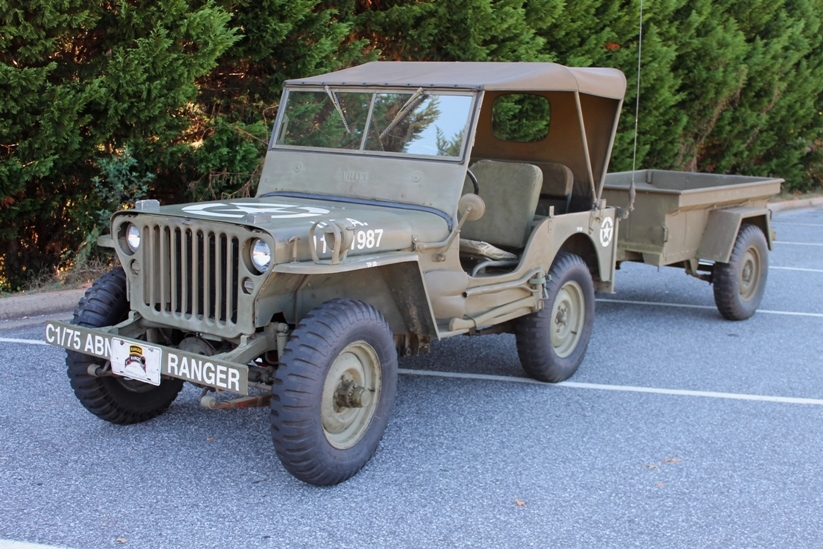
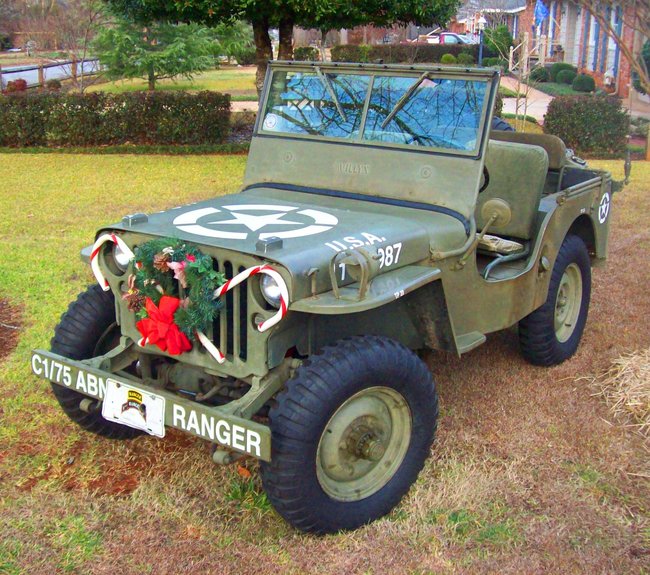
MY PRIMARY JEEP IS A '77 CJ-5, MY OTHER IS A '46 WILLYS THAT I BASICALLY REBUILT FROM ALMOST NOTHING. I'VE MADE BUNCHES OF PICS TO AID IN ANSWER JEEP QUESTIONS.

MORE THAN LIKELY, YOUR RIG USES FUSIBLE LINKS AS A LAST LINE OF DEFENSE TO PREVENT YOUR WIRING (AND RIG) FROM CATCHING ON FIRE

YOU SHOULD BE ABLE TO "TRANSLATE" JEEP TO DODGE

YOU ARE GONNA HAVE TO FIND WHERE YOUR WIRING DRAWS IT'S POWER FROM THE BATTERY

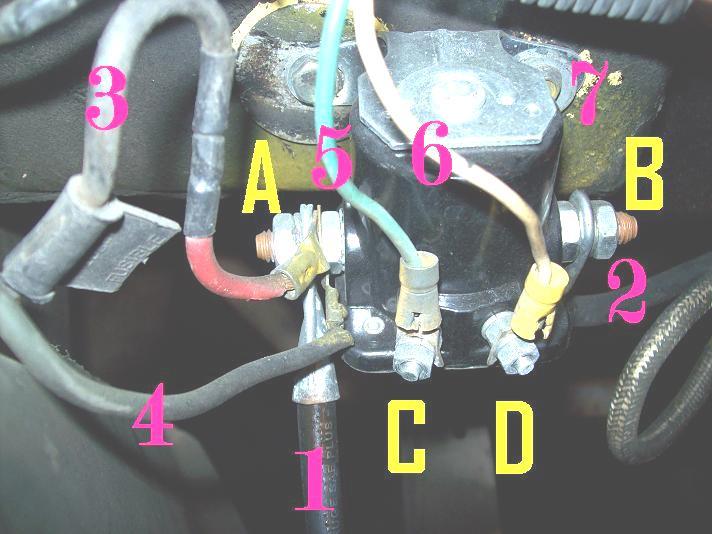
ON THE JEEP IT'S AT THE SOLENOID, WHERE THE POSITIVE BATTERY CABLE IS STACKED TOGETHER WITH A WIRE TO THE ALTERNATOR AND THE OTHER TO THE FUSE BOX

IN MY PIC (OF MY '46 WILLYS, WHICH I COMPLETELY WIRED TO CLOSELY MATCH A 1979)

"1" IS THE POS CABLE FROM MR. BATTERY

"3" RUNS TO THE ALTERNATOR (HAS A TAG ON IT)

"4" RUNS TO THE FUSE BOX (NO MARKING AT ALL)

THE 1st FEW INCHES OF BOTH OF THESE WIRES ARE FUSIBLE LINKS (THEY ARE RATED IN "GAUGE" SIZE) BASICALLY THEY ARE SACRIFICIAL WIRES, LIKE FUSES. THEY ARE AT THE BEGINNING OF THE WIRE TO BE PROTECTED, AND COULD BE IN OTHER LOCATIONS.

IN THE PIC, IT ALMOST APPEARS THAT 3 AND 4 ARE THE SAME WIRE IN A LOOP, THEY ARE NOT!

WHEN A FUSIBLE LINK "GOES", THE WIRE USUALLY DISINTEGRATES

YOU CAN TEST WITH A 12 VOLT TEST LIGHT FROM STARTING AT "GOOD 12V" THEN STABBED INTO THE WIRE AND GET NO VOLTAGE (OR VOLTAGE)

OR

LOOK FOR BUBBLED INSULATION/ BURNED IN HALF WIRE/ OR JUST GIVE THE BEGINNING OF THE WIRE A FIRM PULL, IF THE WIRE IS GONE INSIDE, THE INSULATION MIGHT STRETCH OUT LIKE A RUBBER BAND

*********LET'S INSURE YOU DID NOT PUT A REGULAR WIRE IN PLACE OF A FUSIBLE LINK!!!*********

I'M SPEAKING OF YOUR BURNT WIRE (WAS IT WIRE? OR FUSIBLE LINK?) CAN YOU DETERMINE THIS? YOU REALLY NEED A FUSIBLE LINK, TO REPLACE A BAD ONE!

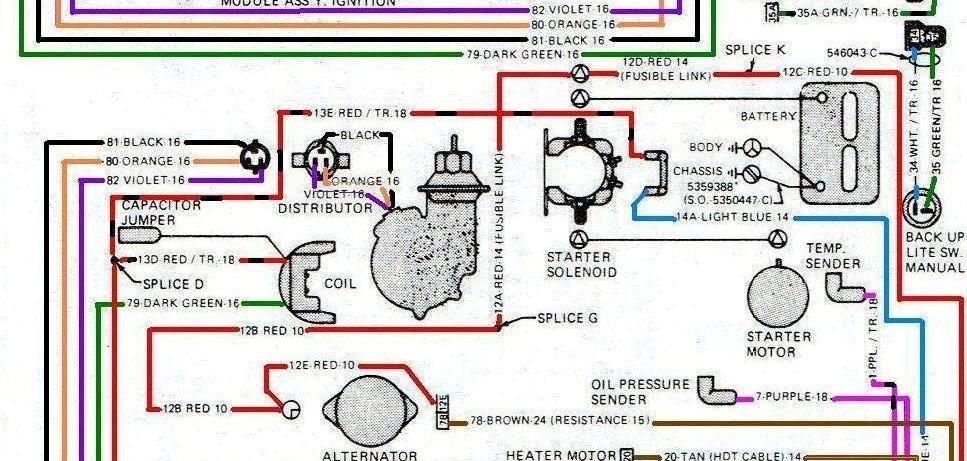
MY SECOND PIC IS A LITTLE CHUNK OF A 1979 JEEP CJ DIAGRAM. I SORTA ZEROED IN ON THE SOLENOID (MY OTHER PIC HAS MY WIRES REVERSED FROM THE WAY THE DIAGRAM SHOWS)

WHAT'S IMPORTANT IS THE BATTERY CABLE STACKED BESIDE THE "FEED WIRES" ON THE SAME BIG TERMINAL, AND THE STARTER CABLE ALL BY ITSELF ON THE OTHER BIG TERMINAL

2nd DIAGRAM SHOWS THE FUSIBLE LINK "VALUES/ GAUGE" THEY SPLICE ONTO THE REGULAR WIRES AT "SPLICE G" AND "SPLICE K"

IT APPEARS THAT THESE 2 WIRES CONNECT AT THE CIRCLE W/ TRIANGLE INSIDE, ACTUALLY, THE CIRCLE THINGEE IS 2 STAKE-ON RINGS STACKED TOGETHER.

NOW THAT I HAVE BORED YOU TO TEARS

CHECK YOUR FUSES BEFORE YOU GO THRU ALL OF THE CRAP I JUST THREW AT YOU!

MAKE SURE YOU DID NOT ELIMINATE A FUSIBLE LINK!

I'LL WAIT FOR YOUR REPLY, HOPEFULLY GOOD NEWS!

IF NOT, KEEP ASKING ME STUFF, I'LL THEN PICK UP ON MY WIRE DIAGRAM SEARCH QUEST THAT I PUT ON HOLD!

THE MEDIC


Sep 6, 2015 at 9:00 PM
Avatar
OLDDODGETRUCK
  • MEMBER
  • 66 POSTS
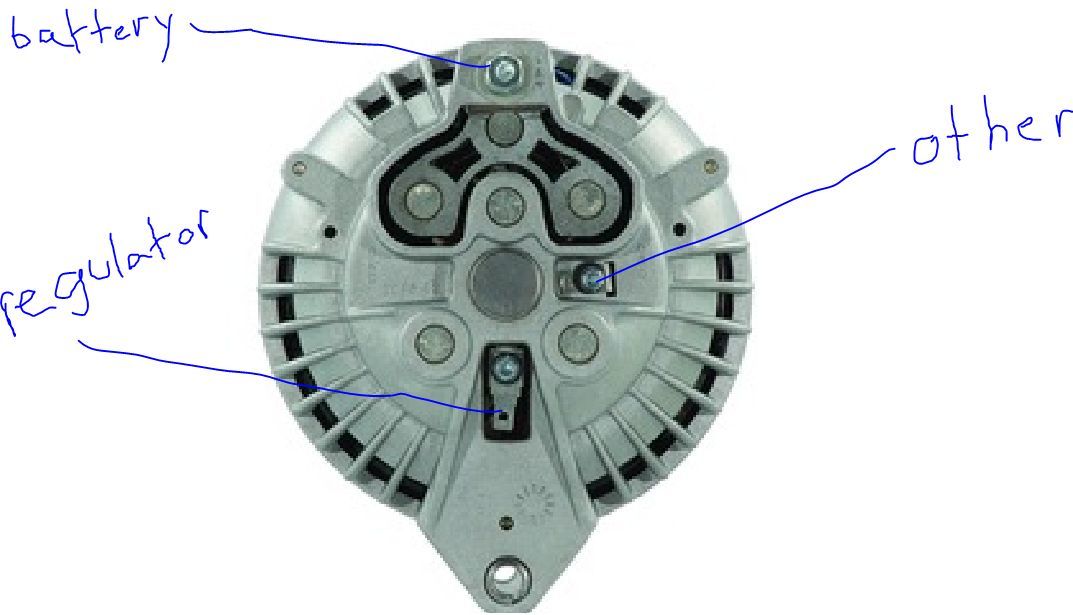
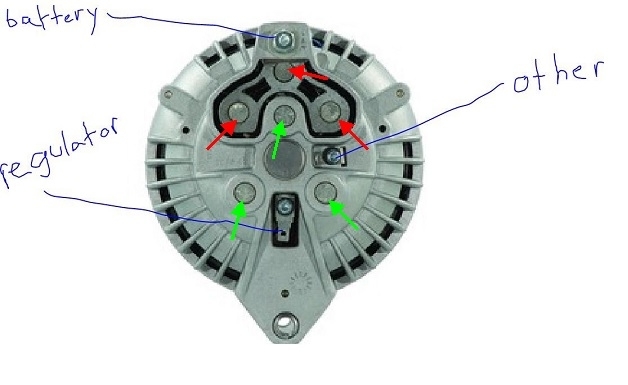
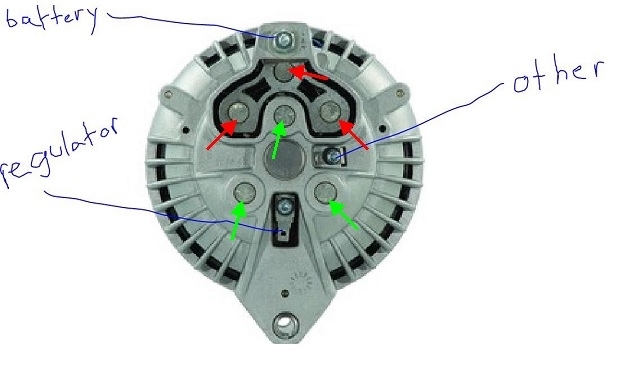
Thanks for the help, I did some research and I think the alternator Oreilly's sold me is the wrong alternator. The part number is Ultima 01-0657, on Oreilly's website its says its for a 69 W100. I also found this video, http://www.youtube.com/watch?v=iuOO_fVroo4, and it says that Chrysler used different types of alternators in the late 60's and 70's. My old alternator had to spade connections of the back, and the one I got from Oreilly's has one spade connector and one bolt and nut connector for an eyelet. I'm not sure if that makes a difference or not. I also went through my wiring and as far as I can tell all the wires are good, all the fusible links are good, and my fuses are good as well. One other question, the alternator has three connections. The big one goes to the positive terminal on the battery, so it should have constant power, right? The green spade connection goes to the regulator and shouldn't be grounded or powered, right? Finally the third red wire splices to about 8 other red wires further down the wire bundle, should this wire be grounded? I attached a picture so you can see the connections.
Sep 7, 2015 at 12:41 PM
Avatar
OLDDODGETRUCK
  • MEMBER
  • 66 POSTS
Just off the phone with Oreilly customer service and they sold me the wrong one. Thanks for your help though!
Sep 7, 2015 at 1:06 PM
Avatar
CJ MEDEVAC
  • CERTIFIED EXPERT
  • 11,004 POSTS
SORRY I COULDN'T DO MORE

IN THE BEGINNING, I ASKED YOU IF YOU HAD ELECTRONIC IGNITION

I WAS GONNA THROW "THIS" ON YOU IN THE NEXT RESPONSE

I HAD READ AN ARTICLE IN A "VALIANT" SITE MONTHS AGO WHEN I WAS LOOKING FOR SOMETHING ELSE FOR SOMEBODY ON HERE.

IT DISCUSSED THAT WHEN ELECTRONIC IGNITION CAME INTO BEING, THERE WAS SOME BIG MIX UP ON THE ALTERNATORS USED WITH THE POINT SYSTEM WERE THE SAME OR WOULD WORK WITH THE NEW SYSTEM. ACCORDING TO WHAT I REMEMBER, THEY WERE VERY DIFFERENT SOMEHOW, AND FOR A WHILE, DIFFICULT TO FIGGER OUT/ OBTAIN THE RIGHT ONE BECAUSE THE PART STORE (BIG COUNTER TOP PAPER) CATALOGS WERE ALSO PRINTED WRONG.

WHETHER TRUCKS WERE AFFECTED, I HAVE NO IDEA!

'COURSE I WAS JUST A LITTLE FELLER IN THE '60s AND EARLY '70s, SO I HAVE NO 1st HAND EXPERIENCE WITH THAT!

I FIGGERED SURELY BY NOW IT WAS STRAIGHTENED OUT!

I'M NO ENGINEER, BUT IT LOOKS LIKE GENERATED POWER IS GENERATED POWER AND WOULD NOT AFFECT EITHER TYPE OF IGNITION, I RECKON THAT'S WHY I HAVE THE JOB I HAVE NOW!

GLAD IT WAS THAT EZ FOR YOU!

EVER HEAR OF PERTRONICS?

SEE THIS LINK!

https://www.2carpros.com/questions/1972-volkswagen-beetle-should-intake-manifold-very-hot-touch

THE MEDIC
Sep 7, 2015 at 5:18 PM
Avatar
TROUBLE0
  • MEMBER
  • 15 POSTS
I'm having the same issue with my 1975 dodge sportsman rv. It has the new mopar alternator...and I had questions about using the old points style, or newer electronic regulator. Of course, I replaced both. But the wire fryed again...mid running. No load. There are however many possible short wires that go nowhere, to inspect. But what you discribe about the redwire going to the junktion with the 5 others is exactly like mine. I've cleaned all contacts that are reachable....the battery is new. This is confusing.
Dec 2, 2017 at 12:08 AM
Avatar
CJ MEDEVAC
  • CERTIFIED EXPERT
  • 11,004 POSTS
Is the wire getting fried a fusible link?

The Medic
Dec 2, 2017 at 5:41 PM
Avatar
TROUBLE0
  • MEMBER
  • 15 POSTS
I don't know....but the wire was fryed with the previous alternator...so not sure when the prob started. Its a new vehicle to me. With that said...you mean a link wire with re-settable fuse? I can istal pne...but will it solve the problem? I would like to move on to installing my solar panels.
Dec 4, 2017 at 10:36 AM
Avatar
TROUBLE0
  • MEMBER
  • 15 POSTS
Oh wow...I just discovered that it was indeed a fuseable link...I'm on the right track, for sure, thank you.....I hope I didn't blow the new regulator, or alternator in doing so.
Dec 4, 2017 at 11:49 AM
Avatar
CJ MEDEVAC
  • CERTIFIED EXPERT
  • 11,004 POSTS
Use the same (size) Amp rated fusible link for replacing it.

These are the last line of defense before wires start melting/ burning/ no more vehicle.

Keep us posted with progress!

What finally clicked to let you know it was a fusible link? (may help another 2car-er reading thru your post)

The Medic
Dec 4, 2017 at 5:32 PM
Avatar
TROUBLE0
  • MEMBER
  • 15 POSTS
Just inspecting the original fry wire. I was told the coating would be more plyable and a lump would indicate a fuse. But I wasn't sure, so I bought the book. Everything with the red wire is correct..but it isn't a fusable link. So my question now is what to check next. ...could it be that the short trip to the parts house with bad alternator blew the new regulator? I feel like I've gonein a circle....but it wouldn't be the first time..lol. thanks.
Dec 4, 2017 at 11:20 PM
Avatar
CARADIODOC
  • CERTIFIED EXPERT
  • 34,308 POSTS
Hi guys. Maybe I can clear up some of the confusion. Fuse link wires are just a piece of wire. There's nothing inside them like fuses or lumps. The wire is a standard copper wire, but it is of a smaller diameter than the rest of the wires it protects. That makes it the weak link in the chain, so it is what burns open. For legal and safety ramifications, that link can not be replaced with any old piece of wire of the same gauge. Unlike regular wire, the insulation on fuse link wires will not burn or melt. It will be a dull color, . . . much different-looking than normal, shiny wire. The color denotes its current rating. You can buy replacement fuse link wire at any auto parts store. Typically you'll get about 12" which is plenty to make two or three repairs. The length of the section you splice in is not important.

To test a fuse link wire, just tug on it. If it acts like a wire, it's good. If it's burned open, it will stretch like a rubber band. Since these are always under the hood where moisture is an issue, always solder the splices, then seal them with heat-shrink tubing with hot-melt glue inside. Never use electrical tape in a car or truck. It will unravel into a gooey mess on a hot day.

A fuse link wire should not be replaced with a fuse holder and fuse, even of the correct current rating. Some people do that when there's an intermittent short that is hard to locate. The problem is the wire takes some time to burn open and it can hold up to a momentary overload such as when a motor draws high start-up current. A regular fuse used for a radiator fan motor, for example, would pop as soon as the motor turned on, but the delayed action of a fuse link wire would prevent it from burning open.

One problem with fuse link wires, when you're diagnosing a dead circuit, is when the wire burns open, it leaves a carbon track behind, similar to what is found inside a distributor cap that got wet. That carbon can conduct enough current that a digital voltmeter can "see" the 12 volts coming from the battery. You can't get enough current through that carbon, so the circuit is dead, but the voltmeter incorrectly says everything is okay up to that point. This is where an inexpensive test light is much more accurate than the voltmeter. Voltmeters work by detecting voltage. That's easy to do. Test lights work by current running through the bulb to make it glow. That can only occur in a circuit that is really okay.

As for the charging system, in my opinion, this is the best system ever produced. Unlike GM which is famous for innovations that benefit GM, Chrysler has a real long history of innovations that benefit car owners. This wondrous story is about two of them. Chrysler developed the "AC generator" for use on 1960 models, and copyrighted the term, "alternator". It develops alternating current, just like we have in our homes, but it's three-phase, like is found in factories, because it is much more efficient. There is no way to store alternating current, so six "diodes", (one-way valves for electrical current flow), redirect the various currents to all go one way out the output terminal, to the battery's positive post.

Three things are always needed to generate a current mechanically, meaning a generator. Those are a wire, a magnetic field, and most importantly, movement between them. That's why we need to spin it with a drive belt. The wire is wound up into coils so the voltage will be "induced" into all of them. That increases the voltage generated to around 14 volts. The magnet is an electromagnet, and is also a coil of wire. Up to three amps maximum is all that's needed to make the magnetic field. That is passed through a pair of brushes to the rotating coil. In the older DC generators, the high output current was taken off the rotating armature. On a good day, that could be as high as 30 amps, (pretty pathetic by today's standards), and all that current had to go through the brushes. That was a lot to ask of those sad brushes.

Once the battery has been recharged from cranking the engine, the only current needed from the alternator is enough to run the rest of the electrical system. It is not practical to slow the drive belt to reduce alternator output, and we can't remove some of the loops of wire from the "stator", or output winding, but it is real easy to reduce the strength of the magnetic field to make it less efficient. This is where the voltage regulator comes in. It is a variable resistance in series with the field winding. "Series" means whatever current flows through the coil goes through the regulator next, just like water flowing in a river flows through one town, then the next town. By increasing its resistance, less current flows through the regulator / field winding, that makes a weaker magnetic field, and that induces less voltage, (electrical pressure) in the stator winding. Less voltage causes less current to flow out of the output terminal.

The first version of Chrysler's charging system was used from 1960 to 1969. It has nothing to do with whether the vehicle had breaker point ignition or electronic ignition. You won't be tested on this later, but this first version was called a "B"-type circuit because the voltage regulator came "Before" the field winding. To say that more clearly, current flow started, for purposes of this story, at the battery's positive post, flowed through the ignition switch, then to a number of places under the hood. Everything under the hood that got 12 volts from the ignition switch used dark blue wires on almost all cars, and red wires on the majority of trucks. That included the ignition system, electric automatic choke heater, and things like that. That 12 volts went to the voltage regulator first. This was used to power the regulator and it was the current supply for the alternator's field winding. It was also where the regulator sensed system voltage so it knew what to do to control alternator output. It had to sense system voltage in relation to something, meaning ground, so the regulator has to be bolted to a good, paint-free place on the body sheet metal.

The current continued on to the field terminal on the back of the alternator. From there is flowed through the first brush, through the field coil, through the second brush, then to ground and back to the battery's negative post to complete the circuit. Here is where the first important detail starts. Since current goes right to ground after that second brush, it made sense to bolt that brush right to the case. If you look at the photo OLDDODGETRUCK posted, where he's pointing to "other", that is the brush that's grounded. In this system, the higher the voltage you find on the terminal marked, "regulator", the more current will be flowing through the field winding, the stronger will be the magnetic field, the higher the output voltage will be, and the higher output current that will cause to flow. This regulator works by cycling fully-on, then fully-off. The ratio of on-time to off-time is varied to adjust average field current flow and the strength of the magnetic field. Digital voltmeters typically don't work well to measure this field voltage because they take a reading, analyze it, then display it while they take the next reading. Every reading they take will be either 0 volts or full battery voltage, with no in-between. The display will bounce around and be unreadable. The older pointer-type analog meters smooth it out to give an average reading. If you don't have one of those, a test light works best to provide a relative indication.

As a point of interest, I added some nifty arrows to the photo to show the diodes. The green arrows are pointing to the three "negative" diodes. Diodes all have two terminals and a polarity. Here the term "negative" just means which of those two terminals goes to ground. It is attached to the metal cover that is pressed into the alternator's rear housing. The red arrows point to the "positive" diodes. The metal block they're in is insulated from the rest of the housing, and it is where the output terminal is attached. That's the "battery" terminal is this dandy photo.

These diodes had an uncommonly low failure rate, but any time one diode fails, the most you'll be able to get under full load is exactly one third of the alternator's rated capacity. The full rated output for cars with air conditioning was commonly 55 amps, so if you found around 15 to 20 amps during the output current test, you knew there was a bad diode.

Not to complicate the issue unnecessarily, output current starts at ground, flows through a diode, one third of the stator winding, through another diode, then out to the battery's positive post. Those diodes are all that stands in the way of a direct short to ground. If one diode shorts, you still have the three in the other group to block current flow. It's when you have any one negative diode shorted AND any one positive diode shorted, that you have a dead short, lots of current flow, and a burned-open fuse link wire. Be aware the size of that fuse link wire depends on the current rating of the generator installed at the factory.

The second version of this charging system showed up in 1970 and was used all the way up to 1989 Fifth Avenues and full-size vans. The two differences were the voltage regulator came "After" the field winding, so they called it an "A" circuit, and to accommodate that, the second field terminal could not be grounded. From the ignition switch again, current went to the first field terminal, through the brushes and field winding, THEN to the voltage regulator, through it, then to ground and back to the battery. Once again the regulator has to be bolted to a solid point on the body because that is one of its three terminals.

The dark blue wire still brings in the 12 volts. Now a green wire continues the current path to the regulator. In this case, there is another blue 12 volt wire going to the regulator. That is the current supply to run its electronic circuitry, and it is where it senses system voltage.

Here's where I get to impress you with the problems you're running into. The original 1960 – 1969 alternator can only be used on those years, with the mechanical voltage regulators. It is impossible to use them on the 1970 and newer models because you need that second brush / terminal to be insulated from ground. The opposite is not true for the 1970 – 89 version. If you want to use it on the earlier cars, all you need to do is hook the blue wire to either one of the terminals, and ground the other terminal. In fact, you'll see there's a fiber insulating washer under the screw heads. For many years we were given a separate metal washer with a rebuilt alternator to replace the fiber one. If you installed the metal washer on the second terminal, it became a 1960 – 69 model.

Testing these systems was real easy and fast. The first thing to be aware of is it is physically impossible for an AC generator to develop much more than what it is designed to produce. If you have a 55-amp alternator, that's all you can hope to get during a full-load output current test. To do that test, you need to make the magnetic field as strong as possible. That simply means eliminating the voltage regulator and the restriction to input current flow it presents. To say that a better way, you need to ground one field terminal and apply full battery voltage to the other terminal. The manufacturer always gives you one of those. You have to supply the other with a jumper wire.

In the first version, one brush was already grounded. You need to supply battery voltage to the other terminal. Touch a jumper wire between that terminal and the battery's positive post, or from that terminal right to the alternator's output terminal. The system is now charging wide open. Voltage can rise to dangerous levels that can destroy computers and any light bulbs that are turned on, so we only do this for a few seconds, . . . just long enough to take a current reading. At the same time we're doing this, we have a load tester connected to give that current a safe place to go. Since all generators are inefficient at lower speeds, it is customary to raise engine speed to 2000 rpm during this brief test. This is also called the "full-field" test because the field winding has full battery voltage across it. That will never occur once the regulator is back in the circuit.

This full-field test gets even easier on the newer version. 12 volts is always applied to the terminal with the dark blue wire. We have to supply the ground to the terminal with the green wire. That can be done at the voltage regulator's plug, but it's way much easier at the alternator. Just grab a screwdriver, touch the tip to the terminal, then flop it over to touch the housing at the same time. You just bypassed the regulator to make the system run wide open. Remember, the terminal is insulated from the screw head, so this won't work if you have the screwdriver on the screw instead of on the terminal.

GM came out with their own AC generator around 1964, and the second version in 1972 that used an internal voltage regulator. This was also an "A"-type circuit where we needed to ground one field terminal to do the full-field test. If you're familiar with the "D"-hole on the back housing, that is what it is for. In my opinion, this was the second-best charging system after Chrysler's second version.

With Chrysler's newer system, you can connect the blue and green wires to either terminals on the alternator. You'll get a rotating north, south, north, south magnetic field. If you switch the two wires, you'll get a rotating south, north, south, north magnetic fields. Works the same way.

I have to add one important word of warning. NEVER, NEVER, ever remove a battery cable while the engine is running, on any car. That was a trick used by mechanics years ago who didn't understand how these simple systems work. The thinking was if the engine kept running, the alternator must be good, but if you think I'm typing a novel now, just wait until I explain why an engine can stall even though the alternator is good, and it can stay running when the alternator is defective. This is not a valid test. Also, the battery is part of the team that lets the voltage regulator do its job. Without the battery in the circuit, system voltage can easily rise to as high as 30 – 35 volts when you increase engine speed. I did that every year on the test bench to show my students why that would destroy numerous computers. On the older models without computers, it can destroy the alternator's internal diodes, voltage regulator, radio, and any light bulbs that are turned on.

If you're burning up a wire, check if your replacement alternator has that one fiber washer replaced with a metal one. If it does, and you connect the green wire there, the alternator will be full-fielded all the time and you'll damage the battery from severe over-charging. If you connect the dark blue, (or red, if that's what is used on your truck), wire there, you'll have a direct short to ground. There's no fuse link wire to protect that part of the circuit, but there will be one further back in the circuit closer to the battery. If that burns open, you'll have more than just a dead charging system. Most likely the ignition system will be dead too, so the engine won't start or run. It's also possible for just the wire between the splice and where it goes to the alternator's terminal to burn up, especially if that section is a smaller diameter wire. Remember, that wire only has to pass a maximum of three amps, and that is only during full-field testing.

To finish up this amazing history lesson, Chrysler was the first manufacturer to have an electronic ignition system in 1972 on Dodges, and Chryslers and Plymouths in 1973. GM got there in 1975 with their HEI systems. AMC used an electronic ignition module in 1970, but it was still triggered by breaker points. The whole idea of electronic systems was to eliminate the wearing of the point's rubbing block, which caused ignition timing to change gradually, and the resulting emissions to increase. Chrysler's was the first system to solve that. They also had the first attempt at computer controlled ignition systems in 1977, the first lock-up torque converters in 1977, first domestic front-wheel-drive, first air bags, first anti-lock brakes, (1969), and as I originally mentioned, these were things that were of great benefit to the car owners.

Chrysler's electronic voltage regulators have temperature compensation built in. Charging a battery is a chemical reaction, and those slow down in colder temperatures. These regulators bump up the charging voltage a little to help the battery charge. Later, when we got electronic fuel injection, Chrysler used the same alternators for a few years but they put the voltage regulator inside the Engine Computer. There, it could "know" all the things the computer knows, then it could adjust alternator output based on incoming air temperature, whether the AC compressor cycled on or off, and a number of other factors. It could even turn the alternator off completely to save up to five horsepower when passing a string of cars at wide-open-throttle, or going up a steep hill.

By the late '80s, some models came with smaller, silver Nippendenso alternators or a few with larger Bosch units, but while the parts were quite different, diagnostic steps were always the same. In the early to mid '70s, there were a few really huge alternators used mainly on police cars. They could develop up to around 75 amps even though field current was still only a maximum of three amps. They used the same electronic voltage regulators. Today it is common to get over 140 amps from an alternator less than half the size of those older police car units. The most common failures are worn brushes that cause an intermittent loss of charging for a few weeks before that becomes permanent. Replacement brushes for the 1970 – 89 models cost bout $3.00 / pair and can often be replaced without removing the alternator from the engine. Same is true with a lot of the brush assemblies on the Nippendenso alternators, but they cost around ten bucks. Their typical life expectancy is around 180,000 to 200,000 miles.
Dec 5, 2017 at 6:20 PM
Avatar
TROUBLE0
  • MEMBER
  • 15 POSTS
Ok, thank you for that. But I did find what I am sure is the. Culprit. Will post pics of connector to regulator. It is a differe plug style than what fits snug on the regulator. The reason it was missed...the parts store guy put it on for me. Anyway, its causing an overload to other wire on alternator. I put in new wire...will need to repair some that melted to red. Bought a new regulator. And ordered a new connector plug. That should do it. I'll update when done, & tested. Thanks again.
Dec 5, 2017 at 11:25 PM
Avatar
CARADIODOC
  • CERTIFIED EXPERT
  • 34,308 POSTS
You can find a new plug for the regulator at any salvage yard. It's a triangular 3-terminal plug, but with just two wires in it. I'm still confused on what is being overloaded. That's not a term I associate with charging systems. If the green wire between the alternator and regulator is shorted to ground, the alternator will charge wide open, but the only thing that will damage over time is the battery. If the terminals in the plug for the regulator are loose and making intermittent contact, the charging system will just stop working. If there is some other problem, I'm looking forward to seeing what you find.
Dec 6, 2017 at 3:58 PM
Avatar
TROUBLE0
  • MEMBER
  • 15 POSTS
ort to be betweenn the alt. and regulator, with bypass. With that, went back to alternator.. the red 12v lead connection terminal was loose...and I say that with high respect for the terminal...lol. So
Dec 9, 2017 at 9:32 PM
Avatar
STRAILER
  • CERTIFIED EXPERT
  • 53,870 POSTS
Glad you could get it fixed, that kind of problem can be tough. Please use 2CarPros anytime we are here to help

Cheers, Ken
Dec 16, 2017 at 1:01 PM
Avatar
TROUBLE0
  • MEMBER
  • 15 POSTS
Not fixeed...im having probs with message board. I had new alt.tested...they said it was good. But I was still having trouble, with the red wire terminal wouldn't tighten. so Ireplaced alt. again. I did replace that reg. Plug...now no frying wire, but
Dec 24, 2017 at 9:06 PM
Avatar
CARADIODOC
  • CERTIFIED EXPERT
  • 34,308 POSTS
So is the system working? If not, lets clear up the wire colors. On cars, the fat output wire from the alternator is a black wire bolted to its terminal. The two smaller wires plug into the brush terminals. The 12-volt feed is dark blue, and the control wire going to the voltage regulator is green.

The dark blue 12-volt feed wire was often a red wire on trucks. When you mention the red wire, is it one of those smaller brush terminals which is also found in the regulator's plug, or is it the fat output wire?
Dec 26, 2017 at 2:34 PM
Avatar
TROUBLE0
  • MEMBER
  • 15 POSTS
ok on mine the 12v lead is red. otth
Dec 28, 2017 at 11:24 PM
Avatar
CARADIODOC
  • CERTIFIED EXPERT
  • 34,308 POSTS
Is that the fat output wire that's bolted to the large terminal on the back of the alternator or one of the two smaller ones that slides onto one brush terminal?
Dec 29, 2017 at 4:27 PM
Avatar
TROUBLE0
  • MEMBER
  • 15 POSTS
Have to start new thread having issues with this message board lag. And yes, to answer your question
Dec 29, 2017 at 11:23 PM
Avatar
CARADIODOC
  • CERTIFIED EXPERT
  • 34,308 POSTS
Are you purposely trying to make this confusing? I asked which wire is red and your answer is "yes"?

The lag in replies is because I had a major house fire a few years ago, and I don't have internet service. I have to trudge outside where it's 9 degrees below zero, hope my van will start, drive 21 miles round-trip to find someplace to connect to a wireless service, and hope I don't have to do that from inside my van with an inoperative heater, all so I can try to help people solve their car problems. I can't stand the cold for more than a few hours, so I head back home where I can squat in front of a little space heater. If you don't reply back within those few hours, I won't see it until the next day. This is why I'm not skipping any days. I'd rather stay holed-up in my garage where I'm warm.

There is no one who knows more about this charging system than me. That isn't hard because there isn't much to this system, and very little that can go wrong with it. If I'm standing next to the vehicle, with a voltmeter in hand, I can have it diagnosed within 30 seconds. Since I'm not by your truck, you have to be my eyes and hands. I'm driving to town every day for your benefit in spite of asthma attacks triggered by cold air. The only variable that is making this diagnosis so difficult is your less-than-complete answers.

This charging system, in my opinion, is by far the world's best system ever developed, and is extremely easy to understand and diagnose. It is the system I always used first when teaching charging systems to my students because once they understood basic electrical theory, it only took ten minutes for them to understand this system and become proficient in repairing it.

This entire system can be diagnosed by taking voltage readings from the three wires on the alternator. The only thing that might be different, since this is on a truck, is the wire colors. Three wiring harnesses were used. One has two red wires on the alternator. One has only one red wire, and the cars had no red wires. If you won't tell me the exact colors of the fat output wire and the two small plugged-in wires, I will most likely unintentionally add even more to the confusion. This conversation has gone on for over a week. We should have had it solved in one night.

The person who started this conversation said the voltage went to 19 volts, then to 8 volts, and he drove home with no trouble. Those do not agree. I’d call 8 volts a problem. 13.75 to 14.75 volts is “no trouble”, but he didn’t say the voltage went back to normal.

The alternator does not have any control over its output voltage, yet he removed it for testing. That is the least-effective way to test it as you’re not including the rest of the system in the tests. A failed alternator would never put out 19 volts, so we know it was okay.

Chrysler’s electronic voltage regulator was the first one used by any manufacturer, and is extremely reliable. I’ve owned dozens of these cars since 1972, and have only had one failure. Replacing one because it’s old doesn’t make sense. A new one has a much higher chance of failing than an old one that has proven itself over time.

The resistor he mentioned is part of the ignition system, not the charging system. That should be a dual ballast resistor. Among all the other innovations Chrysler developed, including the alternator , (1960), and electronic regulator, (1970), they were the first with fully-electronic ignition, (1972 on Dodges and 1973 on Chryslers and Plymouths). He mentioned breaker points, but that truck did not come with that out-dated system. If he has a breaker-point distributor, it is because Chrysler was famous for great parts interchangeability, and someone popped in the older distributor because they couldn’t figure out how to diagnose the simple electronic system.

This all started with a grounded wire that was found. If it went to the ballast resistor, it was the 12-volt feed wire coming from the ignition switch. That same wire feeds the electric automatic choke heater and one of the small wires plugged into the alternator. That wire is always dark blue on cars and on SOME trucks. If I knew which color that wire is on your truck, it becomes real easy to describe how to diagnose the system. If I call it “blue”, and you don’t have a blue wire, what are you going to do?

The next point of interest that most people don’t know is an alternator is physically incapable of developing more current than it is built and rated for. It can not overheat and burn a wire unless someone replaced the output wire with one that is too small in diameter. We know he wasn’t running alongside the truck to replace that wire, and since the system had been working fine for years, that wire is not the wrong gauge. Knowing those things, we know something else besides the alternator is the problem.

The biggest clue that I overlooked is the “Volts” gauge dropping to 8 volts. All Chrysler products through the early ‘80s, and some models through the late ‘80s used a more-informative “Amps” gauge. I suspect he has an after-market “Volts” gauge. If so, that would be tied in to that same wire that feeds the ignition resistor / alternator field. If the charging system quit due to a defect within that system, the voltage would not drop to 8 volts. It would instantly drop to 12.6 volts, then slowly continue to drop as the battery ran down. That could take as much as an hour. The only way system voltage could drop to 8 volts instantly is if the battery had two shorted cells AND the charging system failed, or if something after the ignition switch was shorted to ground. That is what was found; something was shorted to ground.

This boils down to the engine is running now that the grounded wire was repaired, but the charging system is still dead. All indications are the wire feeding the alternator’s field got overlooked where it was spliced to the wire feeding the ignition resistor. That can be verified by measuring the two voltages on the two smaller plugged-in wires on the back of the alternator. If I’m right, you’ll find 0 volts on both of them. If that is not what you find, tell me the three voltages on the three wires, first with the ignition switch off, then with the engine running, and please be sure to state the exact wire colors.

You can't fault the originator of this question for making mistakes. I wasn't here yet with my wondrous wisdom, and there are fewer and fewer people around who are so familiar with this system. Now that I AM here, there's no reason we can't figure this out, but if I have to drive there to look at something, you're taking me out for lunch!
Dec 30, 2017 at 4:24 PM
Avatar
TROUBLE0
  • MEMBER
  • 15 POSTS
Wow....calm down dude...i live in this rv, and have no internet as well. I said lead wire, meaning brush wire not the big fat ground wire with bolt. As i said this thread lags too much . Im frustrated with the lag....thats why i cant respond in timely manner. The original NEW alternator was testing good, but the lead wire terminal was broken inside, & wouldn't tighten down properly. So, i replaced it. Now no burning red wire. There was still a charging problem. There was voltage at the ground on the starter relay. So ive got a did a seperate ground wire, to bypass, untill i can find the short. The power loss issue, I found, was due to a stressed out girl doing her tuneup too fast, & not gapping the plugs right...Re done those and flushed radiator at walmart yesterday. Is running better now. Now my concern is why theres volts at ground on relay. Thanks
Jan 12, 2018 at 10:34 AM
Avatar
CARADIODOC
  • CERTIFIED EXPERT
  • 34,308 POSTS
Voltage on ground? At what points exactly are the meter probes?

If there is still a charging problem, what are the two voltages on the two small wires on the back of the alternator and what are their colors?
Jan 12, 2018 at 7:58 PM
Avatar
TROUBLE0
  • MEMBER
  • 15 POSTS
Ok lunch on me. My internet availability is terrible...sorry for late reply. I don't have a charging problem now. Someone else was doing the probing, i believe it was the lower contact on the top plug...black wire of the starter relay. We took a straitwire from the to ground on battery to bypass. Now it is charging great, and no loss of charge. But what I had new issue with was power loss...she just wouldn't go. But I found that the spark plugs that I gaped needed to be redone. Now no poping and stalling like i had. I also adjusted the choke. Apparently that was a big prob. with how she ran. She still loads up in the morning on starting though. Not badly...i can live with it. I din't mean to confuse you. The alternator frying wire had a broken brush lead ...my 12v constant to alternator was red. The other brush wire is yellow, not green, but ok. The ground wire is large black, & bolted to back. I replaced the alernator again, and now she charges fine. Now I need to find out why I had voltage on the ground to relay. Eventually I need to track that circuit. Thanks.
Jan 15, 2018 at 2:52 PM
Avatar
CARADIODOC
  • CERTIFIED EXPERT
  • 34,308 POSTS
I think there's something going on with how you're taking the voltage readings. There's no ground wire on the back of the alternator. That is the output wire that's bolted on and should have full battery voltage of 12.6 volts with the engine not running, and normal charging voltage of between 13.75 to 14.75 volts with the engine running. That voltage should not go much above 14.75 volts to avoid over-charging the battery.

If the engine starts okay when cold, then immediately runs too rich, there's an "S"-shaped link connecting the choke pull-off to the choke blade. Squeeze that a little tighter with a needle-nose pliers to make the blade open more. Also, to check if that pull-off is okay, unplug the vacuum hose, press the link in, then hold your finger over the vacuum port. Release the link, then it should hold in that retracted position until you remove your finger. If it releases right away, the rubber diaphragm is dry-rotted and leaking.

If the engine only starts to run too rich after a minute or two, there's two things to check. The first is there's an exhaust passage that goes between the two cylinder heads and runs under the base of the carburetor to prevent icing, and it runs under the choke's thermostatic spring to cause it to pull the choke blade open all the way. That passage used to commonly become plugged with carbon. The original symptom was the engine would barely run and you'd have a huge cloud of black smoke from the exhaust. I don't know which year this started, but on the later engines, if you unbolt the thermostatic spring and remove it, it sat in a stamped stainless steel bowl that could be lifted out. That provided access to that passage and it was pretty easy to chop that carbon out to clear it. In earlier years, the intake manifold had to be removed to remove the carbon.

Related to this is the heat riser valve on the passenger-side exhaust manifold. That has a thermostatic spring on it too. That valve closes when the spring is cold, to force all the right-side exhaust to go through the right cylinder head, through the intake manifold passage under the carburetor and choke thermostatic spring, then through the left cylinder head and out the exhaust on that side. That valve spends most of its time open, so that's where it tends to rust tight. The hot exhaust gas looks for the easiest route to leave the engine, and that is not through the passage, so it doesn't heat the choke spring. The Chrysler dealer's parts departments have a REAL good product to free up those heat riser valves. It's called "Rust Penetrant", and comes in a small spray can about half the size of a spray paint can. This stuff will do in 20 minutes what it takes a weekend for WD-40 to do.

The second thing to look at is about the same time they started using that removable bowl under the choke's thermostatic spring, they added an electric heater to that spring. You'll see a wire coming out of the spring's housing, and it usually went to a thermal switch right behind the right side of the carburetor, bolted to the intake manifold. I don't recall ever seeing either of those parts fail. The easiest way to tell if that heater is working is to turn the ignition switch to the "run" position, then check for voltage in that area. A slower way is to observe if the choke plate starts to open by itself after the ignition switch has been on for five or ten minutes. I can't remember how long that should take, but as I recall, you may feel the housing getting warm. If that heater is not working, the best suspect is the 12-volt feed wire is cut, disconnected, or somehow overlooked. That feed wire is the same one that feeds the 12 volts to the brush on the alternator.
Jan 15, 2018 at 4:12 PM
Avatar
TROUBLE0
  • MEMBER
  • 15 POSTS
Ok. Got it. I will check the first 3 things you mentioned. But I've already checked the voltage to the heater. And I adjusted the choke spring....but was not aware of the. Carbon build up issue. I will check that again. Yes very possible that the diaphram is bad also. I will go back over it.
Do you mean catalyst spray? Yes I use that often, but I'll see if I can find that brand. I believe it's supposed to open the plate all the way in 5 minutes. I looked up and did both checks prior. Choke has voltage and heat, but the plate was not opening. I will check the little arm possition. Thanks. I'll let you know.
Jan 22, 2018 at 11:48 PM
Avatar
CARADIODOC
  • CERTIFIED EXPERT
  • 34,308 POSTS
The spray I mentioned is "Rust Penetrant" from the Chrysler dealer's parts department. It goes on black, and sizzles as it eats its way through rust. It was real effective at loosening rusted heat-riser valves, which is what it was originally made for.

Rust Penetrant will burn off from hot exhaust parts, but the problem I found with this product is you need to wash it off once it's done doing its thing on other parts that don't get hot. I was the suspension and alignment specialist at a very nice family-owned Chrysler dealership through the '90s. On every alignment, I sprayed some lube on the threads joining the inner and outer tie rod ends. I saw a lot of the same cars once a year for a regular maintenance alignment, and I thought lubing the threaded connections would insure they would not be rusted tight next year. In fact, what I found is Rust Penetrant opened the way up for moisture to follow it in, then the parts got so rusty, I needed a torch next time to free them up. Instead, now I use their "Spray White Lube" on the threads. That is a lithium-based grease that goes on real juicy. The liquid sneaks into tight places and takes the grease with it. The liquid evaporates and leaves the grease behind. It's real good for door hinge pins too.
Jan 23, 2018 at 2:15 PM