IACV where is the vacuum line on?

1998 HONDA ACCORD
250 MILES • 2.3L • 4 CYL • 2WD • AUTOMATIC
Avatar
DERT BROWN
  • MEMBER
  • 8 POSTS
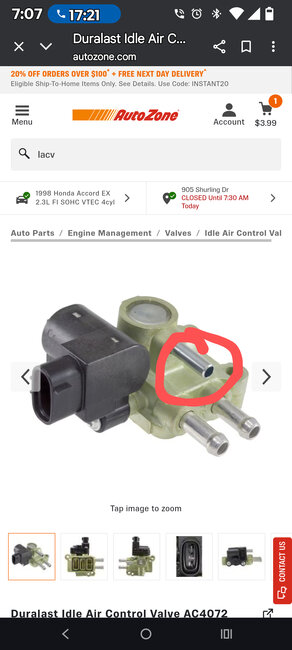
I just recently put the engine in this vehicle, and I was doing it in parts which took a little time, so I have a brain block on where the vacuum line on the IACV connects to. There are three ports on the IACV, two are coolant lines which I have connected but I can't remember where the vacuum goes. I have a photo of the IACV and have the vacuum highlighted in red.
Jul 30, 2025 at 9:14 PM
Advertisement
Avatar
STRAILER
  • Experienced Mechanic
  • 55,112 POSTS
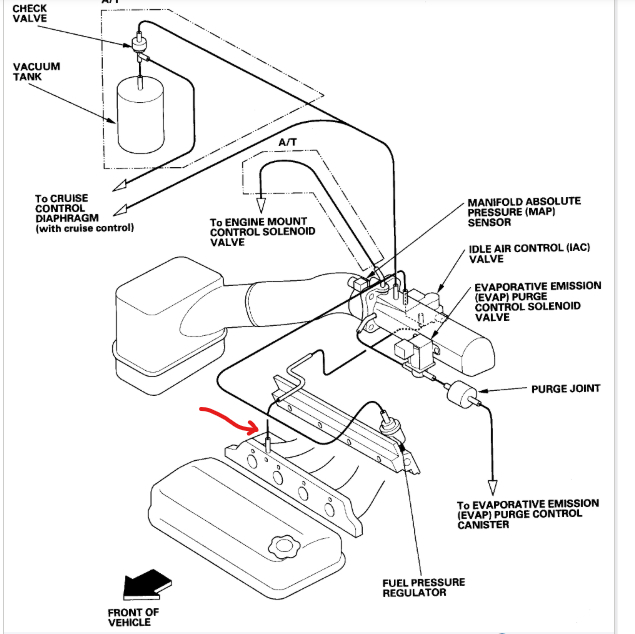
That vacuum line goes to a small port on the intake manifold near the #4 cylinder. Here is a diagram to show you. How did you make out with the crankshaft sensor? Check out the images (below). Let us know if you need anything else.
Jul 31, 2025 at 4:27 AM
Avatar
DERT BROWN
  • MEMBER
  • 8 POSTS
I thought so but I wasn't 100% sure. Thank you.
Jul 31, 2025 at 4:42 AM
Avatar
STRAILER
  • Experienced Mechanic
  • 55,112 POSTS
You are welcome, please use 2CarPros anytime we are here to help.
Jul 31, 2025 at 4:43 AM
Avatar
DERT BROWN
  • MEMBER
  • 8 POSTS
Another problem I'm having. The car idles fine but whenever the accelerator is pressed the engine stalls out and dies. I changed the fuel pump and injectors, but I don't have the right tool to check fuel pressure.
Aug 1, 2025 at 12:01 AM
Avatar
STRAILER
  • Experienced Mechanic
  • 55,112 POSTS
Sorry, we only handle one problem per thread, please post your new question here, you must be logged in.

https://www.2carpros.com/questions/new

Cheers, Ken
Aug 1, 2025 at 4:46 AM
Join 2CarPros for free, one of the most advanced car repair communities on the internet. From first-time drivers to seasoned mechanics, everyone is welcome to reply, share details, and get better answers. You can add a temporary image or video first; uploads are limited to 20 MB.
Ask a Free Question
Repair Safety Notice: This information is for general instructional purposes only. Vehicle repair can be dangerous. Verify all information, follow manufacturer service procedures, use proper tools and safety equipment, and consult a qualified repair shop when needed.