Hard to start the first time in the morning?

2014 FORD TAURUS
113,500 MILES • 3.5L • 6 CYL • 2WD • AUTOMATIC
Avatar
BRANDON FREEMAN
  • MEMBER
  • 2 POSTS
Title says it all after sitting for a while car is hard to start. Takes about four or five seconds of cranking. It cranks very well just and runs great after firing .anybody have a similar problem?
Jan 2, 2019 at 9:26 AM
Advertisement
Avatar
JACOBANDNICKOLAS
  • CERTIFIED EXPERT
  • 110,175 POSTS
Hi and thanks for using 2CarPros.

This is usually the result of fuel pressure drop off. You need to check fuel pressure and drop off.

Check out this guide

https://www.2carpros.com/articles/engine-cranks-excessively-before-starting

Try this:

Turn the key from off to the run positions (engine off) and count to 3.

Repeat that three times and on the forth time, try to start it. If it is pressure drop off, it will start quickly.

If, however, you want to check pressure, here is a link that shows in general how this is done:

https://www.2carpros.com/articles/how-to-check-fuel-system-pressure-and-regulator

_______________

Here are the directions specific to your vehicle for testing fuel pressure. The manufacturer's specs are included in the directions. All attached pictures correlate with these directions.


Fuel System Pressure Test

WARNING: Do not smoke, carry lighted tobacco or have an open flame of any type when working on or near any fuel-related component. Highly flammable mixtures are always present and may be ignited. Failure to follow these instructions may result in serious personal injury.
WARNING: Do not carry personal electronic devices such as cell phones, pagers or audio equipment of any type when working on or near any fuel-related component. Highly flammable mixtures are always present and may be ignited. Failure to follow these instructions may result in serious personal injury.
WARNING: Before working on or disconnecting any of the fuel tubes or fuel system components, relieve the fuel system pressure to prevent accidental spraying of fuel. Fuel in the fuel system remains under high pressure, even when the engine is not running. Failure to follow this instruction may result in serious personal injury.
WARNING: Always disconnect the battery ground cable at the battery when working on an evaporative emission (EVAP) system or fuel-related component. Highly flammable mixtures are always present and may be ignited. Failure to follow these instructions may result in serious personal injury.
WARNING: When handling fuel, always observe fuel handling precautions and be prepared in the event of fuel spillage. Spilled fuel may be ignited by hot vehicle components or other ignition sources. Failure to follow these instructions may result in serious personal injury.

1. Release the fuel system pressure. For additional information, refer to Fuel System Pressure Release See: Fuel Pressure Release > Procedures > Fuel System Pressure Release.

2. Disconnect the battery ground cable. For additional information, Refer to 414-01 See: Battery > Removal and Replacement > Battery.

3. Disconnect the fuel tube-to-fuel jumper tube quick connect coupling. For additional information, refer to Quick Connect Coupling See: Fuel Line Coupler > Removal and Replacement > Quick Connect Coupling.


4. Install the Fuel Pressure Test Adapter and the Fuel Pressure Test Kit between the fuel tube and the fuel jumper tube.


5. NOTE: The Fuel Pump (FP) control module electrical connector was previously disconnected to release the fuel system pressure and must be reconnected to test the fuel system pressure.

Connect the FP (Fuel Pump) control module electrical connector.


6. Connect the battery ground cable. For additional information, Refer to 414-01 See: Battery > Removal and Replacement > Battery.

7. NOTE: Carry out an ignition ON engine OFF visual inspection for fuel leaks prior to completing the fuel system pressure test.
NOTE: After completing the fuel system pressure test, open the drain valve on the Fuel Pressure Test Kit and release any residual fuel into a suitable container prior to removing the tool.
Test the fuel system pressure to make sure it is within the specified range. For additional information, refer to Specifications.

Let me know if this helps or if you have other questions.

Take care,
Joe
Jan 2, 2019 at 5:58 PM
Avatar
BRANDON FREEMAN
  • MEMBER
  • 2 POSTS
Are these directions for a 2014 with the 3.5 direct injection?
Or the older 3.0 Duratech?
Jan 3, 2019 at 11:25 AM
Advertisement
Avatar
JACOBANDNICKOLAS
  • CERTIFIED EXPERT
  • 110,175 POSTS
Hi:
They are for the 2014 with the 3.5. Here is the heading from the page. I didn't attach it with the first post just to eliminate some of the information.

2014 Ford Taurus FWD V6-3.5L
Fuel System Pressure Test
Vehicle Powertrain Management Fuel Delivery and Air Induction Fuel Pump Fuel Pressure Testing and Inspection Component Tests and General Diagnostics Fuel System Pressure Test
FUEL SYSTEM PRESSURE TEST


Fuel System Pressure Test

Let me know if you have other questions.

Joe
Jan 3, 2019 at 3:59 PM
Avatar
JOEDERESE
  • MEMBER
  • 2 POSTS
still long starting after new coil, new wires and plugs.
fuel pressure checks good.
starts great first thing in the morning.
starts great if turned off and immediately restarted.
almost always long start if engine hot and turned off for a little while.
Oct 24, 2020 at 1:10 PM (Merged)
Avatar
JACOBANDNICKOLAS
  • CERTIFIED EXPERT
  • 110,175 POSTS
When it is hard to start, check fuel pump pressure. Let me know what you find.
Oct 24, 2020 at 1:10 PM (Merged)
Avatar
JOEDERESE
  • MEMBER
  • 2 POSTS
fuel pressure checked ok by mechanic yesterday.
Also mechanic said if there was a problem with the
fuel regulator that it would showed up on the
analysis since it is an electronic component.
Oct 24, 2020 at 1:10 PM (Merged)
Avatar
JACOBANDNICKOLAS
  • CERTIFIED EXPERT
  • 110,175 POSTS
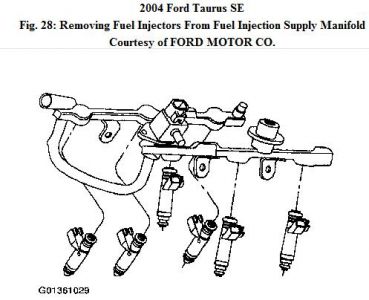
Interesting, I'm showing a vacuum operated regulator on this vehicle. See pic attached.

I want you to try something and tell me what happens. Before you start it, cycle the key to the run position 3 times. Each time, wait about 5 seconds before you turn it off and then back on. The 4th time, see if it starts.
Oct 24, 2020 at 1:10 PM (Merged)
Avatar
JACOBANDNICKOLAS
  • CERTIFIED EXPERT
  • 110,175 POSTS
Sorry, I forgot the pic of the regulator.
Oct 24, 2020 at 1:10 PM (Merged)
Avatar
USMCECHO7RET
  • MEMBER
  • 2 POSTS
I have to crank the starter three to four times, turning off the key in between each try. The engine will then start usually on the fourth try but sometimes sooner. It seems like after the engine is warmed up it starts on the firs try but not always.I replaced the fuel filter just in case it might be something simple like that, but it made no difference.
Oct 24, 2020 at 1:10 PM (Merged)
Avatar
JACOBANDNICKOLAS
  • CERTIFIED EXPERT
  • 110,175 POSTS
I need you to check fuel pressure drop off and fuel pressure regulator.

Here are the directions. You will need a gauge, but most parts stores will lend or rent one to you.

https://www.2carpros.com/how_to/how_to_check_fuel_pressure.htm

Pay attention to fuel pressure drop off. When you shut the key, it should maintain pressure for a period of about 5 to 10 minutes.

Let me know what you find.
Oct 24, 2020 at 1:10 PM (Merged)
Avatar
USMCECHO7RET
  • MEMBER
  • 2 POSTS
I had to use a bypass hose at the filter so after attaching the hose and gage, turned on the key and the pressure only went up to about 10 psi. I shut off the key and recycled the pump and this time it went up to about 15 psi. The third time I cycled the pump it shot up to 60 psi and slowly cabe back down to about 48 psi. I thought it might be a problem with air in th eline from attaching the hose so I bled off the air (my gage set has a valve and bleed off hose) but when I tried it again I got the same results. I started the engine and watched the gage. The engine ran fine but the pressure slowly went down to about 56 psi before leveling off. After running the car, I shut it off and bled off the pressure manually. Turned on the key several times right after running and the pressure went directly up to 60 psi. Looks like I need a fuel pump?
Oct 24, 2020 at 1:11 PM (Merged)
Avatar
JACOBANDNICKOLAS
  • CERTIFIED EXPERT
  • 110,175 POSTS
That is what it sounds like. Did you check the regulator when you ran the vehicle?
Oct 24, 2020 at 1:11 PM (Merged)
Avatar
BENJO71
  • MEMBER
  • 1 POST
I am having trouble starting my car sometimes it starts on the first try and sometimes it takes 2 or 3 times to get it to turn over.
Oct 24, 2020 at 1:11 PM (Merged)
Avatar
BLACKOP555
  • CERTIFIED EXPERT
  • 10,386 POSTS
hook up a fuel pressure check guage and check to see if the vehicle is holding pressure when the key is turned on, reset pressure turn nkey on again. repeat 10 times, does pressure hld each time?

when vehicle wont start
turn the key on off on off on off on off on off in about 3 second cycle then start it, start better?
Oct 24, 2020 at 1:11 PM (Merged)
Avatar
TERSTER
  • MEMBER
  • 2 POSTS
Hi,

We just bought a 2005 Taurus SE. V6, 3.0L and i believe it to be a 2 valve engine per my Ford dealer.

We bought it about 120 miles from home and it drove perfectly.

The next morning when i went to start the car, it turned over and started right away. However, once it started, for the first 7 - 10 seconds, the engine sounded like it might quit and i'd have to restart. It was very rough. After about 10 seconds, something kicked in and the idle went up and it was fine.

I didn't think much of it.

5 hours later when we went to run an errand, it started just fine.

The next morning (2nd day of ownership) i went out and started the car and the same exact thing happened. Car started almost immediately, for about 10 seconds it sounded like it was going to quit, then something kicked in and we were good.

Later in the day we went out to start again and it was fine.

The next day, 3rd morning after purchase, once agian, the same thing.

So it seems that only after the car has sat over night, when you first start the car, there is little power. The engine sounds rough and it feels like it might quit at any moment. 10 seconds after started, it runs perfectly and remains that way even after you stop and restart later in the day.

I was thinking maybe a bad tank of gas (we don't know how long it was sitting at the dealer). We ran the gas down to under a quarter tank and then filled up with brand new 89 Octane Mobile gas.

That was done only today, so i don't know if that will have any affect or not.

The car is not blowing smoke, there are no "noises" that we can hear, nothing seems out of the ordinary.

I asked my local Ford dealer if maybe it could be a bad tank of gas and plugs and they said unlikely. Gas maybe but the plugs are good for 100,000 miles. If one was cracked, the issue would remain, not go away after 10 seconds.

They said that maybe the "power control module" could use a software upgrade but didn't know without actually seeing the car.

The only advise was to hook up a reader and see if there are any "codes". Then they told me it would cost about $100 for that diagnostic service.

I found this forum and thought i'd ask my question here.

I've seen similiar postings however they were for 1997 and 1998 Taurus' and not something as new as a 2005.

I doubt that it matters but we live in southern wisconsin. The nights have been about 60 and the days have been around 75 degrees. We had one rainy night and 2 dry nights.

Weather so far, does not seem to be a factor.

Any advise would sure be appreciated.

Thanks!
Oct 24, 2020 at 1:11 PM (Merged)
Avatar
MHPAUTOS
  • CERTIFIED EXPERT
  • 31,937 POSTS
HI there,

Thank you for he donation,

Try this simple test and report the results.

When you do the cold morning start, turn on the ignition and do not crank for 5 sec. turn of and do the same thing, then try a normal start.

mark (mhpautos)
Oct 24, 2020 at 1:11 PM (Merged)
Avatar
TERSTER
  • MEMBER
  • 2 POSTS
Hi.

We tried what you said and turned the key for 5 seconds, then back, then turned and started car.

Started perfectly.

We do have the new gas in the car, and since i'm not sure if that's a factor or not... tomrrow i will try again.

Tomorrow i will try to start the car normally. If the original condition continues, then we know that priming the car by turning the key 1/2 way for 5 seconds is a partial fix.

But, what does that mean? Fuel pump? Please say no. We just paid more than what the car is probably worth and it pretty much tapped the budget. :)

Thanks again for your help. I'll post again tomorrow when i know if turning the key full, the first time, recreates the original issue or not.

If you would rather i NOT do that and have another troubleshooting step you'd like me to try, that is fine too.

Once again, thanks for the follow up.
Oct 24, 2020 at 1:11 PM (Merged)
Avatar
MHPAUTOS
  • CERTIFIED EXPERT
  • 31,937 POSTS
Hi there,

That test is for fuel retention, i feel that the fuel is draining back into the tank over a period of time, what your are doing is re pressurizing the fuel rail before you start, what i feel was happening was that the car was starved of enough fuel till the pump picked up pressure again, this can be leaking valves in the fuel tank and possibly a faulty pressure regulator valve.

mark (mhpautos)
Oct 24, 2020 at 1:11 PM (Merged)
Avatar
MATTPEAK
  • MEMBER
  • 3 POSTS
This car will take several attempts to start in the morning and has alot of chattering type noise behind the instrument cluster. I was able to duplicate the problem by either going direct from off to crank with the ignition or with the car off and manipulating the environmental system selector and pumping the brakes, then attempting a start. When I turn the key to run wait then crank it starts ok. I think the chattering behind the cluster sounds more like pneumatic action than electrical.
A local shop has had a crack at it and replaced the fuel filter. I replaced the fuel pump and plugs (gap was twice high limit).
Thanks,
Matt
Oct 24, 2020 at 1:11 PM (Merged)
Avatar
MASTERTECHTIM
  • CERTIFIED EXPERT
  • 4,750 POSTS
sounds like the car is not getting enough fuel pressure. if you have accesss to a gauge then check fuel pressure when you turn key to run then get back to us.
Oct 24, 2020 at 1:11 PM (Merged)
Avatar
MATTPEAK
  • MEMBER
  • 3 POSTS
Ok so I'm sure it's me but I've followed the fuel from the filter at the tank to the rails and can't find a schrader to connect my fuel pressure guage to. I even took off the vacuum/sending unit on the foward rail pax side but I'd need an adapter to connect there.


https://www.2carpros.com/forum/automotive_pictures/218779_mattpeak_1.jpg

Oct 24, 2020 at 1:11 PM (Merged)
Avatar
MASTERTECHTIM
  • CERTIFIED EXPERT
  • 4,750 POSTS
ford uses a smaller scrader valve than normal. the standard fitting on a fuel gause is larger for gm models and fod uses a smaller attachment
Oct 24, 2020 at 1:11 PM (Merged)
Avatar
MATTPEAK
  • MEMBER
  • 3 POSTS
I wasn't able to find any valve big or small. My Haynes manual only goes to 2001 and where it shows a valve on the rail in the older models, this 2004 doesn't have one. It looks like I'll need an adapter to hook up.
Oct 24, 2020 at 1:11 PM (Merged)
Avatar
MASTERTECHTIM
  • CERTIFIED EXPERT
  • 4,750 POSTS


https://www.2carpros.com/forum/automotive_pictures/139033_2carpros_5.jpg

Oct 24, 2020 at 1:11 PM (Merged)
Avatar
MASTERTECHTIM
  • CERTIFIED EXPERT
  • 4,750 POSTS
to the top right of picture is where the schraeder valve is located on the fuel rail
Oct 24, 2020 at 1:11 PM (Merged)
Avatar
LGRAD33
  • MEMBER
  • 2 POSTS
I have a 2003 Ford Taurus SES 3.0L, Overhead Valve. It has about 162,000 miles. It has been idling high, losing antifreeze/coolant, and hard to start. I just replaced the battery last week, but still doing the same thing.

There has been no check issue light on at all.

Do you know what this could be?

Thank you,
Lisa
Oct 24, 2020 at 1:11 PM (Merged)
Avatar
CARADIODOC
  • CERTIFIED EXPERT
  • 34,308 POSTS
Do you see a wet spot on the ground where you park? If not, the most likely suspect is a leaking cylinder head gasket. There are a couple of tests that can be done to verify that. Your mechanic can handle both test methods, or I can explain how you may be able to do them yourself if you're interested.
Oct 24, 2020 at 1:11 PM (Merged)
Avatar
LGRAD33
  • MEMBER
  • 2 POSTS
thanks for replying. I don't recall seeing any wet spots on the ground. one time I do remember noticing the passenger side floor was a little wet. but that was months ago and I didn't notice it any more. guess I need to get it checked out or you mentioned you could tell me what to do.

thanks,
lisa
Oct 24, 2020 at 1:11 PM (Merged)
Avatar
CARADIODOC
  • CERTIFIED EXPERT
  • 34,308 POSTS
The first test is to simply add a small bottle of dark purple dye to the coolant, then you check a day later with a black light. The dye will show up as a bright yellow stain that you can follow back to the source. If you find the dye inside the tail pipe, it can only get there through a leaking cylinder head gasket. Auto parts stores have the dye for the fluid you're using it on, and those that rent or borrow tools should have the black light.

The second test involves drawing air from the radiator through a glass cylinder with two chambers partially-filled with a special dark blue liquid. You do that while the engine is running. If combustion gases are sneaking into the cooling system, the liquid will turn bright yellow. The stores that borrow tools will have this one but they make you buy your own bottle of liquid. That's because it will be rendered ineffective if it is allowed to freeze or if antifreeze gets into it. You don't want to be handed the tool with contaminated fluid and not know it. That's why they made the last person buy their own bottle of fluid too. This test only takes a few minutes so it might be less expensive to just let a mechanic do it. If combustion gases can get into the cooling system, coolant can go the other way too and get burned in the engine. That's why the coolant level goes down when there's no obvious leak.
Oct 24, 2020 at 1:11 PM (Merged)
Avatar
PNELS481
  • MEMBER
  • 3 POSTS
2003 Ford Taurus 6 cyl Front Wheel Drive Automatic 68k miles
----------------------------------------------------------------
Hello. I have an 03 SES 3.0. When starting either warm or cold, parked over night or driven, it acts like it has a dying battery (slow crank) then it'll kick over. The starter was replaced a year ago, the battery checks out ok. All conections seem tight and clean. It also seems to be working really hard to run when it does start and drive, the RPM dips to approx 800 (sometimes) at idle. The MAFS is clean, filter has always been changed regularly, the fuel filters are replaced regularly and I have no error codes to pull from. Any thoughts?

Thanks for any insights!
Oct 24, 2020 at 1:11 PM (Merged)
Avatar
PNELS481
  • MEMBER
  • 3 POSTS
The starter was bad. I replaced it and all is well. I still like my Taurus! The RPM issue and sluggushness were due to a vac hose near the throttle body that had come off.
Oct 24, 2020 at 1:11 PM (Merged)
Avatar
ANN281
  • MEMBER
  • 4 POSTS
i have an 02 ford taurus and its hard to start alot of the time. when i try to start it will turn on but automatically die if i dont give it alot of gas. sometimes i have to sit there with my foot on the gas for like 3 minutes until it will finally stay on. im not sure why. the check engine light is on and it gave me the code p1336. something about the cam/crankshaft sensors. ive tooken it to several mechanics and they always tell me different things but when i replace whatever they say, it still does the same thing.even at the FORD dealership. somebody PLEASE HELP!!!!
Oct 24, 2020 at 1:11 PM (Merged)
Avatar
BMRFIXIT
  • CERTIFIED EXPERT
  • 19,053 POSTS
suspect and replace IAC valve
JD22 P1336 CONTINUOUS MEMORY CODE: CHECK CKP CIRCUIT HARNESS Shield Ground
Note: The shield must be grounded at one end (near the PCM) only.

Key off.
Reconnect PCM.
Measure the resistance between battery negative and shield of CKP harness.
Is resistance less than 5 ohms?
Yes
The CKP circuit is not the source of electrical noise.

No

REPAIR open circuit or poor ground connection.


CHECK CMP SENSOR OUTPUT — PCM DISCONNECTED
note: A misfire may occur, and (DTC) P1309 may be output, indicating Misfire Detection Monitor was disabled. The misfire can be disabled by the lack of learning the profile correction, which can be due to CMP faults.

Diagnostic Trouble Code (DTC) P1309 indicates Misfire Detection Monitor is not enabled.

Disconnect PCM.
Connect digital multimeter.
Measure voltage between CMP and PWR GND circuits at the PCM harness connector.
Bump engine in short burst with the starter, without starting engine for at least 10 engine revolutions.

Oct 24, 2020 at 1:11 PM (Merged)