PCV valve location

1999 FORD RANGER
Avatar
CHICAGONUT
  • MEMBER
  • 2 POSTS
Six cylinder two wheel drive automatic 100,000 miles.

I am trying to locate my PCV valve. Where is it? What does it look like?
Apr 28, 2008 at 9:49 PM
Advertisement
Avatar
98RANGERXLT
  • ASE Certified Mechanic
  • 301 POSTS
  • ASE Certified Mechanic
is it 3.0 or 4.0?
Apr 28, 2008 at 10:34 PM
Avatar
CHICAGONUT
  • MEMBER
  • 2 POSTS


It is a 3.0. Thanks.
Apr 28, 2008 at 10:36 PM
Avatar
ROB2008
  • ASE Certified Mechanic
  • 258 POSTS
  • ASE Certified Mechanic
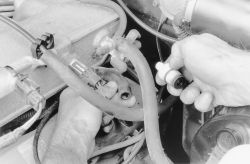
The PCV valve should be located under hood, center, upper engine area, top of engine, mounted in driver side valve cover. Check the PCV valve frequently to see if it is free and not gummed up, stuck or blocked. To check the valve, remove it from the engine and shake it. It should rattle. It is possible to clean the PCV valve by soaking it in a solvent and blowing it out with compressed air. This can restore the valve to some level of operating order. This should be used only in emergency situations. Otherwise, the valve should be replaced at least once a year. Always check PCV valve hose for wear or cracks during service procedure. Removal and installation: Remove the PCV valve by simply disconnecting the vacuum hose from the valve, then pulling the valve from the rocker cover grommet. Click image to see an enlarged view.

https://images.2carpros.com/forum/automotive_pictures/181498_0900823d800b868b_1.jpg

Fig. 2: Remove the PCV valve from between the hose and the valve cover grommet.
Apr 28, 2008 at 10:55 PM
Join 2CarPros for free, one of the most advanced car repair communities on the internet. From first-time drivers to seasoned mechanics, everyone is welcome to reply, share details, and get better answers. You can add a temporary image or video first; uploads are limited to 20 MB.
Ask a Free Question
Repair Safety Notice: This information is for general instructional purposes only. Vehicle repair can be dangerous. Verify all information, follow manufacturer service procedures, use proper tools and safety equipment, and consult a qualified repair shop when needed.