car won't start no spark

1994 CHRYSLER CONCORDE
Avatar
SHERRICK
  • MEMBER
  • 2 POSTS
6 cyl Front Wheel Drive Automatic 150,00 miles
----------------------------------------------------------------
I have 94 chrysler concord it wont start it also is not getting a spark i had the camshaft sensor changed but it wasn't the problem what should i try next?
Dec 21, 2007 at 1:34 PM
Advertisement
Avatar
STRAILER
  • CERTIFIED EXPERT
  • 53,857 POSTS
Hello,

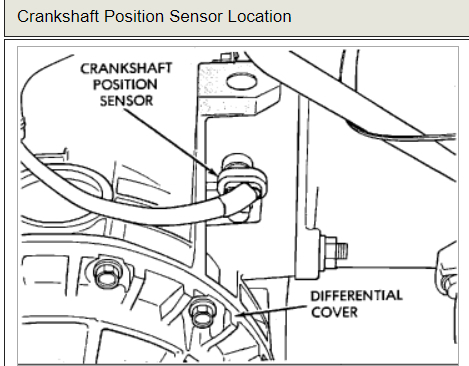
This sounds like a classic crankshaft angle sensor that has gone out. Here is a guide to give you an idea of what you are in for when doing the job.

https://www.2carpros.com/articles/crankshaft-angle-sensor-replacement

Here is how it is done on your car (Below)

The crankshaft position sensor at the transaxle bellhousing. That checks out time to go thru all ignition components such as the coil, distributor pick-up, ignition control module and cam and crankshaft sensor. Or the computer itself. Do you have power to the coils?

Here is a full guide

https://www.2carpros.com/articles/car-cranks-but-wont-start

Check out the diagrams (Below)

Let us know what happens and please upload pictures or videos of the problem.

Cheers, Ken
Jan 6, 2018 at 1:01 PM
Avatar
MONIWOODS
  • MEMBER
  • 1 POST
Electrical problem
1994 Chrysler Concorde 4 cyl Two Wheel Drive Automatic

We just bought a new battery and it wont start. the lights and the radio still turn on.
Jan 6, 2018 at 1:01 PM (Merged)
Advertisement
Avatar
JDL
  • CERTIFIED EXPERT
  • 16,098 POSTS
Welcome to the forum, If the starter won't crank, make sure the battery connections are good. Then check the circuits at the starter relay in power distribution center under the hood. Voltage for the load side of relay is hot all the time. Voltage for the coil side of relay goes hot with the key in the crank position. You can unplug relay and use a testlite on the circuits.
Jan 6, 2018 at 1:01 PM (Merged)
Avatar
CARADIODOC
  • CERTIFIED EXPERT
  • 34,308 POSTS
Why did you buy a new battery? There's a dozen different symptoms that owners describe as "won't start". If you describe what it's doing, we can give you a better idea of what to check.

Does the engine crank normally but it doesn't run? Do you just hear one kind of loud clunk from the starter but it doesn't spin the engine? Do the headlights or dome lights go very dim or stay bright when trying to crank the engine? Did the engine stall previously while you were driving the car, and it wouldn't restart, or was it running fine the last time you drove it, and now it won't start after turning the engine off?

You can't just tell your doctor you're in pain and expect him to treat you without giving him more information. He won't know if you have a stomach ache, a hang nail, or you cut your foot off with a chain saw!

What have you done so far to try to diagnose the problem?

caradiodoc
Jan 6, 2018 at 1:01 PM (Merged)
Avatar
WILLIAM FOSTER
  • MEMBER
  • 1 POST
Drove through waist deep water .Water filled engine through air intake. Engine died immediately replaced spark plugs wires and ignition coil after removing water from engine cylinders reset car by using ignition keys off and on engine ran fine for about 2 hours replaced battery. The battery never started after that.
Jan 6, 2018 at 1:01 PM (Merged)
Avatar
CARADIODOC
  • CERTIFIED EXPERT
  • 34,308 POSTS
What is the symptom? It's hard to guess from your description if we're talking about a starter problem or a crank-but-no-start problem.
Jan 6, 2018 at 1:01 PM (Merged)
Avatar
BCOCHRAN
  • MEMBER
  • 1 POST
Computer problem
1994 Chrysler Concorde 6 cyl Front Wheel Drive Automatic 200000 miles
----------------------------------------------------------------
I have a 1994 Chrysler Concorde 3.3L. The car was running fine, then became difficult to start about the last three or four starts and then wouldn’t start at all. I can’t hear fuel pump kick in. I tried the ignition test on off on off on but the check engine light just flashes once very briefly while turning the key the first two times, and then no lights except the oil can and light under the P (PRNDL). Not sure where to start.
Jan 6, 2018 at 1:01 PM (Merged)
Avatar
RASMATAZ
  • CERTIFIED EXPERT
  • 75,992 POSTS
Inspect and test the ASD relay then do below

Get a carb cleaner and spray into the carb or the throttle body on an EFI. Did it start and die? If not disconnect a sparkplug wire or 2 and ground it to the engine -have helper crank engine over-do you have a snapping blue spark? If so-you have a fuel problem, check the fuel pressure to rule out the fuel pump/pressure regulator and listen to the injector/s are they pulsing or hook up a noid light.

If both fuel and spark is present-check the valve and ignition timing, this will lead you to problems with compression and valves opening and closing at the wrong time
Jan 6, 2018 at 1:01 PM (Merged)
Avatar
ZENQ14A
  • MEMBER
  • 1 POST
Engine Mechanical problem
1994 Chrysler Concorde 6 cyl Two Wheel Drive Automatic 150000 miles

I go to turn on the car and it only "clicks" once and doesn't turn over at all. Battery is good.
Jan 6, 2018 at 1:01 PM (Merged)
Avatar
WRENCHTECH
  • CERTIFIED EXPERT
  • 20,761 POSTS
If that click your hearing is solid and coming from the starter, then you likely have a bad starter. Make sure all the cable connections are good.
Jan 6, 2018 at 1:01 PM (Merged)
Avatar
PAULCONCORDE94
  • MEMBER
  • 3 POSTS
After I bought this concorde 94 by 2 days I tried to start but didn`t work the car starts for just seconds then shuts down on its own even if I push gas pedal, after several tries and about 45 minutes the car worked like nothing is wrong every thing was going fine. This error happened many times it starts for just 1 or 2 seconds it turns off from its own. I went to the mechanic but he said he can`t figure out anything and he checked every thing was very good. Then I left it with him overnight so he can check what is wrong. He told me fuel pressure and pump were good, but ignition spark and injector signal gets weak in intensity causing the car not to work. He suspects either Hall effect sensor cam position sensor or crank position sensor and / or pcm. Now I can`t afford changing these parts as he said it would cost at least 700$. Any idea is this error could be caused due to something else ? Is it progressive, I mean is it possible that one day the car won`t work forever ?
Please note that when the car is working there is nothing wrong with it !!.
Thanks
Jan 6, 2018 at 1:02 PM (Merged)
Avatar
CARADIODOC
  • CERTIFIED EXPERT
  • 34,308 POSTS
$700.00???? It's time to find a different mechanic.

Thanks to the politicians you and I voted for, there is so much government regulations, taxes, and unnecessary involvement that repair shops have to charge at least $100.00 per hour, and I don't understand how they can afford to stay in business at that rate, but there is something wrong here with that estimate. Each of those sensors should cost less than $70.00. The crankshaft position sensor is a little difficult to get to and could take an hour to replace. Keep in mind this doesn't include any diagnostic time, but just to replace the part, part and labor should be less than $200.00.

The camshaft position sensor is real easy to reach and can be replaced in a couple of minutes.

Your mechanic may have included some diagnostic time in the estimate, and he may have inflated the estimate to cover unexpected or unknown things that might not be needed. Your final bill could be a lot less than $700.00.

If the engine runs at all, as in one or two seconds, you know it has spark and fuel pressure. To stop after two seconds is what happens when the theft deterrent system kicks in. What needs to be done is to determine if the automatic shutdown (ASD) relay is turning on when the engine won't start. That can be done by measuring the voltage on the dark green / orange wire going to the ignition coil pack, any injector, or either small wire on the back of the alternator. A test light works better for this than a voltmeter because most digital voltmeters don't respond fast enough. You should see voltage on that wire for one second after turning on the ignition switch, then it will go away. You might hear the hum of the fuel pump too for that one second. Next, that voltage must come back during engine rotation, (cranking or running). When it doesn't come back and the engine never starts, that's the time to suspect the cam or crank sensor.

That voltage must go to 0 volts when the engine stops running for any reason. This can be hard to catch, but you have to see if the engine stops first, then the voltage goes to 0 volts one second later, or does that voltage go to 0 volts, then the engine stops right away.

Another approach is to read the diagnostic fault codes to see if one is set related to those sensors. Be aware that they often don't set just from cranking the engine. The sensor has to fail while you're driving, then the loss of signal will be detected as the engine coasts to a stop. These codes may not turn on the Check Engine light because they don't relate to things that could adversely affect emissions.

Chrysler makes it possible to read the fault codes yourself. Cycle the ignition switch from "off" to "run" three times within five seconds without cranking the engine, leave it in run, then count the flashes of the Check Engine light. You'll see a series of flashes for the first digit of the code, a pause, then another series of flashes for the second digit. After a longer pause, the next code, if there is one, will flash the same way. Code 55 just means it's done flashing codes.

You can go here to see what the codes mean:

https://www.2carpros.com/articles/retrieve-trouble-codes-for-chrysler-dodge-plymouth-odb1-1995-and-earlier-car-mini-van-and-light-trucks

You can also have the codes read at an auto parts store. Many of them do that for you for free. It's important to not disconnect the battery or let it run dead because that will erase any codes, then that valuable information will be lost. If there are no codes stored in the Engine Computer, the next step would be to connect a scanner to view live data. I use Chrysler's DRB3 scanner. A lot of independent shops have them too because with an additional plug-in card, they will work on any brand of vehicle sold in the U.S., but only for emissions-related things. That includes engine sensors. It will list the cam and crank sensors, and "no" or "present" for each one. If one of those signals is missing when the engine won't start, that is the circuit that needs further diagnosis. The sensor has about a 50 percent chance of being the cause of that code. The rest of the time it's a wiring problem related to that circuit.

What is much more common for the symptom you described is a failing fuel pump. Pumps on GM vehicles tend to fail while you're driving, so they suddenly leave you stranded on the highway. Chrysler fuel pumps almost always fail to start up, leaving you stranded in your driveway or a parking lot. The clue to a dead pump is you won't hear it hum for one second when you turn on the ignition switch. Banging on the bottom of the gas tank often gets them going, but that works best if a helper is cranking the engine at the same time. Once the pump does start running and the engine starts, it will stay running at least until you stop the engine again.

At the mileage you listed, you're probably due for the second replacement fuel pump. My '88 Grand Caravan is 25 years old and just turned 260,000 miles yesterday, and I put in the first replacement pump about two months ago. It's not common for any pump to last that long. The additional clue to a failing fuel pump is you'll still have spark when the engine doesn't start.
Jan 6, 2018 at 1:02 PM (Merged)
Avatar
PAULCONCORDE94
  • MEMBER
  • 3 POSTS
Thank you so much for your reply.
The fuel pump should be good, the mechanic tested it and also I can hear it kicks in. Is it ok to keep driving it or should I leave it parked till we can figure out the problem? The mechanic told me each sensor would be 300-400 $ plus labor ajd tax !!!!!
Jan 6, 2018 at 1:02 PM (Merged)
Avatar
CARADIODOC
  • CERTIFIED EXPERT
  • 34,308 POSTS
Some diagnosis needs to be done. It doesn't matter if you drive it or not. Nothing else will be damaged, but you need to start somewhere, and the least desirable place is by throwing random parts at the problem. That's the most expensive and least effective way to diagnose a problem. Start with the fault codes. If there's any related to the cam or crank sensor, that will cut the list of suspects in half.

The problem with replacing parts for an intermittent problem is you never know if it's fixed. If the problem acts up again, you know whatever you did didn't solve anything. If it doesn't act up again, how do you know if it's really fixed?

That said, if you want to do something yourself, get a copy of the manufacturer's service manual and read the section about replacing the camshaft position sensor. You might want to try that yourself. If you have a "pull-your-own-parts" salvage yard near you, you'll find dozens of cars there with the same engine size and sensor. You can practice taking that one off. It's right on top of the front of the engine. If you live anywhere between Indianapolis and southern Georgia, do a search for "Pull-A-Part" and see if they have a yard near you. I just got back from a 1500 mile round trip yesterday. I was at the Indianapolis, IN and Louisville, KY yards. They're all very clean and well-organized. A used sensor and the service manual from eBay will cost a whole lot less than what your mechanic wants for replacing one sensor.
Jan 6, 2018 at 1:02 PM (Merged)
Avatar
PAULCONCORDE94
  • MEMBER
  • 3 POSTS
Thank you so much you really helped a lot. Now I confirmed that my problem is the anti-theft is not disarmed if I try to open the car using the key !!!!! It is only disarmed when I open it using the keyless entry. But now my question is , my is this happening ? Is there a major electric problem or it is just minor issue ?
Thank you so much for your time
Jan 6, 2018 at 1:02 PM (Merged)
Avatar
REGINA BROWN
  • MEMBER
  • 1 POST
Electrical problem
1994 Chrysler Concorde 6 cyl Front Wheel Drive 105 miles
----------------------------------------------------------------
the car cranks up but does not spark up
Jan 6, 2018 at 1:02 PM (Merged)
Avatar
BLACKOP555
  • CERTIFIED EXPERT
  • 10,386 POSTS
Do you have spark at all cylinders?

also you have fuel pressure at the fuel rail?
Jan 6, 2018 at 1:02 PM (Merged)
Avatar
CARADIODOC
  • CERTIFIED EXPERT
  • 34,308 POSTS
Dandy. The hard part is done thanks to that observation. There's two likely causes. One is the disarm switch is disconnected from the lock cylinder in the door. That occurs more often after someone was in there to repair something else and they forgot about it. More commonly there are broken or frayed wires between the door hinges. Check for that first. If you find any, I'll describe how I repair them.
Jan 6, 2018 at 1:02 PM (Merged)
Avatar
XWAVE
  • MEMBER
  • 3 POSTS
i have a 1994 concorde ,crank over but would not start the problem was the camshaft sensor the crankshaft sensor could do it to,
Jan 6, 2018 at 1:02 PM (Merged)
Avatar
BLACKOP555
  • CERTIFIED EXPERT
  • 10,386 POSTS
please start a new topic and pm me the link and i will help you there
Jan 6, 2018 at 1:02 PM (Merged)
Avatar
STEIN
  • MEMBER
  • 1 POST
Electrical problem
1994 Chrysler Concorde 6 cyl Two Wheel Drive Automatic 84000 miles
----------------------------------------------------------------
lights horn radio everything works but when key is turned on it does nothing won't make a click or nothing checked battery and cables
Jan 6, 2018 at 1:02 PM (Merged)
Avatar
BMRFIXIT
  • CERTIFIED EXPERT
  • 19,053 POSTS
[quote:cf8e9be652="stein"]Electrical problem
1994 Chrysler Concorde 6 cyl Two Wheel Drive Automatic 84000 miles
----------------------------------------------------------------
lights horn radio everything works but when key is turned on it does nothing won't make a click or nothing checked battery and cables[/quote:cf8e9be652]

check fuses and relay
replace starter
Jan 6, 2018 at 1:02 PM (Merged)
Avatar
MEXICANPRIDE
  • MEMBER
  • 1 POST
Engine Mechanical problem
1994 Chrysler Concorde 6 cyl Two Wheel Drive Automatic 101000 miles

was driving just find the other day park it outside and when trying to drive it just wont start at all it makes a single click just about that battery is good cables are clean can it be the starter? thank you
Jan 6, 2018 at 1:02 PM (Merged)
Avatar
JACOBANDNICKOLAS
  • CERTIFIED EXPERT
  • 110,175 POSTS
It could be the starter. If you are sure the battery is good and the terminals are clean and tight, I would recommend removing the starter and having it bench tested at a parts store. Most will do it for free.
Jan 6, 2018 at 1:02 PM (Merged)
Avatar
MICHAEL110189
  • MEMBER
  • 1 POST
I have a 1994 chrystler concorde I was driving it it was running fine when i stopped and shut it off it only cranks and dosnt fire.. It's getting fuel idk what else to do I have not had any problems out of this car other than this
Jan 6, 2018 at 1:02 PM (Merged)
Avatar
HMAC300
  • CERTIFIED EXPERT
  • 48,601 POSTS
check your theft unit it may be the cause check all fuses then scan for codes.
Jan 6, 2018 at 1:02 PM (Merged)
Avatar
MIKE22951
  • MEMBER
  • 1 POST
Electrical problem
1994 Chrysler Concorde Front Wheel Drive Automatic 307000 miles
----------------------------------------------------------------
twice now my 94 concorde has completely shut off on me both times as i come to a stop either at a stop light or parking lot. first time i was able to restart the car a few moments later but the second time i was unable to start at all and there was also a strong odour coming from the engine compartment, something like the smell of burnt wires. later the next day after towing it home i tried to start it and boom it started multiple times without hesitation, i drove it the next day and then parked it in case it happened again. could this problem be just the starter or could there be more parts at fault?
Jan 6, 2018 at 1:02 PM (Merged)
Avatar
JDL
  • CERTIFIED EXPERT
  • 16,098 POSTS
When the problem happens, if your saying, the starter won't crank, then pull the starter relay and do some testing. If your saying it cranks good but won't start, then check for troublecodes. The codes might give you a direction. Even without the codes, if the vehicle cranks good but won't start, you can do some basic tests. Have a helper crank the vehicle while you check for spark at the plugs, if you have good spark everywhere, check the fuel system next.
Jan 6, 2018 at 1:02 PM (Merged)
Avatar
SARAHP
  • MEMBER
  • 1 POST
Engine Performance problem
1994 Chrysler Concorde 6 cyl Two Wheel Drive Automatic 136000 miles

evey time i try to start my car i have to hold the key over for 45 sec to get it to start or sometimes i have to push the gas petal when holding the key over for it to start.
Jan 6, 2018 at 1:02 PM (Merged)
Avatar
JACOBANDNICKOLAS
  • CERTIFIED EXPERT
  • 110,175 POSTS
Hi:
Has the check engine light come on? Also, have you checked fuel pump pressure? Finally, hold in the start position for no longer than 8 or 10 seconds at a time or you may burn up the starter.

Let me know.
Jan 6, 2018 at 1:02 PM (Merged)
Avatar
CARADIODOC
  • CERTIFIED EXPERT
  • 34,308 POSTS
Was the battery disconnected recently? If so, minimum idle must be relearned by the engine computer. Until this is done, the computer doesn't know when you have your foot on the gas pedal and when it must be in control of idle speed.

To relearn minimum idle, drive on the highway, then coast for seven seconds without touching the brake or gas pedals.

caradiodoc
Jan 6, 2018 at 1:02 PM (Merged)
Avatar
XWAVE
  • MEMBER
  • 3 POSTS
Electrical problem
1994 Chrysler Concorde 6 cyl Front Wheel Drive Automatic 153000 miles
----------------------------------------------------------------
I have a 1994 chrysler concorde the car just quit lost of fire i replace crank sensor, coil , the car will turn over but will not start ,i am getting power from the coil to the computer (red wire) could it be the computer. please help. thanks.
Jan 6, 2018 at 1:02 PM (Merged)
Avatar
BMRFIXIT
  • CERTIFIED EXPERT
  • 19,053 POSTS
check timing
check fuses
and ASD relay
do you have fuel pressure
you let me know
Jan 6, 2018 at 1:02 PM (Merged)
Avatar
PI20032002
  • MEMBER
  • 1 POST
1994 Chrysler Concorde 6 cyl Front Wheel Drive Automatic 320000 miles

i have change the starter the alterntor and battery but i am haveing the same proble it still won't start
Jan 6, 2018 at 1:02 PM (Merged)
Avatar
ZACKMAN
  • CERTIFIED EXPERT
  • 4,202 POSTS
If Your Engine Cranks but Does Not Start Follow this Troubleshooting Guide

Vehicles operate by the same principle; basic troubleshooting procedure applies to most cars.

* Step 1 - Anytime you have a problem with electronically controlled components such as an engine, transmission, ABS brake, or SRS (supplemental restraint system, Air Bag) inspect all fuses using a test light and check the under hood power distribution center and under dash fuse panels. If all fuses test ok continue to the next step.

* Step 2 - To check for problems with electronically controlled components such as an engine, transmission, ABS brake, or SRS (supplemental restraint system, Air Bag) and the fuses test ok a trouble code scan is needed to identify any system trouble. Use a simple scanner tool to retrieve trouble codes and see if they relate to the specific problem, like a crank angle sensor failure code. If the trouble code present does not pertain to the immediate problem like an EVAP code ignore it until a later time, after the car is running. The reason we repair non-related codes after the engine is running is because sometime false codes can be triggered by the engine not running. Once the engine is running again the code present might cycle and turn itself off. You might say "if the engine doesn't run shouldn't it have a trouble code?" Sometimes conditions occur that will not be detected by the computer, example: if the fuel pump fails the computer cannot detect the failure, so the engine doesn't start and the computer thinks everything is ok with no codes. If no trouble codes are present proceed to the next step.

* Step 3 - Determine if the engine has compression, this can be done a number of ways but the most complete method is to perform a compression check. Remove the spark plugs and perform a compression test on one cylinder. If one cylinder has compression then the remaining cylinders usually will be close to the same. Crank the engine over about 5 seconds, normal compression readings should be between 125 psi and 160 psi on each cylinder. If no or little compression exists additional tests will be needed. The most popular reason for an engine to lose compression is a timing belt or timing chain fails. If low or no compression exists remove the oil fill cap and observe camshaft rotation when the engine is cranked over. If no rotation exists the timing belt or chain has failed. If your engine has a timing belt and you cannot see the camshaft easily remove the upper bolts to the timing cover and gain visual access to the belt, recheck cam rotation by cranking the engine over. Sometimes a timing belt or chain can jump causing the camshaft to lose correlation with the crankshaft and therefore causing low compression. The best test for this condition is to remove the timing belt/chain cover and inspect timing marks. If the compression is ok proceed to next step.

* Step 4 - Test the ignition system output, ignition systems can vary in configuration but operate on the same principal. Ignition systems can consist of a coil, pick up coil, crank angle sensor, cam angle sensor, spark plugs, spark plug wires, distributor cap, ignition rotor and a distributor and any variations of these components. An ignition coil is a voltage stepper coil that transforms a low voltage (12 volts) signal into tens of thousands of volts needed to jump the gap of the spark plug. This coil is activated by an ignition module triggered by using the camshaft/crankshaft angle sensor; timing is adjusted by the ECM (computer).

Distributor less Ignition System Configuration

Some ignition systems have a coil for each spark plug. This is called Direct Ignition (DI) system; there are no plug wires in this system just individually controlled ignition coils. The amount of coils or spark plugs depend on the number of cylinders the engine is designed with, example: four cylinders, six cylinders etc. To perform a basic ignition output test you must have a test light follow this ignition system output test video and substitute the ignition coil for the plug wire (Note: leave the coil trigger wires connected).

If the ignition system test is weak or non-existent test the car fuses, both under hood power distribution center and the fuse panel under dash. This test is performed with a test light tool. The test light should illuminate on both sides of the fuse, if not the fuse has failed and needs to be replaced. If the fuses are ok a manufacturer specific repair procedure is required and an online auto repair manual is needed to continue. If the ignition system tests ok proceed to the next step.
* Step 5 - Test fuel system pressure, test for proper fuel pressure with a test gauge on the fuel rail or in line somewhere in the system, most throttle body injection cars (TBI) are between 13 psi and 17 psi. Most (DPI) direct port inject systems are between 40 psi and 55 psi. If good fuel pressure is present continue to next step. If no or little fuel pressure is present check the fuel pump fuse and fuel pump control relay located in the fuse panel, you can find this fuse and relay by checking your owner's manual, back of the fuse panel cover diagram, or an online auto repair manual, if the fuse or relay has failed replace it a new unit and re-test.

Note: some Ford cars have an inertia switch designed to cut off the fuel pump in the event of an accident. Sometimes this switch can accidentally be triggered causing the engine to not start. If the car is exposed to a random bump either in the road or by another car this switch can be triggered. To check for this condition locate the inertia switch, if the cut off switch has been active it will have a white or red indicator at the top of the switch. Push this indicator down to disarm the cut off switch, if the indicator does not move down it is not activated and is not the problem.

Have a helper crank over the engine while you place your fingers over the relay, does the relay click under your fingers? If so the relay could be working, there is a chance the relay has burned contacts inside causing the problem but we will get back to that. Next, access the fuel pump power feed wire, there are a few ways to do this, first you need a wiring schematic to find the color wire needed for testing, the best way to do this is with an online auto repair manual. Once you have found the color wire it should be located in the wiring harness near the fuel tank were the pump is located. Ground the test light and probe (pierce the wire's outer coating with the test light point) the wire, have a helper crank the engine over. If the test light illuminates and you have no fuel pressure the fuel pump had failed and needs to be replaced. If the test light doesn't illuminate the fuel pump control relay has probably failed, replace it with a new unit and re-test, in most cases this relay is under thirty dollars. There is an outside chance the power feed to the relay has failed but it doesn't happen very often. If this is the case use an online auto repair manual to trace the power source to the relay.

Step 6 -Test fuel injector pulse and supply voltage output (test is used for most cars). This test will tell you if the computer system has operating voltage and injector trigger signal. Remove an electrical connector from a fuel injector (it doesn't matter which injector) probe both sides of the connector with a grounded test light (there are only two terminals). Have a helper turn the key to the "on" position without cranking the engine and observe the test light. The test light should illuminate one side of the connector only. Next, switch the test light lead to the positive side of the battery to test the system ground injector trigger, probe the side of the connector that did not light up, have a helper crank the engine over and observe the test light, it should blink on and off. If this test checks ok continue to next step. (Note: if no injector pulse is present try disconnecting the remainder of injectors and re-test, if a fuel injector is shorted it can shut down the injector driver causing no injector pulse. If injector pulse returns plug injectors electrical connectors in one at a time until the pulse fails and replace that injector)

If this test revealed that there was no pulse but system has power the ECM is not generating a fuel injector trigger. If there is no trigger to the fuel injector it will not allow fuel to enter into the engine. Some of the most popular reasons that can cause this condition include a shorted crankshaft angle sensor, shorted camshaft position sensor or shorted ECM/PCM. (When a system trouble code scan is performed it does not always catch a crankshaft angle sensor, camshaft position sensor failure). Tip: try disconnecting all non-essential sensors, example: oxygen sensor, coolant sensor, throttle position sensor, air intake temperature sensor, mass air flow or map sensor and EGR valve pressure differential sensor. Crank the engine over, if the injector pulse returns, one of the sensors is shorted causing the system to not operate. Plug the sensors in one at a time until the injector pulse fails then replace that sensor and reassemble.

Note: Most Ford cars have an EGR valve pressure differential sensor that when the catalytic converter becomes slightly plugged will melt the sensor causing the system to shut down. Inspect sensor for melting at the electrical connector then repair or replace as needed and recheck.

If the test reveals that the connector has no power on either side at any time the system power has been disrupted. Some of the popular reasons for this is condition is main ECM/PCM fuse, main ECM/PCM power relay and main ECM/PCM power feed wire failure. (Some vehicle ECM/PCM feed wires are located near the battery and corrosion can stop the voltage feed). If all power sources check out the system ground needs to be checked, this is done by reversing the test light lead and installing it on the positive side of the battery. Now the test light will illuminate when grounded. Use the test light to check main system grounds to the ECM/PCM, most system ground wires are black but to be sure you will need an online auto repair manual. If repairs have recently been made a system ground lead could have been left off of the engine causing the system not to power up, so double check all engine wiring harness grounds.

* Step 7 - If the engine has compression, ignition and fuel injector pulse and the engine still doesn't run it could have a plugged exhaust system. Disconnect the exhaust system before the catalytic converter and crank over, if the engine starts the car has a plugged converter or exhaust system. Disassemble the exhaust system to inspect to replace the exhaust component that has failed and reassemble to recheck.

For more info, visit https://www.2carpros.com/first_things/car_cranks_but_wont_start.htm
Jan 6, 2018 at 1:02 PM (Merged)