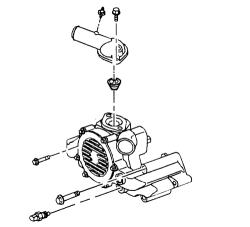
[quote:d284b29b59="sazaisan"][quote:d284b29b59="sazaisan"]My 95 Vette (Chevrolet Corvette 1995 60,000 miles 5.7 L.) started running hot yesterday. Everything seems in order (fluid level/fans running) and I am assuming the thermostat is stuck partially closed. I am a fair mechanic and would like to replace the thermostat. Is it located on the top-front of the engine at the point the upper radiator hose connects to the engine?[/quote:d284b29b59]
OK, so I replaced the thermostat (it was the easiest thermostat I have ever replaced), and flushed the cooling system again (I did that last November also) and the engine still runs hotter than I think it did before and hotter than I think is should. By the way,,,, the thermostat is connected to the lower radiator hose, not the upper one. I checked the fan fuses and they are OK and the fans come on at 225 degrees. At highway speeds the temp stays down around 208 but as soon as I start driving city streets the temp goes up to 230 sometimes. Is this normal??? I thought it ran closer to 205 before, but I could be mistaken. The memory is the second thing to go when we get to be my age.[/quote:d284b29b59]
Did you open the air bleed screw on top of the thermostat housing (waterneck) ?
Check the front of the radiator and condenser for blockage. These cars are like Hoover vacuum cleaners going down the road, I know, I've had a "94 Vette and have a '96 Vette now.
My 2 cents,
GWH
Aug 10, 2007 at 10:47 AM