P1810 Manufacturer Control Transmission

CHEVROLET CAVALIER
Avatar
HOLSON
  • MEMBER
  • 2 POSTS
Hi, I have a 97 Chevy Cavalier RS (2.2 with 186000 miles) and I was experiencing some shifting issues with the automatic transmission (4 Speed). No light came on or anything. I just did a fluid and filter change with the transmission and it shifts fine now. Now, the engine light came on (ETS off too of course :) ) and I scanned the vehicle and it came up with code P1810 Manufacturer Control Transmission. What is this and what part do I need to buy? :shock:
Sep 9, 2007 at 1:34 PM
Advertisement
Avatar
MERLIN2021
  • ASE Certified Mechanic
  • 17,250 POSTS
  • ASE Certified Mechanic
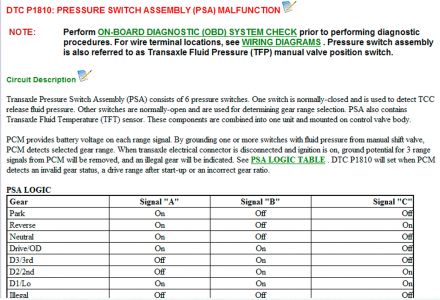
Its the Pressure switch assembly, pretty complicated to say why it set a code but testing is a pain in the a_ _!


https://images.2carpros.com/forum/automotive_pictures/62217_PSA_copy_1.jpg

Sep 9, 2007 at 1:55 PM
Avatar
HOLSON
  • MEMBER
  • 2 POSTS
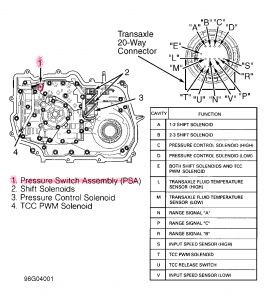
OK. So where is this part you speak of located? Is it inside the transmission, mounted on the outside etc. Could this be an electrical issue or in your expert opinion would it require replacing of the part.

Thank You! :)
Sep 9, 2007 at 3:18 PM
Avatar
MERLIN2021
  • ASE Certified Mechanic
  • 17,250 POSTS
  • ASE Certified Mechanic


https://images.2carpros.com/forum/automotive_pictures/62217_CavTranny_copy_1.jpg

Looks like its inside and it monitors tranny fluid pressures, the first thing it monitors is the TCC releasing fluid. Try having the light reset, it may have been low! If it comes back on with this code investigate at the dealer! Or a good tranny shop.
Sep 9, 2007 at 3:29 PM
Join 2CarPros for free, one of the most advanced car repair communities on the internet. From first-time drivers to seasoned mechanics, everyone is welcome to reply, share details, and get better answers. You can add a temporary image or video first; uploads are limited to 20 MB.
Ask a Free Question
Repair Safety Notice: This information is for general instructional purposes only. Vehicle repair can be dangerous. Verify all information, follow manufacturer service procedures, use proper tools and safety equipment, and consult a qualified repair shop when needed.