Check engine codes?

1994 DODGE GRAND CARAVAN
113,000 MILES • AUTOMATIC
Avatar
FARR_2007
  • MEMBER
  • 82 POSTS
Please tell me what codes I have showing and how to fix. I’ve attached the flashing check engine light video
Sep 4, 2026 at 4:20 PM
Advertisement
Avatar
CARADIODOC
  • ✓Experienced Mechanic
  • 34,377 POSTS
I don't see the video. Go here:

https://2carpros.com/articles/retrieve-trouble-codes-for-chrysler-dodge-plymouth-odb1-1995-and-earlier-car-mini-van-and-light-trucks/

first. This will tell you how to read the codes, and it gives you the definitions, but I can interpret them for you too. I'll be back tomorrow to see if you got it figured out.

This usually starts with a code 12 which can be ignored, and ends with code 55. That just means it's done spitting out codes. If you think you mis-counted the flashes, just turn the ignition switch off, then back to "run" and it will flash the codes again.

Sep 4, 2026 at 6:04 PM
Avatar
FARR_2007
  • MEMBER
  • 82 POSTS
I will attach the video again
Sep 4, 2026 at 6:13 PM
Avatar
FARR_2007
  • MEMBER
  • 82 POSTS
Please help me identify the codes I have attached the video
Sep 5, 2026 at 7:13 AM
Avatar
CARADIODOC
  • ✓Experienced Mechanic
  • 34,377 POSTS
Codes 12, 32, and 55.

Code 12 basically means the ignition switch was recently turned off. Once erased, that code is useful if it sets while you're driving and the engine stalls unexpectedly. It would indicate which circuit you need to start the diagnose in. Other than that very rare occurrence, code 12 can be ignored. It will be in every vehicle.

Code 55 means the computer is done displaying the codes. If you think you miscounted, just cycle the ignition switch to "off", then back to "run" one time, and the sequence will repeat. On a few models, the codes will flash repeatedly until you turn the ignition switch to "crank". For the benefit of others researching this topic, three-digit codes are displayed in the odometer readout on '96 and newer models. Chrysler made reading codes yourself much easier than any other manufacturer.

32 - EGR solenoid circuit, open or short detected. In 1995 and older models, fault codes don't get very specific, but they still do a good job of indicating the circuit that needs to be diagnosed. One important point to be aware of is diagnostic fault codes never say to replace a part or that one is bad. When a part is listed in a code, it is actually the cause of that code about half of the time. This is one case where the part has a better chance of being the cause.

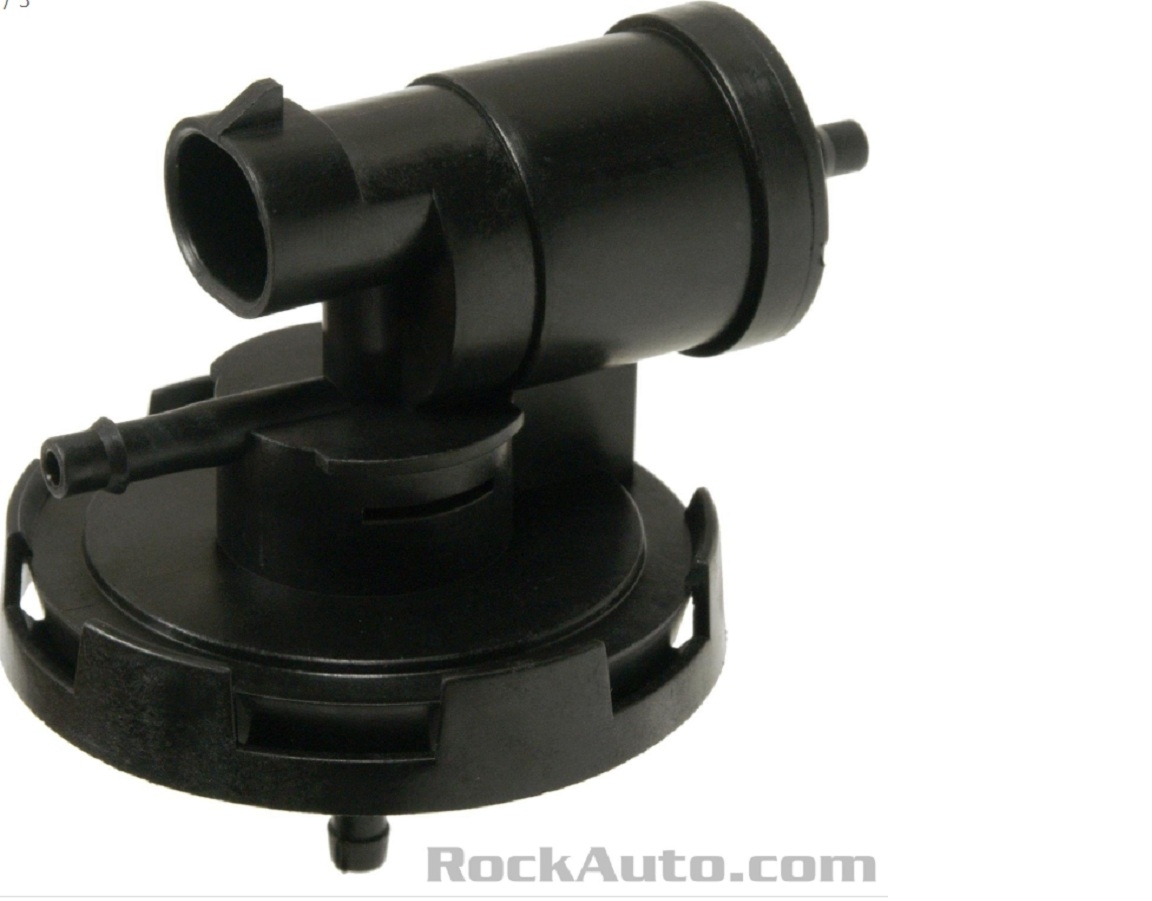
When you have an engine-related problem, please list which engine you have. I have five Grand Caravans including a '94 and a '95, both with the common 3.3L engine, so I'm very familiar with them. If that is what you have, the EGR valve sits on top of the intake manifold, close to the brake master cylinder. (I'm doing this from memory here). The part that's more likely to fail is the amplifier on top of the valve. That's about a three-inch diameter black plastic disc. It has a two-wire connector going into a switching valve on top. A vacuum hose is also attached to that valve. This photo shows what the replacement looks like. It is commonly referred to as a "transducer".

Years ago, the only way to get a new transducer was to buy the entire EGR valve with the amplifier mounted to it. Today you can buy just the amplifier. The first thing to do is to be sure the connector didn't get unplugged and overlooked.

Next, if you would like to pursue this the way a mechanic would, use an inexpensive digital voltmeter to back-probe the two wires in the connector, and tell me what you find. For this type of problem, to be valid, the readings must be taken with the connector plugged in. The ignition switch must be in the "run" position. If you don't know how to use a voltmeter, I can help with that. Stick the meter's probe into the back of the connector, alongside the wire, until it touches that terminal and you get a reading. Do the same for the second wire, then tell me what you find.

Since this is such a simple circuit, and since the replacement part is relatively inexpensive, this is one time I would let you just pop in a new one to see if it solves the problem. Normally we don't spend our customer's money on a part until we've ruled out all the other possible causes. Code 32 is saying the computer sees the two wires are shorted together, or there is a break in one of them. The break is more common, and is most likely to occur inside the valve. The next most likely cause for a break would be corroded or stretched terminals in the connector. (That's much less likely if no one has had that connector disconnected or monkeyed with it).

Part of the repair process is to erase the fault code. A mechanic would do that with a scanner, then he would check that is didn't set again. If it does set again, he performed the wrong repair.

For a competent do-it-yourselfer, on vehicles of this era, you can simply disconnect the battery's negative cable for a few seconds. If you don't know how to reset the clock in the factory radio, a simple trick is to reconnect the battery cable at 12:00 noon or midnight.

From here on, feel free to disregard the remainder of my wondrous reply if it will make things too complicated, but I'm going to address right away some things you may run into. Most notably, that is "minimum throttle", but first, there is a third way to erase the fault code. That is to simply drive the van. Codes that don't get detected again will self-erase after 50 engine starts. If the Check Engine light remains on every time you start the engine, it will turn off after those 50 starts. Whether or not the Check Engine light remains on depends on the severity of the problem that had been detected. For very minor, non-emissions-related defects, the light never turns on. For really minor problems that could adversely affect emissions, the light turns on only while the defect is occurring. If it clears up intermittently, the light will go off while you're driving. If it's a little more serious, the light turns on when the defect is detected, then, if the problem goes away intermittently, the light remains on until you turn the ignition switch off, then restart the engine. Still more serious, the light turns on when the problem occurs, but stays on for that drive cycle even if it clears up for a while. The most serious is when the Check Engine light is flashing. That means too much unburned gas is going into the exhaust system where it will burn inside the catalytic converter and overheat it. You're supposed to stop the engine as soon as possible to prevent expensive damage to the converter.

The "minimum throttle" I mentioned is only a Chrysler thing and has an easy solution. When a battery cable is disconnected, the Engine Computer loses its memory. Sensor personalities and fuel trim numbers get relearned automatically, without you even noticing, as soon as you restart the engine. The one exception is minimum throttle. The computer needs to figure out when your foot is off the accelerator pedal so it will know when it has to be in control of idle speed. Until that relearn takes place, the engine is likely to not start unless you hold the accelerator pedal down 1/4". You won't get the nice "idle flare-up" to 1500 rpm at start-up, and it will tend to stall at stop signs. You'll need to drive with one foot on the brake pedal and one on the accelerator pedal. Drive at highway speed with the engine warmed up, then coast for at least seven seconds without touching the pedals. That meets the conditions the computer needs to see for the relearn to take place.

For most drivers experiencing low idle speed, they'll tell you the problem magically cleared up on its own. They don't realize it cleared up because they coasted down an off-ramp, or coasted up to their driveway.

This is the big advantage to erasing fault codes with a scanner. That leaves minimum throttle alone with no need to relearn it.

The bottom line is, . . . if you don't want to do any other testing first, replace the transducer on top of the EGR valve. The same part is used on the identical 3.8L engine. It is also used on the 3.0L Mitsubishi engine. I have that engine in an '88 and '89, but they either didn't use the EGR valve in those years, or I don't remember where it is.

let me know how far you get, then we'll figure out where to go next.
Sep 5, 2026 at 2:25 PM
Avatar
FARR_2007
  • MEMBER
  • 82 POSTS
Well I replaced the whole solenoid and it came with that black part on it and havnt reset the code yet so I’ll try that
Sep 5, 2026 at 4:22 PM
Avatar
CARADIODOC
  • ✓Experienced Mechanic
  • 34,377 POSTS
I'm here for a few hours just about every day. Reply when you know something new.
Sep 6, 2026 at 5:49 PM
Avatar
FARR_2007
  • MEMBER
  • 82 POSTS
I cleared the code and the part is new and the check needing will stay off for a lil bit but during driving it will illuminate and I shut off car it goes off and then is fine for a short bit and comes on again, where would the short be coming from or what’s causing this code
Sep 19, 2026 at 10:15 PM
Avatar
CARADIODOC
  • ✓Experienced Mechanic
  • 34,377 POSTS
First you have to be sure it's the same fault code. Run the ignition switch test again, and count the flashes of the Check Engine light.

Here's another tidbit of information to confuse you even more. For any fault code to set, there is always a long list of requirements that must be met. One of them is that certain other fault codes can't already be set. As an example, the Engine Computer knows that after the engine has been off for at least six hours, the coolant temperature sensor and the intake air temperature sensor should be reporting the same temperature. If there is a code set for the coolant temperature sensor, the computer knows it can't use its readings to compare to the intake air temperature sensor. Some tests on the intake air temperature sensor will be suspended. If certain defects in that circuit develop, they won't be detected. It's once the problem with the coolant temperature sensor's circuit is repaired that all the other tests resume. That is when a problem in the intake air temperature sensor's circuit gets detected. This is a case of where the mechanic only knows about the first problem and gives you a repair estimate for that. When you show up later to pick up the vehicle, as you drive away, the new problem sets its fault code and the Check Engine light turns right back on. You incorrectly think the first problem wasn't diagnosed or repaired properly.

For your problem, there are two possibilities. I described both, but let me condense this down. The first possibility is there can be a number of different things that caused code 32 to set. The most likely cause was the transducer, but that's not the only one. A mechanic would do a lot of testing first, but that translates into time and dollars. You went the less expensive route by installing a new part as a test. Now we can move on.

The second possibility is that first problem has been solved. Any suspended tests resumed, and now a new or different defect has been detected.

We start by running the codes again like you did the first time. If you need to, post another video and I'll count the flashes for you, otherwise tell me what code number comes up. I'll look up the definition for you, then we'll figure out where to go next.
Sep 20, 2026 at 3:31 PM
Avatar
FARR_2007
  • MEMBER
  • 82 POSTS
This was the most recent video but I’ll get another one today
Sep 20, 2026 at 4:04 PM
Avatar
CARADIODOC
  • ✓Experienced Mechanic
  • 34,377 POSTS
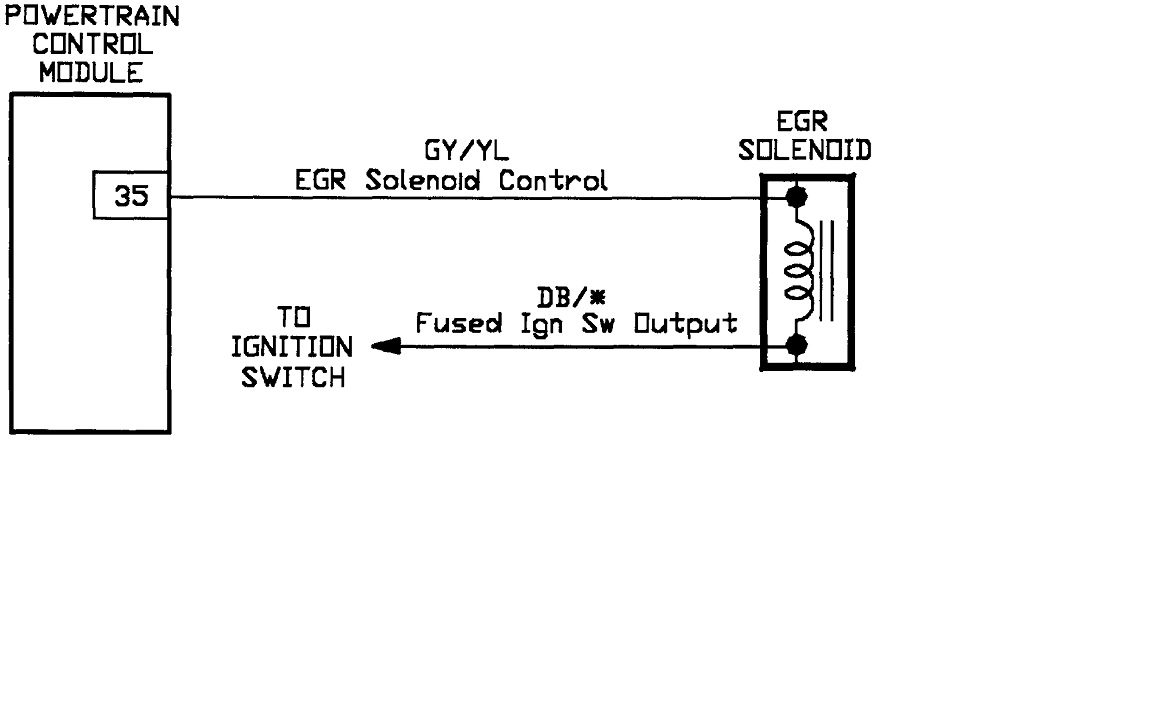
That's code 32 again. Now we have to refer to the diagram I posted earlier. You'll need a digital voltmeter. Do you know how to use one?

For a good first step, if I understand correctly, the Check Engine light will be off when you turn on the ignition switch, then the light turns on later while you're driving. If that's right, have a helper watch for that light, then you go under the hood and gently wiggle the connector to that valve assembly. The ignition switch must be on "run" but the engine shouldn't have to be running. If the light turns on when you wiggle the plug, turn the ignition switch off, then back on, and see if you can make the same thing happen repeatedly. If you can, the suspicion is the terminals in that connector are corroded or are making weak contact. My solution would be to remove each terminal to clean them and bend them to make better contact. When that doesn't work, I'd head to a pick-your-own-parts salvage yard to get a replacement connector and splice that in.

If wiggling the connector doesn't make the Check Engine light turn on, unplug it completely. That should turn the light on. If it still doesn't, that means my suggestion is not valid. In that case, use the voltmeter and back-probe the gray / yellow wire. Remember, for this test to be valid, the connector has to remain plugged in. You should find close to 12 volts. If you do, see if it stays there solidly as you wiggle the plug a little.

I'll be back tomorrow to see what you found.
Sep 20, 2026 at 5:13 PM
Avatar
FARR_2007
  • MEMBER
  • 82 POSTS
Thing is the part I believe came with a new transducer so I don’t see that being the problem my guess would be the connector
Sep 20, 2026 at 7:04 PM
Avatar
FARR_2007
  • MEMBER
  • 82 POSTS
So what is the purpose of the transducer is it possible it came with a a bad one? The harness connector looked fine so I’m not sure what could be causing it
Sep 21, 2026 at 9:45 AM
Avatar
FARR_2007
  • MEMBER
  • 82 POSTS
So you’re saying that the transducer could have a short inside the part itself? Could I try getting another transducer

Sep 21, 2026 at 2:19 PM
Avatar
CARADIODOC
  • ✓Experienced Mechanic
  • 34,377 POSTS
No. I'm saying there are multiple possible causes for this code. Normally your mechanic would perform electrical tests first, then spend your money on a part if that's what is suspect. Because this used to be a common failure part, it was less expensive for you to pop in a new one as a test. While it is possible to get a defective new part, this is where the next step is to get more involved with testing the circuitry.

This valve actually works the opposite of what we'd expect. It wants to open all the time, which would cause a really miserable idle. The Engine Computer activates the solenoid to block vacuum, thereby keeping the valve closed when appropriate.

One quick check you can do is to unplug the solenoid connector while the engine is idling. That should make it go from a nice, smooth idle, to running rough and possibly stalling. If it does, the valve is working and the computer is controlling the solenoid. If it goes back to a normal idle when you reconnect the plug, the system is working. At that point we're looking for an intermittent problem.

There's two things left to do. With the engine running, wiggle the wires and solenoid connector to see if the idle quality changes. Flex the wire harnesses, and look for any place a harness runs over a metal bracket. It's somewhat common for a harness to fall down onto the sharp edge of a bracket, and the insulation on one or more wires will rub through and ground out. A short to ground on the gray / yellow wire would keep the valve closed, (smooth idle), but the computer would see no control current flowing through its switching circuit. That can set code 32.

A second test you can do is to measure the resistance on the gray / yellow wire to ground with an ohm meter. If you need help with that, let me know. This test can be done with the connector unplugged or plugged in, but it's still best to back-probe that terminal next to the wire. Poking a meter probe into the open terminal can stretch it, often causing a poor or intermittent connection later. With the ohm meter connected, watch for a change in the reading as you flex the wire harnesses.

If you do read a short to ground on the gray / yellow wire, the computer will recognize that when it tries to deactivate the solenoid. That occurs only after the engine is warmed up, and only at higher road speeds, not at idle. If flexing the wire harnesses doesn't make the short change or go away intermittently, disconnect the large plug from the Engine Computer. This is not at all common, but if doing that makes the short go away, replace the computer. A used computer from a salvage yard should be very inexpensive. One from a '95 model should work too as long it's for your engine size. I think a '93 computer will be the same, but ask someone at the yard to double-check.
Sep 21, 2026 at 3:45 PM
Avatar
FARR_2007
  • MEMBER
  • 82 POSTS
So I unplugged the connector from egr solenoid and no change in how the car runs so now what do I do?
Sep 24, 2026 at 6:18 PM
Avatar
CARADIODOC
  • ✓Experienced Mechanic
  • 34,377 POSTS
I listed the next things to do. Gently wiggle and flex the connector, wires, and the rest of the wire harness to see if anything makes the idle quality change.

Check the resistance from the gray / yellow wire to ground. Keep watching the reading while you again, flex the wire harnesses. Expect to find a rather high resistance, as in the thousands of ohms range, or higher.

You can also check for 12 volts on the dark blue wire. The ignition switch will have to be in "run" during that test. I'm pretty sure the engine doesn't have to be running for that test, but if you do not find 12 volts on this wire, try again with the engine running. Let me know what you find with these tests.
Sep 25, 2026 at 8:27 PM
Join 2CarPros for free, one of the most advanced car repair communities on the internet. From first-time drivers to seasoned mechanics, everyone is welcome to reply, share details, and get better answers. You can add a temporary image or video first; uploads are limited to 20 MB.
Ask a Free Question
Repair Safety Notice: This information is for general instructional purposes only. Vehicle repair can be dangerous. Verify all information, follow manufacturer service procedures, use proper tools and safety equipment, and consult a qualified repair shop when needed.