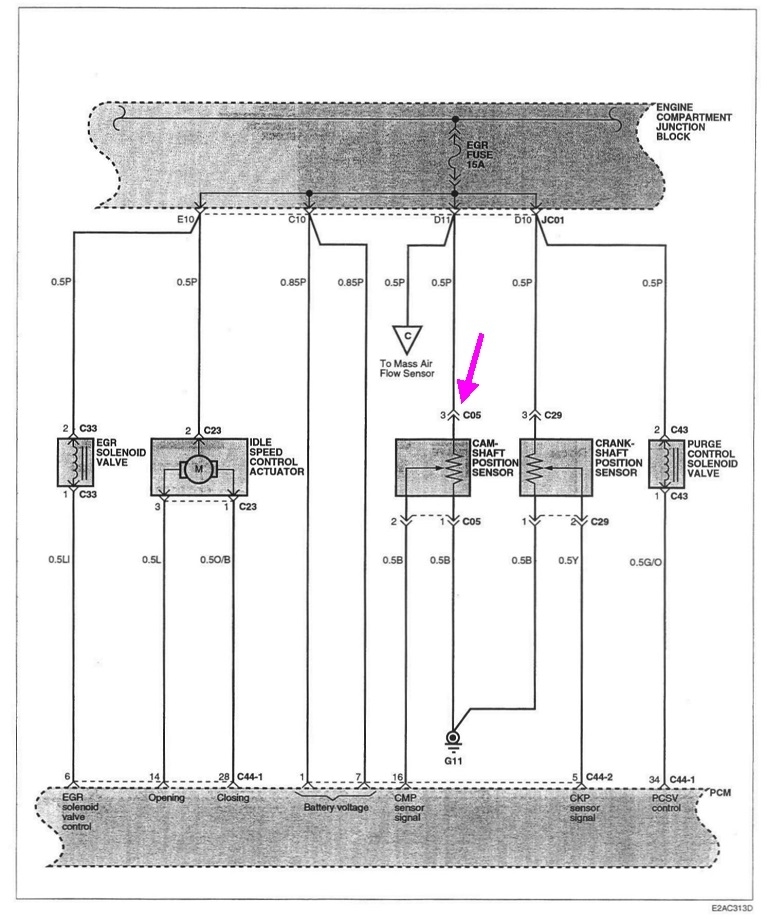
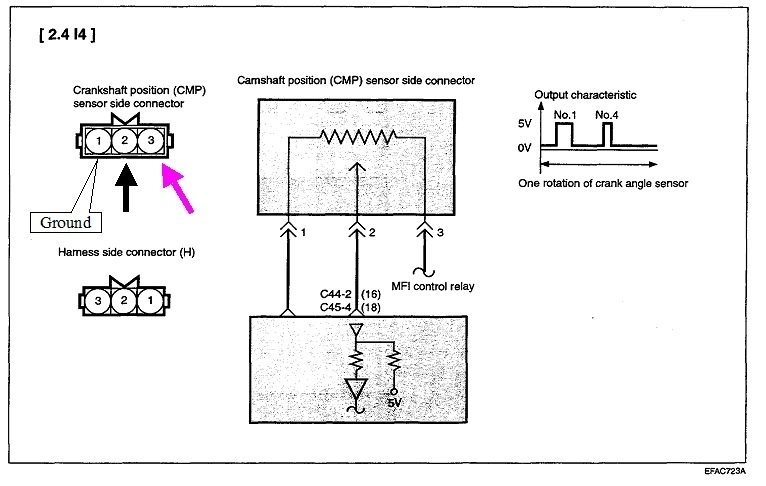
The signal wire and ground wire are both black. You'll need to use an ohm meter to see which is the ground wire so you don't mix them up. Put the ground wire in terminal "1".
If you don't know how to use an ohm meter, here's a link to an article that will get you started:
https://www.2carpros.com/articles/how-to-use-a-voltmeter
This shows using an auto-ranging meter. That's an expensive feature you don't need. You can find a perfectly fine regular meter at Harbor Freight Tools for less than $7.00, or at Walmart or any hardware store. I can help you with setting the range if you need it.
You can also find the ground wire with a test light, but normally we put its ground clip on the battery's negative post or someplace on the body or engine. In this case you would put that clip on the battery's positive post, then the light will light up when you place the probe on the sensor's ground wire. This article shows how to use a test light, if you need it:
https://www.2carpros.com/articles/how-to-use-a-test-light-circuit-tester
You can find these at the same places as you'd find the voltmeters, but be sure to get a cheap one with a regular incandescent light inside. There are some really expensive ones on the market today, but the old-style test lights have a really big advantage that makes them more accurate than digital voltmeters for some types of problems.
Images (Click to enlarge)
Feb 5, 2020 at 6:18 AM