POWER STEERING SYSTEM FLUSHING
Flushing
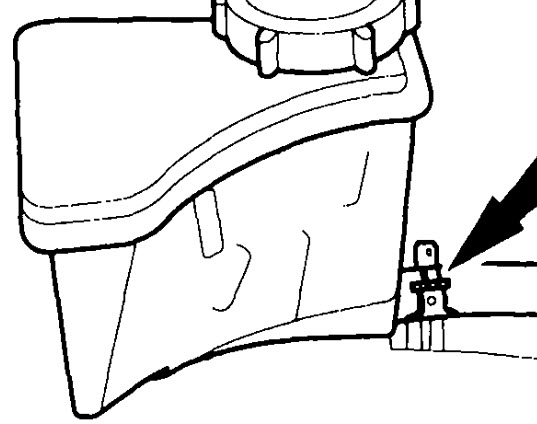
1. Disconnect the crankshaft position (CKP) sensor. For additional information, refer to CRANKSHAFT POSITION SENSOR .
2. Disconnect the return line from the power steering fluid reservoir.
? Allow the fluid to drain into a suitable container.
Fig. 9: Disconnecting Return Line From Power Steering Fluid Reservoir
Courtesy of FORD MOTOR CO.
3. Cap the power steering fluid reservoir with a suitable piece of hose.
? Place the end of the return line into a suitable container.
Fig. 10: Capping Power Steering Fluid Reservoir With A Suitable Piece Of Hose
Courtesy of FORD MOTOR CO.
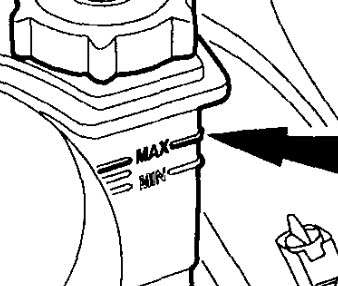
4. Fill the power steering fluid reservoir to the MAX mark with power steering fluid.
Fig. 11: Filling Power Steering Fluid Reservoir To MAX Mark With Power Steering Fluid
Courtesy of FORD MOTOR CO.
CAUTION: Do not continuously crank the engine for more than 30 seconds. Failure to follow this instruction may result in damage to the starter motor.
5.
? While adding 1.9 liters (0.50 gallon) of power steering fluid turn the ignition switch to the START position.
6. When all the fluid has been used, turn the ignition switch to the OFF position.
7. Connect the fluid return line to the power steering fluid reservoir.
? Remove the cap from the reservoir.
refill to max when done.reconnect cranks sensor.
Images (Click to enlarge)
Nov 4, 2011 at 12:41 PM