Air Intake Boot Hose Connection?

2000 MAZDA MPV
150,000 MILES • 2.6L • AUTOMATIC
Avatar
MFENG
  • MEMBER
  • 4 POSTS
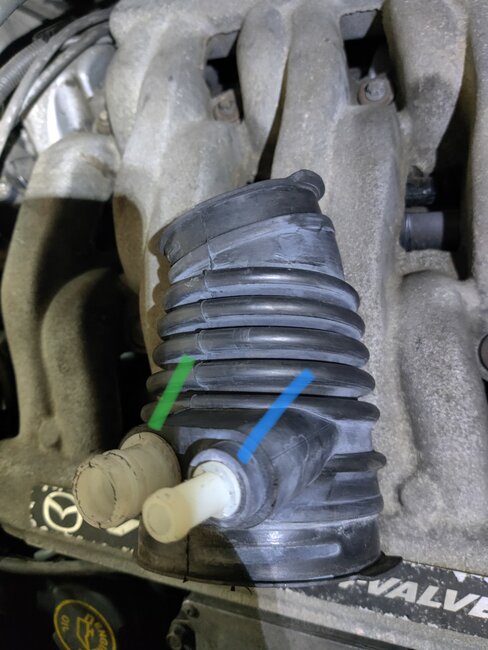
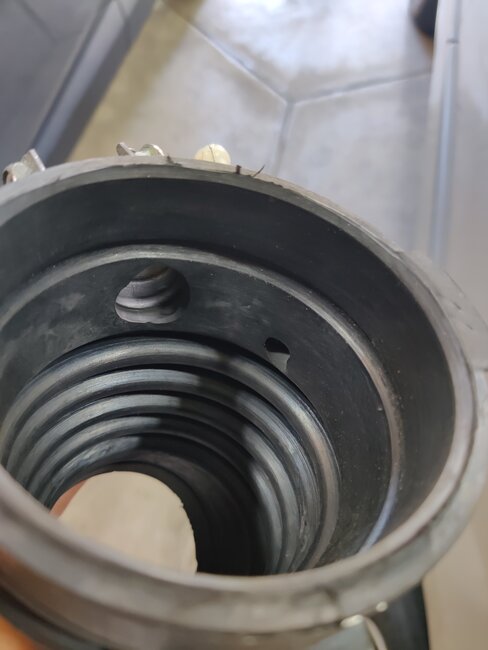
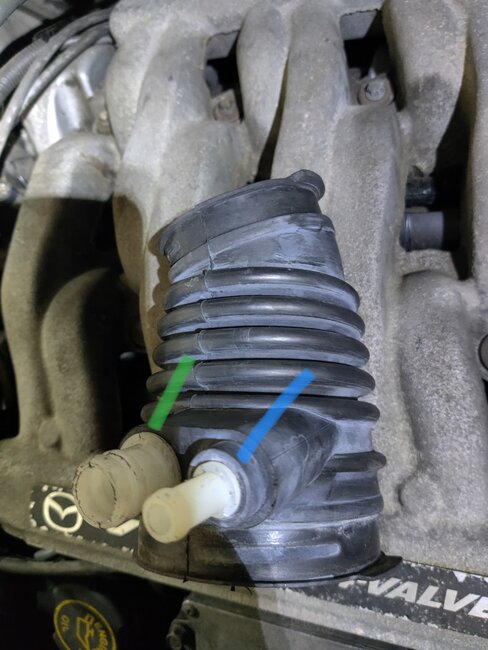
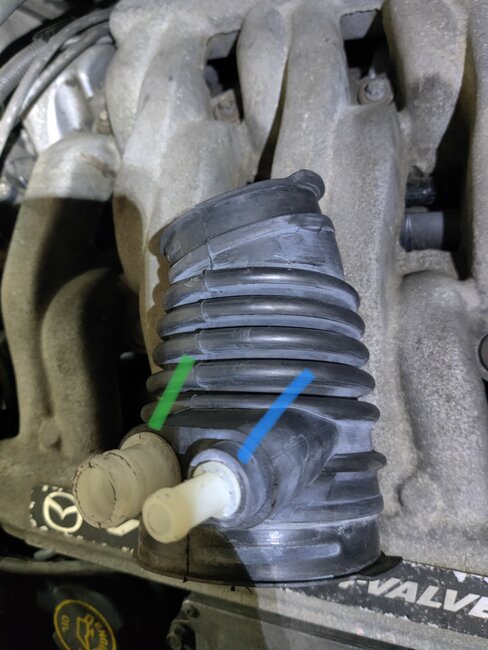
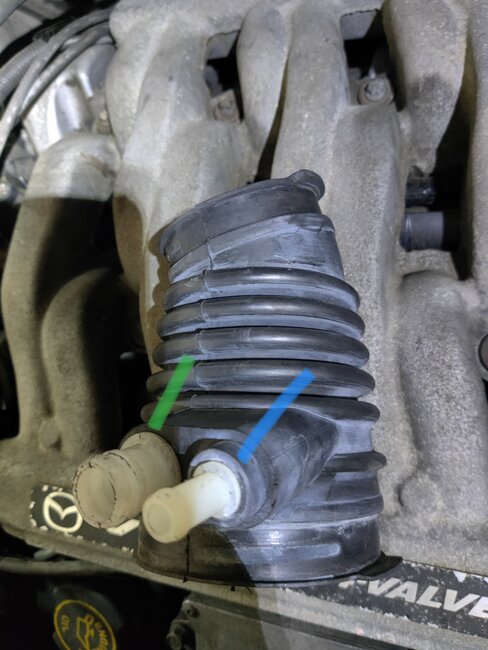
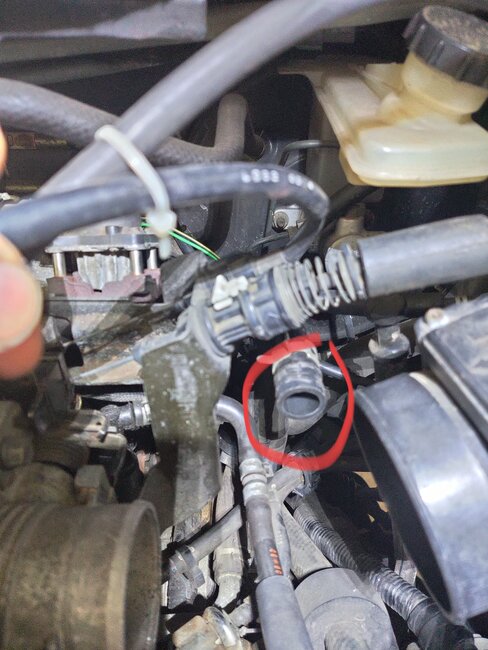
I cleaned the throttle body on my 2000 Mazda MPV after getting a P0507 code. When I reinstalled the air intake boot, I was surprised to find that there was no hose connected to the small port marked in blue in the picture. There is only one hose, marked in red, which fits the larger port marked in green.
I stopped by a local Mazda dealer and asked about it. They told me that there should definitely be a hose connected to the small port. I came home and searched the area several times, but I still cannot find any extra loose hose.
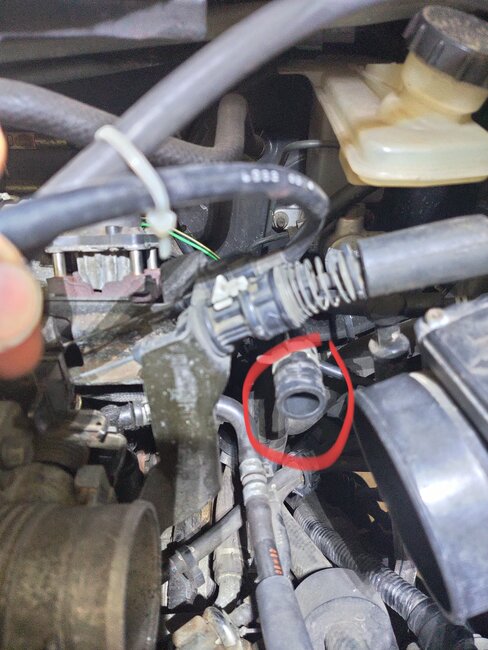
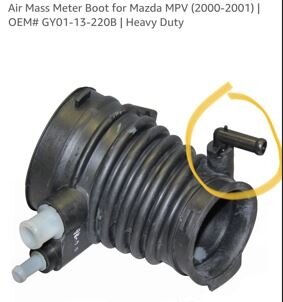
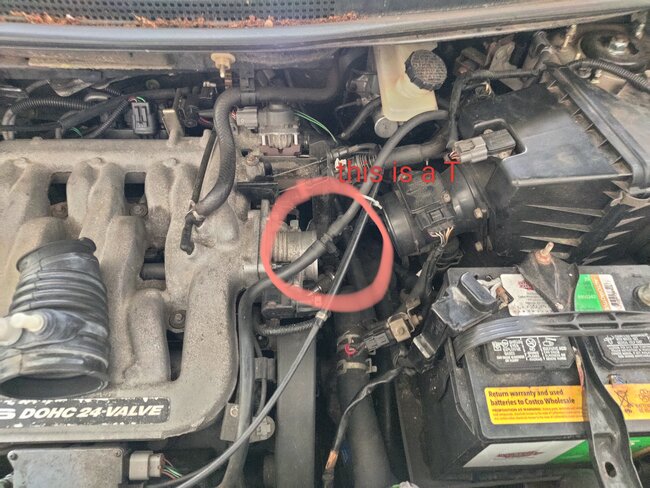
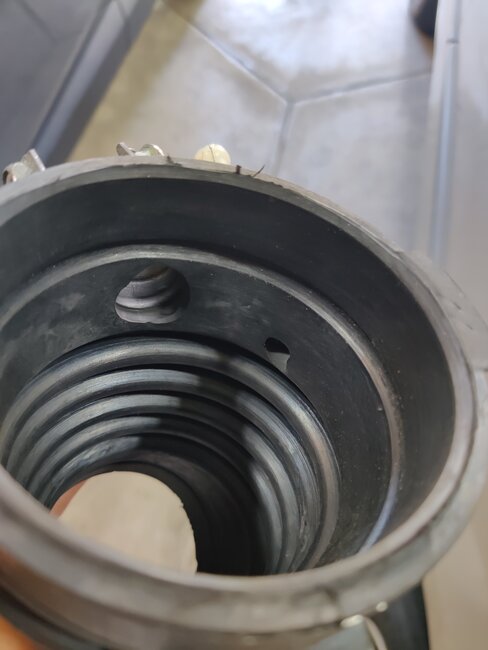
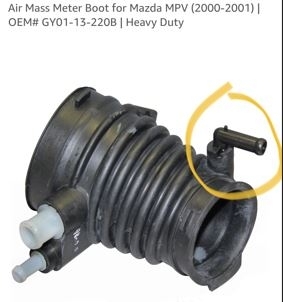
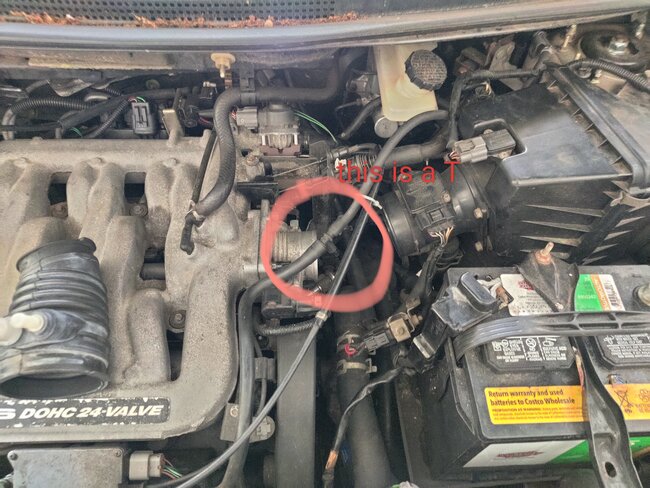
There is also an upper port on the air intake boot. I then noticed that the OEM GY01-13-220B intake boot uses a single 90-degree elbow at this upper port, pointing toward the front of the engine. However, my current fitting is a T-connector (last picture marked pink). One branch goes forward toward the middle/front of the engine, while the other branch goes backward toward the middle/rear of the engine.
I previously had some work done at a local garage, but I do not remember exactly what was done in this area. I am wondering whether the current setup may have been modified or misconfigured at some point. What concerns me most is that leaving the small blue port completely open does not seem correct.
My current plan is to:
1. Replace the T-connector on the upper port with the OEM-style 90-degree elbow.
2. Keep the hose that currently runs toward the front of the engine connected to that upper elbow.
3. Take the hose that currently runs toward the rear of the engine from the T-connector and connect it instead to the small blue port on the intake boot.
Does this sound correct?
If anyone is familiar with the 2000 Mazda MPV 2.5L V6 and can confirm where these hoses are supposed to connect, I would really appreciate your help before I change anything.
Thank you very much.
Aug 7, 2026 at 8:51 PM
Advertisement
Avatar
STEVE W.
  • Experienced Mechanic
  • 15,295 POSTS
Those look like the PCV hose connections. They are both fresh air intake hoses, one should go to each side of the engine. The smaller right angle fitting is for a small hose that goes from it to a fitting on the throttle body. Looking at it I think someone connected the outlet directly to the TB with the "pink" coupler. I've seen similar things when people add a catch can to the PCV system. It doesn't help and in fact can damage the seals on the engine by having a constant vacuum inside the engine instead of the controlled amount through the PCV valve. The image is for the system. They used a couple set-ups depending on the emissions type.
Aug 8, 2026 at 10:27 PM
Avatar
MFENG
  • MEMBER
  • 4 POSTS
Thank you, Steve. My 2000 Mazda MPV has the California-emissions configuration.
There are three air ports on the rubber intake boot: one upper port and two side ports (marked blue and green in my picture above).
I am considering two possible options:
Keep the current T-connector configuration on the upper port and seal the small “blue” side port.
Or, as I outlined above:
Replace the T-connector on the upper port with the OEM-style 90-degree elbow.
Keep the hose that currently runs toward the front of the engine connected to the elbow.
Connect the hose that currently runs toward the rear of the engine from the T-connector to the small side “blue” port on the intake boot.
Either configuration would eliminate the open port and prevent un-metered air from entering the intake system.
Thank you again for your help.

Mike
Aug 8, 2026 at 11:15 PM
Avatar
STEVE W.
  • Experienced Mechanic
  • 15,295 POSTS
The CA version uses the same lines there but it has a control valve in the PCV line. I wouldn't leave that connector in place as it will apply excess vacuum to the crankcase. The larger ports both go the engine as filtered air for the PCV system, The line off the 90 angle is the PCV line that the engine sucks the gases into the engine through.
Aug 9, 2026 at 12:46 AM
Avatar
MFENG
  • MEMBER
  • 4 POSTS
Thnak you, Steve.
Aug 9, 2026 at 7:22 PM
Avatar
STRAILER
  • Experienced Mechanic
  • 55,214 POSTS
Please use 2carpros anytime
Aug 11, 2026 at 7:00 AM
Avatar
MFENG
  • MEMBER
  • 4 POSTS
Here’s what I tried:
I replaced the T-connector on the upper port with an OEM-style 90-degree elbow and kept the hose that currently runs toward the front of the engine connected to the elbow. I then connected the hose that currently runs toward the rear of the engine from the T-connector to the small side “blue” port on the intake boot.
Unfortunately, this configuration did not work. I started the van and drove it for about 20 minutes, and everything initially seemed fine. However, when I returned home and let the van idle, the RPM stayed around 2,000.
After thinking about it more, I also believe the chance that the garage I previously used changed the original hose configuration is fairly small. So I decided to reinstall the T-connector and reconnect the hoses the way they were before. I’m still not sure why the OEM diagram shows a 90-degree elbow while my van has a T-connector.
The remaining question is what should be connected to the blue port. I did not want to leave it open, so I temporarily sealed it with electrical tape.
I have driven the van several times over the past few days, and everything seems to be running normally with no check-engine light or fault codes.
I also stopped by my local Mazda dealer. They checked the diagram and said there should be a hose connected to the blue port, and it may have dropped down somewhere. I searched the area many times but could not find any loose or unused hose. The dealer also told me that leaving the proper hose disconnected from the blue port may not trigger a check-engine light, but it could cause the van to use more fuel. For now, I plan to leave it as it is. It does not seem worth removing so many components in that area just to search for a hose that may be buried underneath.
Thanks again for your help.
Aug 23, 2026 at 2:35 PM
Avatar
STEVE W.
  • Experienced Mechanic
  • 15,295 POSTS
Thanks for the update. The lines may have been changed earlier in the cars life. Hard to know for sure. But if you are happy with it then it's your call.
Aug 23, 2026 at 8:22 PM
Join 2CarPros for free, one of the most advanced car repair communities on the internet. From first-time drivers to seasoned mechanics, everyone is welcome to reply, share details, and get better answers. You can add a temporary image or video first; uploads are limited to 20 MB.
Ask a Free Question
Repair Safety Notice: This information is for general instructional purposes only. Vehicle repair can be dangerous. Verify all information, follow manufacturer service procedures, use proper tools and safety equipment, and consult a qualified repair shop when needed.