
What is an automotive driveline universal joint? All vehicles use a universal joint in the drive line of some kind to connect the engine and drivetrain to the drive wheels. On front wheel drive or independent rear suspension applications a CV joint (constant velocity) is used whereas straight axle rear wheel drive vehicles utilize a driveshaft with universal or U joints.
What Goes Wrong?
An universal joint contains a series of needle bearings housed inside four bearing caps which rotate on the main body of the joint. These bearings require lubrication which is held in place using a grease seal which also rides on the main body and allows the joint to operate under extreme load. Many manufacturer's provide grease already installed which is meant for the life of the U joint, while others provide a zerk fitting on the joint to add grease at regular service intervals. When a U joint fails it can cause rhythmic squeaking or ticking that is usually more audible at slower vehicle speeds and if left unattended the universal joint can break causing a mechanical breakdown.
Let's Jump In!
Universal joints are used at either end of a driveshaft to serve as a flex joint
as the suspension moves while the vehicle is in motion, the rear joint is connected
to the differential via the
drive shaft.
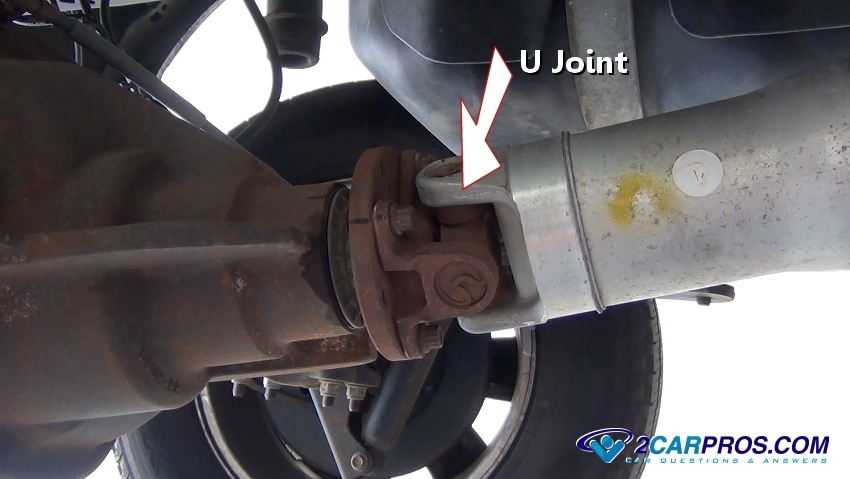
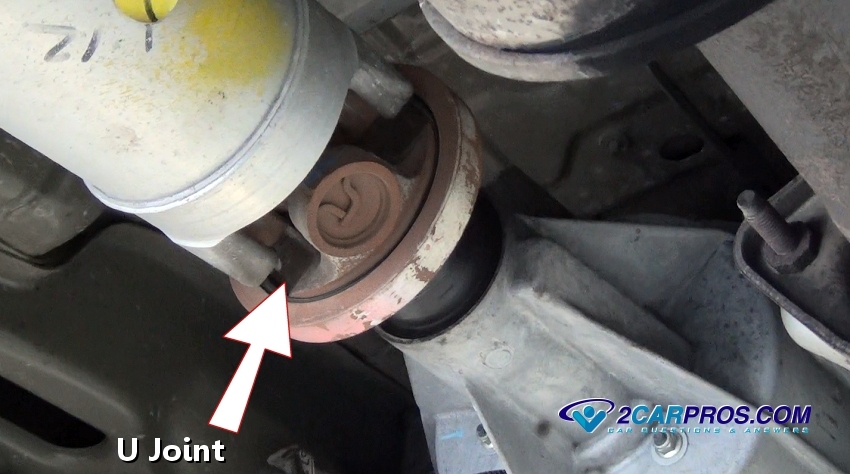
The forward or front U joint is located near the rear of the transmission and
connects the driveshaft to the transmission tail shaft using a
yoke. On 4WD vehicles the yoke is fitted
at the rear of the transfer case in the same method.
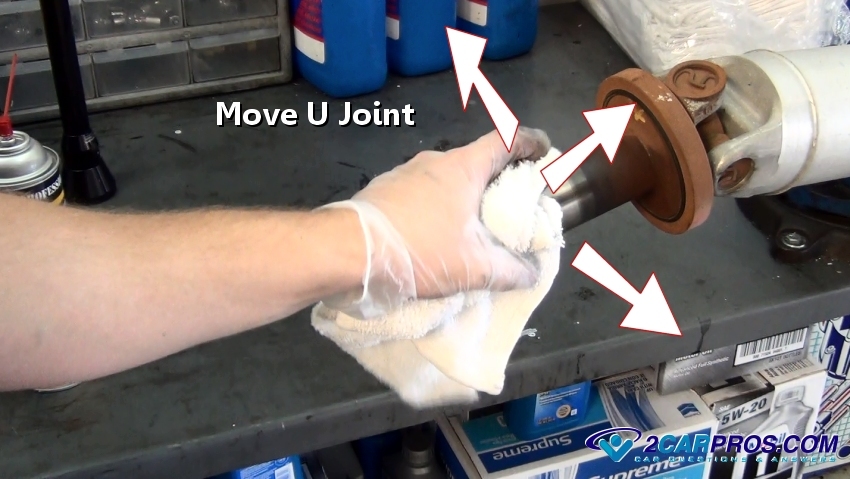
To check a U joints condition and wear
remove the driveshaft, move
the joint in every direction looking for hard spots or excessive play, a rust colored
powder will also be present if the U joint has failed and needs replacement which
is the result of metal contacting metal without lubricant under extreme pressure
causing rust partials to be extruded.
Questions?
If you have a car repair question, you can ask the 2CarPros community for help. We hope this guide helped you understand the repair. Please visit our 2CarPros YouTube channel for more helpful repair videos.